EN
EN  ID
ID 


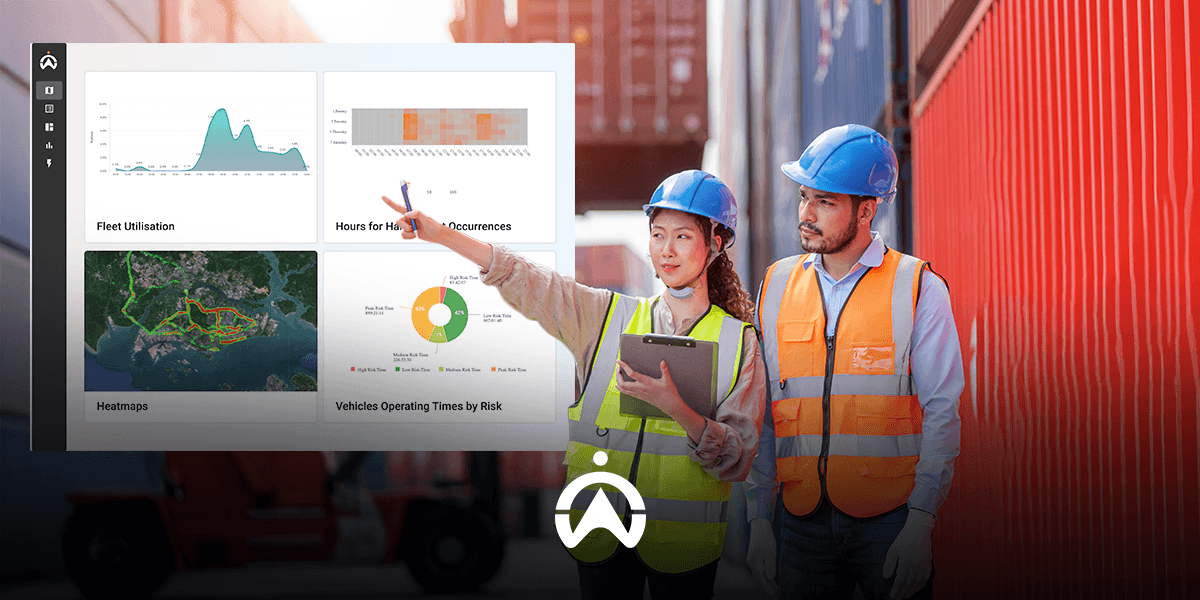
We will show you how to empower and grow your construction business, and how smart fleet management software can help you achieve this.
We will show you how to empower and grow your construction business, and how smart fleet management software can help you achieve this.
What does a fleet management software platform do?
This can also be referred to as a fleet software platform.
Businesses and industries of all types can use this tool to manage every aspect of their operations, leveraging the accurate data it provides. For instance, you can gain insights into maintenance, driver behaviour, fuel expenses, fuel consumption, and much more.
For a fleet manager, time is money.
Many tasks can be automated to reduce time spent on administrative work and create more time for growing the business.
Certain managerial qualities are also required to boost morale, building upon a solid fleet management process.
What skills do you need to become a fleet manager?
-
Establish quality monitoring
Construction fleet managers need to maintain an overview of their operations, drivers, and vehicles throughout the day. At any given time, if a vehicle is out of service, they must be able to explain the reason, react quickly, and promptly find a solution. Alternatively, if an issue arises on-site, they need to identify who is responsible for a specific construction project or which driver is assigned to a particular vehicle or piece of equipment.
-
Make safety a priority
Measures must be taken to secure the fleet. Real-time vehicle tracking is essential to prevent or detect theft and to safeguard assets during construction projects. Fleet managers also need to ensure proper vehicle operation and establish performance standards for drivers. This ensures the safety of drivers, vehicles, and assets while simultaneously avoiding unnecessary fleet costs. Another safety measure involves ensuring compliance with rules and regulations, including reminding drivers to avoid distractions and safety hazards. To this end, managers should identify restricted zones for their fleet and implement geofences or barriers to prevent drivers from entering unsafe or unauthorised areas.
-
Understanding data
Fleet managers need to analyse, interpret, and quickly react to software data to make immediate decisions that safeguard operations. They must respond to data alerts—such as vehicle breakdowns, poor driving behaviour, or vehicles being out of position. For instance, a vehicle might be malfunctioning, requiring maintenance to prevent costly repairs to construction equipment.
-
Manage vehicle maintenance and make better decisions
Managers need to take a more strategic approach to the data received from software platforms, using it to plan ahead and improve organisational efficiency. They can generate predictions or forecasts regarding maintenance plans for both new and existing vehicles. Software platforms can provide answers to questions such as whether additional vehicles are needed, or which vehicles are the most heavily used and the most efficient, thereby facilitating future planning. Ultimately, the goal is to reduce fleet costs and enhance operational efficiency.
What types of fleet management industries are out there?
- Vehicle rental and leasing
- Cold chain logistics
- Construction
- Taxi
- Transportation & logistics
In this article specifically, we will delve into what fleet management entails for construction businesses and provide you with construction fleet tracking and telematics solutions.
What is construction fleet management?
This involves planning and overseeing all vehicles, drivers, and assets to ensure productivity and effective workflows within the business.
This is a process in which fleet managers gain full visibility and control over their operations using route planning, vehicle fleet monitoring, data collection, and reporting.
Construction fleet managers need to identify what works and what doesn't, so that project delays and cost impacts on the overall business are minimised.
An intelligent fleet management platform is the answer to effective construction fleet management—here’s how.
Why you need Cartrack's fleet management solution to boost your construction fleet business
- GPS vehicle and equipment tracking: Easily locate your vehicles and assets to keep them secure and stay informed about their condition—and monitor whether they are being used efficiently.
- Maintain your construction assets: Receive maintenance alerts when your vehicles and machinery require service to reduce costs and extend their lifespan. Additionally, minimise downtime and boost productivity.
- Construction fleet safety: AI-powered cameras provide insights into driver behaviour, ensuring drivers remain focused and drive correctly.
Equipment fleet management in construction fleets
Vehicle management is not only important for your construction vehicles or fleets; heavy equipment fleet management plays an equally important role.
Equipment failure of this kind can be highly detrimental to the business, reducing the number of projects that can be undertaken and leading to missed deliveries to clients.
Let's look at a concrete mixer, for example.
Our system enables you to produce your own batches of concrete, which can be transported directly to where they are needed on the construction site. It also saves time and money, as you do not need to rely on a concrete batching plant for deliveries and can control the quantity used.
For instance, if you have ten cement mixers on-site, do you know whether they are being used effectively and are properly secured? Monitor them using GPS tracking technology and access the data through the platform.
They can be left running unsupervised and spinning without any cement inside—meaning they are not being used efficiently. You may have some that are underutilised, so you would save money by not purchasing more where they aren't needed.
Also receive instant alerts if it is stolen, used without authorisation, or requires repair.
4 key benefits of fleet management software for construction fleets
-
Optimising fleet and operator performance
A well-functioning fleet management system involves maximising the analysis of vehicle and operator data.
Data such as fuel consumption, mileage, mechanical diagnostics, maintenance, and driver performance enables managers to gain a comprehensive understanding of the fleet operator's history and performance.
Fleet managers can then improve daily operations, save costs, and make informed business decisions.
For instance, truck breakdowns and maintenance can be extremely costly. Managers can use this data to develop and manage vehicle maintenance schedules, thereby reducing the need for repairs and extending vehicle lifespan. Operations can also run at full capacity, leading to lower fuel costs. Furthermore, data regarding optimal routes and safe driving practices can be utilised to enhance driver safety and improve fuel efficiency.
-
Improving productivity and workflow
Once fleet management software is installed, there is less room for errors, issues, delays, or anything else that could disrupt the workflow, resulting in greater overall efficiency.
Fleet managers must efficiently coordinate the dispatch of vehicles and equipment to keep construction projects on schedule. They can plan efficient routes, identify the best paths, and dispatch the nearest available drivers to meet site requirements. The right personnel are assigned to the right jobs, ensuring tasks are completed effectively and on time. Projects are accurately planned, and teams remain accountable and on top of the tasks necessary to keep the project moving forward.
As a result, the company will have more time to respond to urgent requests and adapt quickly without delay.
-
Improve invoicing
Automated reports notify you exactly when your construction team arrives at or leaves the assigned project site.
This allows you to see their actual working hours so you can accurately bill your clients and pay your team's wages, helping you avoid wasted costs.
Managers must consider handling invoices and transactions digitally, which will also enhance data security and safety.
Also, to implement financial record-keeping on digital platforms in order to improve accuracy and minimise errors and/or payment mistakes.
This will enable construction companies to review payment history and send accurate invoices to clients.
-
Better budgets and forecasts
The primary goal of executing a successful construction operation is to determine whether a capital gain is realised. By doing so, companies can leverage fleet data to gain an overview of expenses and understand which projects are profitable and which are not.
Obtain reports to forecast expenses and revenue, and to generate more accurate budgets and projections for the future. For instance, they can assess the amount spent on fuel over a specific period and set appropriate budgets.
Overall, businesses must understand their financial standing in order to take the appropriate actions to keep their doors open and their finances healthy.
How to grow an efficient construction business
Kami tahu platform manajemen armada akan memberi Anda kendali lebih besar atas bisnis Anda, tetapi seperti halnya bisnis apa pun, elemen lain penting untuk kesuksesan Anda.
We have a few additional tips for you.
- Build a great team: You need the right people in the necessary roles to ensure the work is done correctly. You must also reward them for high-quality work and empower them to achieve even better results.
- Build a strong network: Attend events and expand your connections to grow your customer base. Build rapport with existing clients and pave the way for positive referrals.
-
Launch a website: Your website should include valuable information about your company and services, and answer questions frequently asked by your customers. You should outline how your services will solve their problems.
-
Build effective sales and marketing channels: Having an engaging website and social media accounts is a good starting point for an online presence. However, to take it a step further, you should consider employing effective digital strategies—such as SEO, analytics, content marketing, and advertising—as part of your overall growth strategy.
-
Invest in the right construction fleet management software: As mentioned, a SaaS platform will facilitate smoother operations and give fleet managers greater control over their fleets through accurate reporting and data insights.
The best fleet management solution for construction businesses is out there. Start with fleet management software from Cartrack. Grow and enhance your business with a modern, technology-powered platform.