EN
EN  ID
ID 


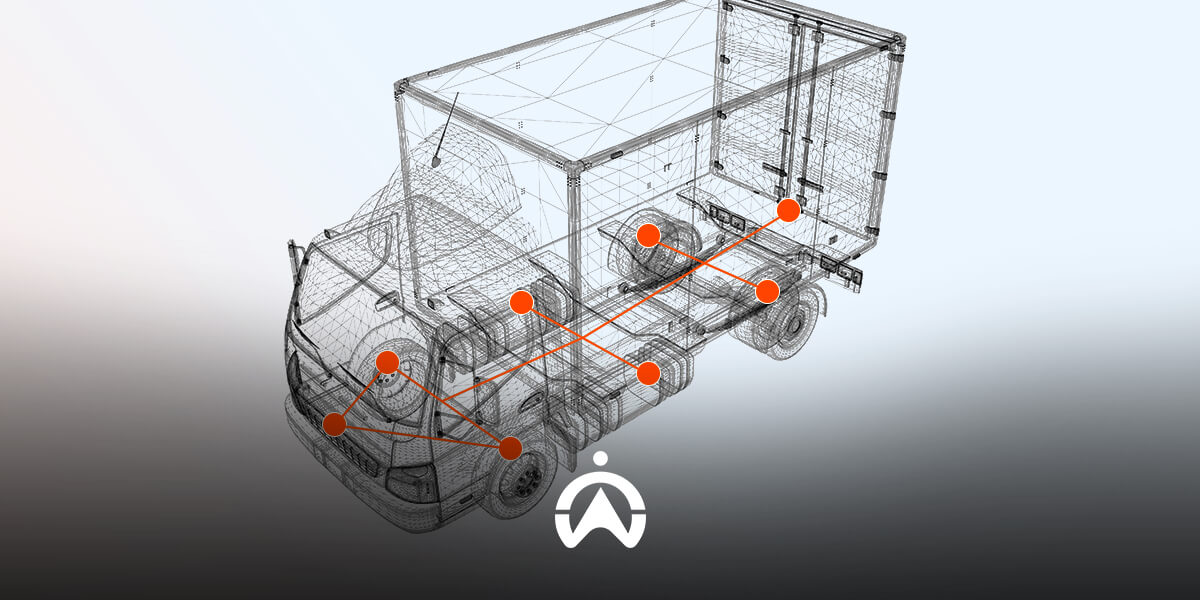
Have you ever thought about how a car engine slows down when we step on the brake pedal?
As we know, a car has many parts, each with its own function. They're all interconnected by a "communication system" called CANBus, which allows each component to connect and "work together."
In this article, we'll discuss CANBus (Controller Area Network Bus), which is available in today's modern cars. Learn what CANBus is, its functions, how it works, and how it integrates with Fleet Management Systems.
What is CANBus?
Imagine when you send a message on WhatsApp, it's first sent to a server before being forwarded to the recipient. With CANBus, there's no such central control "server," so messages are truly delivered directly.
CANBus (Controller Area Network Bus) is a vehicle system that allows various system units (engine, brakes, airbags, dashboard, etc.) to communicate with each other. They can exchange messages over a single line without the need for a server or control center.
When a message is sent by a system unit (called a node), all other nodes can receive it and determine whether it's relevant to them. This process happens so quickly that you won't notice any significant delays.
What are the main components of CANBus?
In one CANBus system, there are several components that have their respective functions, some of the main components in the CANBus system include:
ECU (Electronic Control Unit)
The ECU is a CANBus component that functions as a part that regulates a specific feature or system in a car. Each ECU consists of a package of components: a microcontroller (MCU), a controller, and a transceiver.
For example, the engine ECU is responsible for regulating engine performance, or the ABS ECU is responsible for regulating braking. Each of these ECUs then exchanges information and communicates with other ECUs via CANBus.
Microcontroller Unit (MCU)
This section is like the "brain" of each ECU, each responsible for a specific part of the car. When a message (CAN data) comes in, it's processed by the microcontroller and then responded.
CAN Controller
This component processes received CAN data and prepares messages to be sent to other ECUs. It also regulates CAN communication standards and prioritises data transmission.
CAN Transceiver
The CAN transceiver acts as a bridge between the ECU, which uses digital data, and the CANBus cable, which uses electrical signals. It converts digital data into electrical signals for transmission to the CAN cable and vice versa, allowing the ECU to read them.
CANBus Line (Kabel CAN)
The CANBus cable is the primary communication channel through which all vehicle components are interconnected. Each connected ECU can send and receive data efficiently and in real time through this channel.
Terminator
CANBus requires a resistor, typically installed at the end, to maintain stable communication. Without a terminator, the data signal could bounce around and cause interference in the vehicle's system.
Also Read: Getting to Know the Internet of Things (IoT), How It Works, and Examples of Its Use
How does it work?
How CANBus works is detailed as follows:
1. Node/ECU sends message-based data
Nodes or units within the CANBus system can exchange specific data (CAN Data) in the form of messages (CAN Frames). For example, the ABS brake ECU sends braking data, and messages are sent to be received and responded to by other ECUs.
2. Sending messages using one line (bus)
Each ECU is connected to the same lines, called CAN-High and CAN-Low, so they can exchange data. The digital data from the ECUs sent over these lines is first converted into electrical signals by the transceiver.
3. Each message has special characteristics
Each node or ECU can receive any data sent, but can choose which data is relevant to them. Each message sent by the ECU also has a unique characteristic that indicates the priority and type of information being transmitted.
For example, the signal from the ABS braking system will have higher priority than the signal to open the window.
4. Data is sent and processed quickly and efficiently
Data transfer rates in CAN systems are extremely fast, reaching up to 1Mbps on high-speed CAN. This allows the system to operate in real time and respond quickly to received signals.
For example, when the sensor system sends a signal of a hard impact that triggers the active airbag system to avoid injury due to an accident.
5. Error detection and correction
This system can also detect corrupted data, allowing it to be ignored and retransmitted. This error-checking mechanism also ensures that no erroneous signals are processed further.
Utilisation of CANBus in Fleet Management System
Using CANBus is extremely beneficial for fleet monitoring. By adding a GPS tracker or fleet management telematics, you'll be able to "tap" into communications between systems within the vehicle.
This way, you can get up-to-date information, from engine condition to location to driver behavior. Some things you can monitor using CANBus data include:
-
Vehicle health condition (Real-time data for engine diagnostics and if there are any errors)
-
Driving behavior (Speeding, sudden braking, sharp turns)
-
Fuel (Fuel monitoring down to per liter)
-
Maintenance (Allows predictive maintenance)
Fuel Monitoring with CANBus from Cartrack
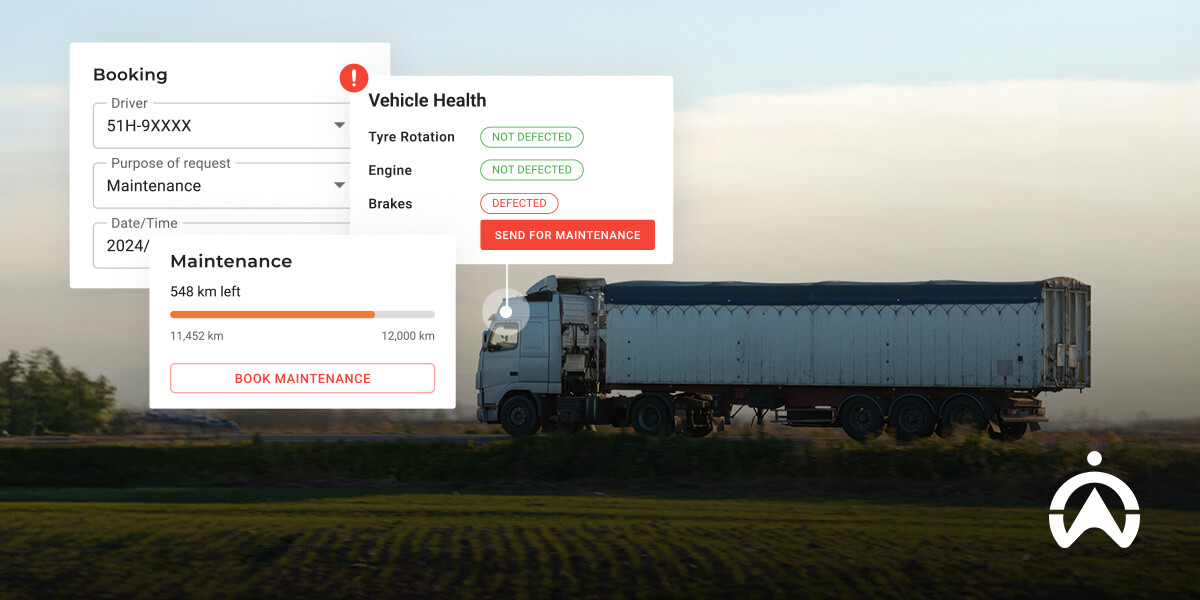
One use of CANBus in Cartrack's fleet telematics is for fuel monitoring. You'll receive fuel consumption information in liters, making it easier to manage your fleet's fueling.
So, how does it work?
A CANBus clamp connected to telematics will be installed on your vehicle's CANBus. This allows you to access data graphically on the dashboard, in reports, and in notifications.
In addition to CANBus, Cartrack Fuel Monitoring is also available using other sensors, namely:
-
Fuel Analog: By installing telematics on your vehicle's fuel system, you can read the data in liters, making it easier to understand.
-
Fuel Probe: Using a rod-shaped sensor that is mounted directly on the vehicle's tank, so that accuracy is higher.
Read Also: Exploring the Concepts and Benefits of Vehicle Telematics
So, that concludes our discussion of CANbus, a communication system between vehicle components that can help simplify monitoring. One of CANBus's benefits is fuel monitoring, as offered by Cartrack.
Improve fuel efficiency with Cartrack Fuel Monitoring. Complete the form here, and our staff will contact you to discuss your vehicle monitoring needs further!