EN
EN  ID
ID 


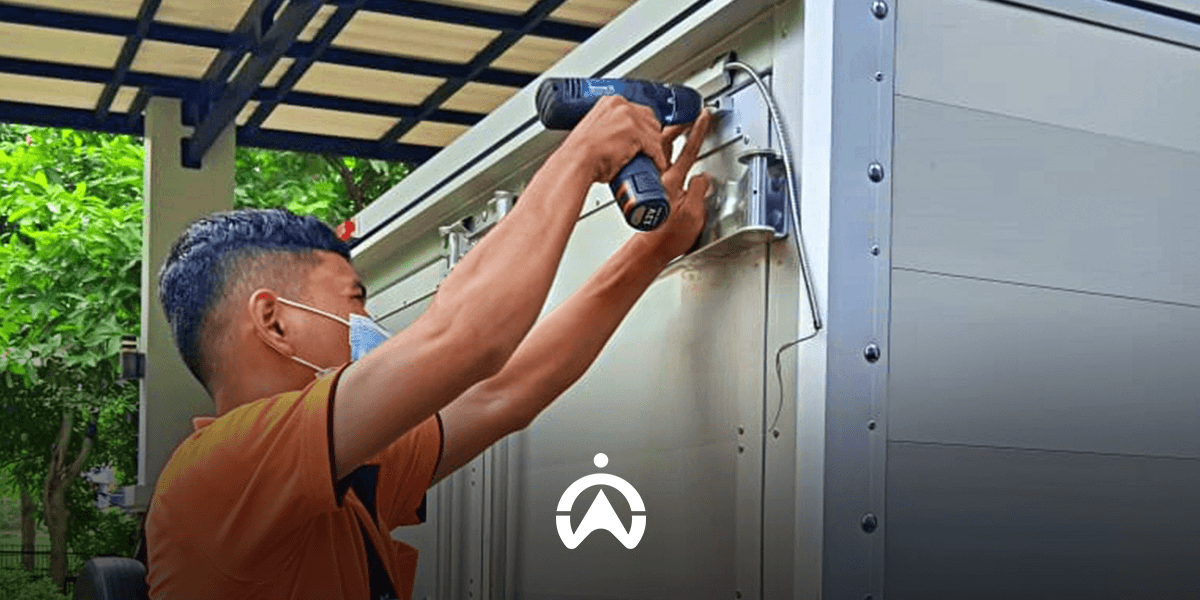
These additional devices help monitor activity-based vehicle information that is important to you or your business. In addition, Cartrack’s solution is more flexible as it can be customised to your needs. All data recorded by these additional devices is available on a single Cartrack vehicle management platform (Fleet Web and the mobile application), which is integrated. This data is not standalone but interconnected and processed in such a way that it provides valuable insights to optimise your vehicle operations.
What additional IoT devices from Cartrack can you choose to complement your vehicle monitoring?
1. Fuel Sensor
This sensor is primarily used to monitor fuel volume in the tank. However, the Cartrack platform further extends its benefits. In addition to monitoring fuel volume in real time, you can receive automatic notifications whenever there is refuelling or fuel loss, as well as various fuel reports (PDF or Excel format). These automated reports include the Fuel Efficiency Report and Fuel Refuelling Report, which help you detect fraud in fuel purchase claims and identify the most fuel-efficient vehicles or trips.
2. Temperature Sensor
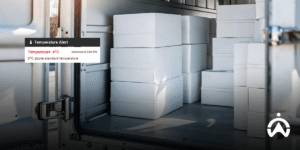
The temperature sensor provides real-time information on refrigerated cargo temperature, allowing you to ensure that cargo temperatures remain optimal throughout the journey. You can also receive notifications whenever the cargo temperature rises or falls beyond the limits you have set. Temperature changes recorded by the sensor are combined with GPS tracker data (location, speed, ignition status) and presented in a Temperature Sensor Report (PDF or Excel format).
3. Cargo Door Sensor
To track loading and unloading activities involving cargo door opening and closing, you need a cargo door sensor. You can receive notifications whenever the cargo door is opened and/or closed. Data recorded by the sensor is combined with GPS tracker data (location, geofence) and presented in a Cargo Unloading Report. You can see when and where the door is opened, allowing you to detect unauthorised deliveries or cargo tampering. In addition, you can also determine how long the door remains open, indicating how efficiently loading and unloading operations are carried out.
4. Sensor Power Take-Off (PTO)
For those who operate heavy equipment vehicles with mechanical functions activated via switches, buttons, or levers, this PTO sensor is highly useful. You can monitor the use of mechanical features such as cranes, bulldozer blades, dump truck beds, and excavator bucket attachments. This allows you to determine whether the engine is running due to idle (non-productive) activity or because these features are being operated (productive use). You can track the time, duration, location, and geofence when the PTO is activated or deactivated. In addition to monitoring productivity, PTO sensor data can also be used as proof of service for your heavy equipment fleet.
5. Sensor Mole
Specifically for heavy equipment vehicles with concrete mixers or mixer trucks, you can use this sensor. You will receive a Daily Concrete Mixer Work Duration Report, which provides information on departure and arrival times, departure and arrival geofences, operating duration, time spent within a geofence, inter-geofence duration, as well as cement loading and unloading duration. With this sensor data, you can ensure that operations are carried out according to standards to maintain concrete quality.
6. Sensor CAN Bus
In essence, this additional device is used to read vehicle CAN Bus data (for vehicles equipped with a Controller Area Network or CAN Bus system). This CAN Bus data is displayed on the Cartrack platform for various purposes, such as generating performance reports, receiving automatic notifications related to vehicle performance or specific component activity, and identifying whenever there is an issue within the vehicle system. Some of the CAN Bus data includes seatbelt status, door status, hazard light status, odometer, and fuel level.
7. Sensor Buzzer
You can add this sensor if you need a system that alerts drivers when they are speeding. The Cartrack pre-set speed limit is 130 km/h, but you can request a different speed limit setting from Cartrack. For example, if your company sets a maximum speed limit of 80 km/h for fully loaded trucks, the sensor will trigger an in-cabin alert when the vehicle exceeds that speed. This allows drivers to become aware of their speed and immediately reduce it to maintain safe driving.
8. Driver Identification Sensor
The device known as a driver identification (DID) tag is used to improve driver management, allowing you to identify drivers for each trip, record working hours, and control vehicle access. Drivers must tap the tag on the reader installed in the vehicle before starting a journey. This DID can be combined with a starter disable feature (start inhibit) to ensure that your vehicle is only used by authorised drivers. Installing this combination prevents the engine from being started without driver identification via the DID.
9. Remote Starter Disabler
This device allows you to disable the vehicle’s starter via a PC or mobile phone when theft or misuse of your vehicle is detected. Both deactivation and reactivation of the starter are carried out using OTP verification via SMS. The vehicle will not stop immediately while it is still in motion. The deactivation and reactivation only take effect after the vehicle’s engine has been turned off. Therefore, once the engine is switched off, the driver will not be able to restart the vehicle.
10. Surveillance Camera
If you want to monitor the cabin and cargo of your vehicle in real time , you can add a surveillance camera to your vehicle. Cartrack provides high-tech cameras. (AI) and non-AI. The difference is that cameras with AI technology have additional functions such as detecting driver movement or calculating vehicle collisions. event The AI camera detects factors such as drivers using mobile phones, fatigue or distraction while driving, and the risk of collision with the vehicle in front.
Without additional sensors or IoT devices, you already have more functionality than just a GPS tracker with Cartrack. However, Cartrack provides a variety of additional devices to provide a flexible solution, which can be tailored to each customer's needs. Consult your vehicle management needs with Cartrack now before choosing the best solution for you. Send us a message here.