EN
EN  ID
ID 


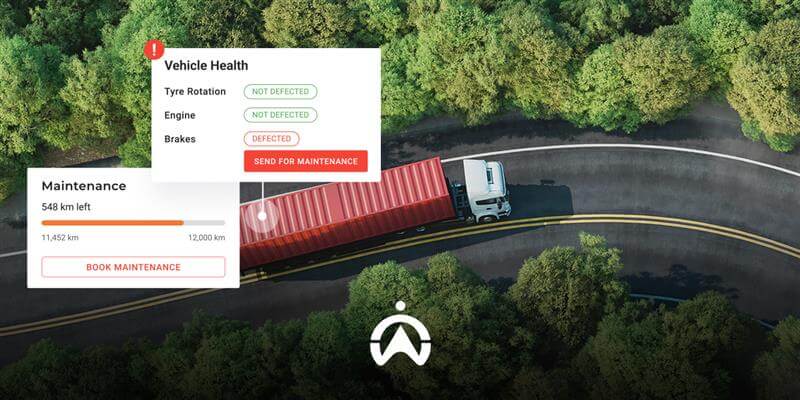
One of the challenges when managing dozens or even hundreds of operational vehicles is sudden breakdowns. Not only do they disrupt operations, but they also require your business to incur unexpected costs.
Therefore, regular vehicle maintenance is essential to minimise unit downtime. What are the steps you need to take to maintain your fleet, and is there technology to make things easier? Find out more in the following article!
What is Vehicle Maintenance?
Vehicle maintenance is the process of maintaining or caring for a vehicle to ensure it remains optimally functional, safe, and comfortable to use. This can be done routinely, based on specific timeframes and mileage, or when problems arise.
Vehicle maintenance performed on a business/company's operational fleet is known as fleet maintenance. This maintenance is managed using fleet maintenance software for easier fleet management.
Types of Vehicle Maintenance
In general, there are three types of vehicle maintenance that you can do as part of managing your personal vehicles or operational fleet.
1. Preventive Maintenance
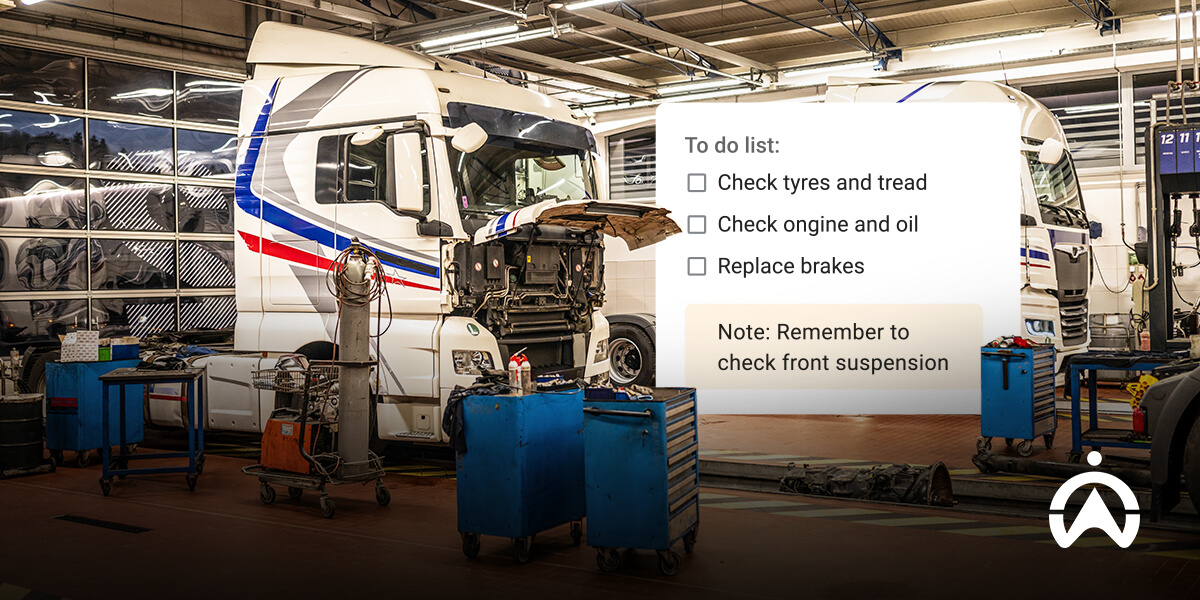
Preventive maintenance is the maintenance performed to minimise sudden vehicle damage. This includes creating daily checklists and routine maintenance programs performed at specific intervals.
Example: Regular oil changes every 10,000 km.
2. Corrective Maintenance
The opposite of preventive maintenance, corrective maintenance is maintenance performed after damage has occurred. The goal of this maintenance is to restore the vehicle's condition so it can function properly.
Example: Replacing a flat tire on a vehicle.
3. Predictive Maintenance
Predictive maintenance is maintenance performed by collecting and analysing data from sensors to detect potential failures. This maintenance system typically uses specialised programs or software to monitor the data.
Example: Use of sensors to detect overheating in engines.
Ideal Maintenance Schedule
So, what is the ideal vehicle maintenance schedule?
In general, routine vehicle scheduling can be based on mileage or a specific time period. For an overview, you can see the vehicle maintenance table and its frequency below.
|
Fleet Maintenance Management |
Frequency |
What it shows |
|
Oil and filter change |
Every 3–6 months (every 10,000 km) |
Depends on the type of vehicle and its use. |
|
Checking and replacing brake pads |
Every 10,000–15,000 km (check) Every 40,000–70,000 km (replacement) |
Brake pads on automatic transmission cars (automatic cars) need to be replaced more frequently. If you frequently brake hard, check them more frequently. |
|
Checking tire pressure and condition |
Every month (check) |
Generally, car tires only need to be replaced about once every 3 years, depending on usage. |
|
Battery and electrical system check |
Every month (minimum) |
This must be done for wet battery types. |
|
Cleaning or replacing the air filter and cabin filter |
Every 6 months (10,000 km) |
Can be checked and replaced more frequently if driving in dusty environments (every 4–5 months). |
|
Cooling system check (radiator, AC) |
Every 6 months |
Check the radiator immediately when the engine sound becomes rough or the AC becomes cold. |
|
Wheel and suspension calibration |
Every 10,000 km or once every 6 months |
The frequency can be adjusted to the intensity of vehicle use. |
|
Checking lights, wipers, and washer fluid |
Every 6–12 months |
Can be immediately repaired or replaced if there are signs of damage. |
Also Read: Preventive Maintenance: The Solution for a Long-Lasting, Durable Vehicle
Factors Affecting Vehicle Maintenance Frequency
While the ideal maintenance frequency mentioned above exists, there are times when your vehicle may require more frequent servicing. Several factors that influence vehicle maintenance frequency include:
1. Factory recommendation
Manufacturers usually provide recommended maintenance frequency based on the type or model of unit you own. You can find the "basic maintenance and repair" section in the owner's manual that comes with your new vehicle.
2. Type of care
Some minor maintenance, such as oil and air filter changes, can be performed more frequently, such as every 5,000 km. Meanwhile, major servicing, which involves checking all vehicle components, can be performed once a year.
3. Conditions of use
Vehicles used to transport heavy materials or frequently travel on damaged roads may require more frequent maintenance. This also applies to vehicles frequently stuck in traffic for extended periods.
4. Environmental conditions
Certain components may require more frequent maintenance due to environmental factors. For example, air filters become dirty more easily in highly polluted areas, or tires wear out more quickly due to poor road conditions.
5. Vehicle Condition
When you experience something unusual, it's often an indication of a problem with a specific vehicle component. If this condition occurs more frequently despite repairs, a major service or part replacement may be necessary.
Self-Maintenance vs. Workshop Maintenance
You can perform several simple vehicle maintenance tasks at home without having to take it to a repair shop. Some of the maintenance tasks you can perform yourself include:
-
Cleaning the internal and external of the vehicle
-
Check and fill tire pressure
-
Filling the radiator or washer water
-
Replacing the wipers
-
Checking the oil (with the dipstick)
-
Clean the air filter (if it is the easily removable type)
-
Check the condition of the lights and fuses
There are some checkups or maintenance that require specialised equipment and techniques to be taken to a repair shop. Some of the repairs you can take to a repair shop include:
-
Change the oil and filter (if you are not used to it)
-
Brake service (check brake pads, calipers, discs)
-
Tire balancing and spooring
-
Servis AC
-
Resetting the injection system or ECU
-
Major periodic service (tune-up, electrical system check, etc.)
Also Read: 3 Tips to Streamline Your Company's Vehicle Tire Maintenance Costs
Signs That Your Vehicle Needs Immediate Service
In addition to regular maintenance, you also need to know when your vehicle needs to be taken to a repair shop. So, what are the signs that a vehicle needs immediate servicing?
1. Unusual voice
Every vehicle naturally has a unique engine sound. However, there may be times when your vehicle makes unusual noises or sounds. If this happens, you need to check for problems with the engine or other components.
2. Unusual vibrations
The engine's performance naturally causes the vehicle to vibrate. However, if the vibrations you experience are excessive, this may be a sign that the vehicle needs immediate inspection.
3. The indicator light is on
On the dashboard, specifically on the Multi-Information Display (MID), you'll find various indicator lights that indicate the vehicle's condition. If any indicator lights up, it indicates a problem and requires immediate inspection.
4. Wasteful fuel consumption
Increasingly wasteful fuel consumption often indicates a specific problem. You'll need to investigate further whether the waste is due to inefficient routes, theft, or actual damage.
Manage Fleet Maintenance Easier with Cartrack
Performing fleet maintenance can be more challenging because you have to manage dozens or even hundreds of vehicles simultaneously. Therefore, having a monitoring system will allow you to better manage the maintenance of each unit.
Cartrack's Fleet Management System features a Maintenance feature that simplifies maintenance management. This feature allows you to schedule routine servicing and repairs, and document them.
Cartrack's fleet management includes a variety of systems and sensors that help you better monitor and maintain your fleet. Some of the available features include:
-
GPS Tracker → Track your operational vehicles in real-time and access accurate travel history and working hours.
-
Fuel Monitoring → Monitor fuel usage in your fleet with three types of sensors tailored to vehicle types.
-
Delivery → Cartrack delivery management system that allows you to manage, track and monitor delivery status in one platform.
-
AI & Non-AI Vision → Maximise vehicle and driver monitoring with AI and non-AI cameras according to your operational needs.
-
IoT Sensor → You can add various sensors such as Temperature Sensor, Power Take Off Sensor (PTO), Cargo Door Sensor according to your needs.
Also Read: 5 Tips to Extend the Life of Heavy Construction Equipment
For those of you who manage business vehicles, you need fleet maintenance to ensure all units continue to operate optimally. With Cartrack's Fleet Management System, you can manage vehicle maintenance and repairs more easily.
The Maintenance feature in Cartrack's Fleet Management System allows you to schedule maintenance, receive reminders, and document them. Click the following link and complete your details to get Cartrack's fleet management solution!