EN
EN  ID
ID 


What is logistics?
The logistics industry encompasses the comprehensive process of efficiently managing the transportation, storage, and distribution of goods from production to consumption, and plays a critical role in supply chain management. This makes the logistics industry much broader in scope than the transportation industry, as it focuses beyond the transportation and delivery of goods.
Logistics management is a component that maintains the integrity of the supply chain by ensuring the smooth flow of goods, services, and information both forward and backward to efficiently meet customer needs. This involves coordinating vehicles for optimal efficiency and cost reduction. Therefore, the logistics sector remains a core component of every industry.
What are the key components of logistics management?
While logistics management may seem complex, it is fundamental to any business. The key components of logistics management are:
- Transportation: This component is considered the most critical because it plans and supports the distribution of goods to their final destination. It involves selecting the most efficient and cost-effective mode of transportation for various types of goods and distances.
- Demand Planning: Proper planning is a key component of the supply chain. Planning helps determine all aspects of logistics and maintains a balance between demand and supply.
- Warehouse and Storage Management: This component deals with providing a secure, centralised location for storing goods until they are ready for distribution. In a world where market demand can suddenly increase, it's necessary to have a surplus of goods to meet sudden customer needs.
- Inventory Management: This involves regularly checking inventory levels to monitor the flow of goods in and out of the warehouse. This helps businesses ensure they maintain optimal stock levels to meet customer demand.
- Fleet Management: Fleet management involves overseeing and monitoring the vehicles involved in logistics. It's important for ensuring timely deliveries, cost efficiency, and optimal use of resources, covering all activities related to acquisition, maintenance, scheduling, and route optimisation.
Also Read: Getting to Know FTL and LTL Methods in Large-Scale Shipping
What is fleet logistics?
Fleet logistics refers to the strategic planning, organisation, and coordination of a company's fleet to transport goods efficiently. Elements of fleet logistics include:
- Vehicle management: This element includes the supervision and coordination of a fleet of vehicles to efficiently transport goods. It also extends to monitoring and recording couriers and delivery personnel, assisting in the efficient management of drivers, fuel consumption, and vehicle speed.
- Manajemen bahan bakar: Elemen ini mencakup manajemen dan pemantauan konsumsi bahan bakar untuk kendaraan armada. Dengan mengumpulkan data terkait bahan bakar, termasuk konsumsi bahan bakar, perusahaan dapat melacak dan mengelola penggunaan dan pembelian bahan bakar mereka sehingga meningkatkan penghematan biaya dan efisiensi bahan bakar armada.
- Route planning: Route planning elements are useful for optimising freight transportation by strategically planning routes. By considering factors such as vehicle type, road conditions, and driver availability, route planning helps fleet managers improve efficiency and productivity, reduce fuel costs, and adhere to delivery time windows.
- Driver management: Driver management involves monitoring driver activity, which is crucial for freight delivery. This helps fleet managers identify driver behaviors that negatively impact business efficiency and provide specific training to address these behaviors.
What is the current state of the logistics sector?
The logistics sector is experiencing rapid growth, driven by technological advances. The logistics industry has seen a surge in e-commerce and new markets, such as apparel, food, and pharmaceuticals, leading to rapid expansion in online retail and delivery.
Companies in this sector have been using various technologies to stay ahead in fast-moving developments. From real-time monitoring to data analysis, these solutions can be summed up in two simple words: fleet management.
What Is Fleet Management?
Fleet management is the process of overseeing and coordinating the operations and movements of a fleet of vehicles. Fleet management involves strategic planning, logistical coordination, and operational control aimed at maximising fleet efficiency, productivity, and cost savings. To achieve this, fleet management systems include a variety of features, such as proactive vehicle maintenance, enhanced driver safety measures, and unparalleled fleet visibility.

Why do logistics companies need fleet management?
Fleet management is crucial for the success of a logistics company as it provides the following benefits:
- Reducing fleet costs: By using fleet analysis to manage vehicle expenses, lower accident rates, and streamline operations with fleet software, fleet management helps make logistics run smoother. A fleet management system can cut maintenance costs by up to 14%, accidents and related expenses by up to 20%, and fuel consumption by up to 25%, all of which means more maximised fleet cost savings.
- Making real-time tracking easier: Fleet management systems are equipped with GPS vehicle tracking devices, giving fleet managers access to fleet management and real-time tracking. With GPS tracking, fleet managers can easily find drivers' locations anywhere within seconds, instead of having to contact each driver manually or guess their estimated arrival times during deliveries.
- Assists in effective route planning: Fleet management software enables fleet managers to plan routes with the shortest possible delivery duration. Furthermore, route planning allows them to track fuel usage and measure it against their fleet's performance, which is essential for achieving fuel cost savings.
- Providing advanced analytics: Fleet analytics provides better insight into driver behaviour, helping them address safety issues and prevent accidents. Using fleet analytics, fleet managers can identify drivers prone to reckless driving behaviours such as high speeds, harsh braking, and excessive idling.
- Providing fleet maintenance monitoring access: Fleet management systems allow fleet managers to track the health of vehicles and their maintenance dates. This monitoring helps managers reduce the chances of sudden breakdowns and costly emergency repairs or vehicle replacements.
What are the benefits of implementing fleet management in logistics companies?
Let's reveal what are the benefits of fleet management for logistics companies:
- Improve fleet efficiency: Combine logistics and fleet management to simplify operations, optimise routes, reduce fuel consumption, improve fleet efficiency and reduce costs.
- Real-time monitoring: Fleet management systems let you track vehicle locations and usage in real time, helping managers optimise routes, keep an eye on fuel consumption, and deal with issues right away.
- Improving driver safety: Fleet management systems can help identify risky driving behaviour and implement training programs to improve driver safety, thereby reducing the likelihood of accidents and their associated costs.
- Improving customer satisfaction: Combining logistics and fleet management can result in increased customer satisfaction by enabling fleet managers to provide accurate and timely deliveries of goods to customers.
- Reducing unexpected downtime: Preventive vehicle maintenance through a fleet management system can help avoid unexpected downtime, extend vehicle lifespan and lead to cost savings.
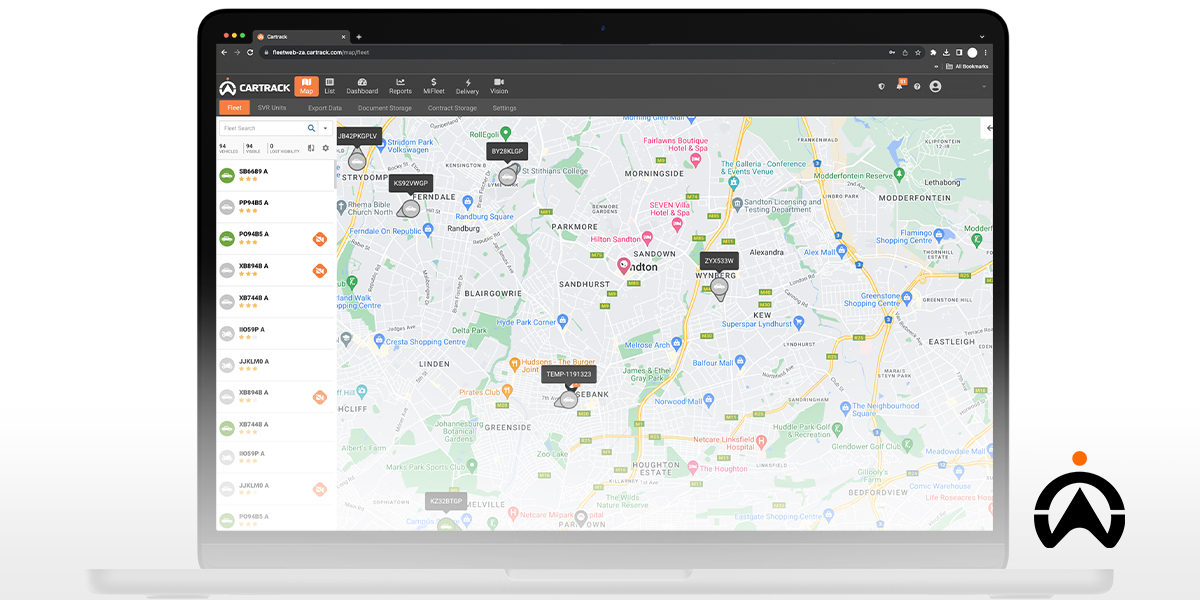
Improve supply chain efficiency with logistics fleet management from Cartrack Indonesia
Here are 6 fleet management solutions to help logistics businesses:
Delivery App Cartrack
Simplify your logistics business deliveries with Cartrack's Delivery App. Designed for fleet managers and drivers, Cartrack Indonesia offers an intuitive and easy-to-use platform for managing deliveries, from scheduling to tracking and payment. It features route optimisation to help avoid travel delays, reduce fuel costs and boost efficiency. By analysing distance and travel time, this feature helps fleets achieve faster, more efficient delivery times. Route optimisation ensures logistics companies stick to set arrival times and reach more delivery points using less fuel.
Real-time GPS tracking
Unlock top-notch security for vehicles, assets and goods with live tracking from Cartrack. Use GPS (Global Positioning System) technology to see where all your vehicles and drivers are in real-time. This level of insight lets you optimise fleet performance by giving key metrics like distance travelled, speed, rest times, fuel levels and idle periods. This info not only allows you to keep tabs on your assets efficiently but also gives full control over logistics operations and boosts overall safety for the vehicles and goods being transported.
Preventive care
Avoid unexpected downtime and cut maintenance costs with preventive care from Cartrack Indonesia. The system sends real-time diagnostic notifications for mechanical issues, including engine problems and worn brake pads, helping fleet managers quickly identify vehicles that need servicing to prevent costly repairs and accidents. The platform also tracks each vehicle's usage hours to automate maintenance schedules and help simplify the maintenance process.
Fuel monitoring
Cartrack Indonesia's fuel monitoring system is designed to help optimise fuel consumption. Get real-time data on fuel use per kilometre and per job with daily, weekly, or monthly reports. These reports provide full insights into fleet fuel consumption and help spot sudden spikes in fuel usage. It's easy to identify potential fuel fraud with this system, which automatically matches fuel receipts with vehicle locations and fuel status. Recognise drivers with excessive idle time, allowing fleet managers to provide training and guidance to improve driving behaviour and reduce fuel consumption.
Special sensors
There are various sensors from Cartrack Indonesia that can be used to enhance security for every delivery. First, use the cargo door sensor to get real-time alerts whenever the cargo door is opened, helping fleet managers carefully monitor the cargo and keep it safe. Second, use the temperature sensor to keep the cargo fresh and get instant alerts when temperature fluctuations are detected. Third, use the rear door sensor to monitor the security of heavy cargo and receive instant alerts when the trailer's rear door is activated, indicating that the cargo is being accessed.
Live-streaming Camera
Get full visibility over your cargo using Live Vision, the advanced camera from Cartrack Indonesia. This cloud-connected video management solution uses real-time alerts and smart detection to keep your goods safe. The Live Vision camera with live-streaming technology also comes with AI that monitors driver behaviour such as lack of focus, speeding, smoking, and mobile phone use. The AI-powered technology features real-time audio alerts inside the cabin, notifying drivers when these behaviours are detected so they can correct them immediately and avoid accidents or collisions.
Integrate fleet management into your logistics business and optimise all your operations today! Powered by technological advancements from Cartrack Indonesia, keep supporting the growth and adaptability of the logistics sector.
Contact Cartrack Indonesia now to stay ahead in the logistics business in Indonesia! Click the following link!