EN
EN  ID
ID 


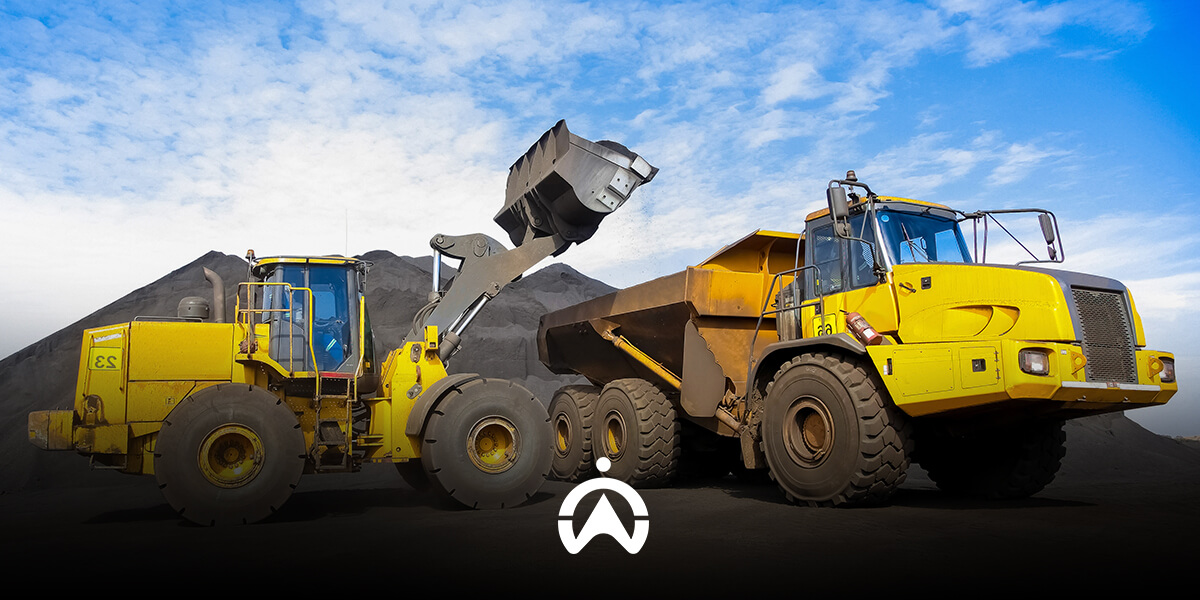
Heavy equipment plays a vital role in various sectors, from construction and mining to logistics. Each type of heavy equipment has its own specific function, and understanding these can help you choose the most suitable unit for a specific project.
On the other hand, the use of heavy equipment also requires proper fleet management to prevent operational costs from escalating and minimise downtime. Using Fleet Management System technology, you can comprehensively manage your heavy equipment fleet.
Types of Heavy Equipment Based on Their Function
There are many types of heavy equipment used for various needs, the following are the types of heavy equipment based on their function.
Heavy Equipment for Earthworks
Heavy equipment in this category is used for digging, moving, or leveling land. Some types of heavy equipment include:
1. Excavator
An excavator is a heavy equipment used for digging, trenching, and moving materials. This equipment has a boom, arm, and bucket, which are used to dig or move materials.
2. Buldoser (Bulldozer)
This tool is used to push soil, level areas, or clear land. The front of the bulldozer has a blade, which is used to push material during the leveling process.
3. Loader
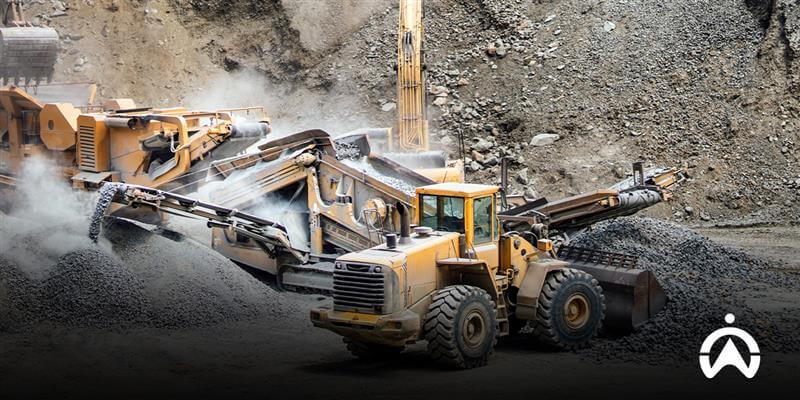
As the name suggests, a loader is a tool used to move materials such as soil, sand, or gravel into trucks or other heavy equipment. There are many types of loaders, but they are generally equipped with a wide bucket at the front.
Read Also: How to Calculate Engine Hours and Why It's Important for Fleet Business
Heavy Equipment for Material Transfer
The next type is heavy equipment that is used to lift and move materials in certain areas such as warehouses, ports, or construction areas.
4. Derek (Crane)
A crane is a machine used to lift and move materials vertically or horizontally. A crane has a boom, jib, and hook for attaching the object to be moved.
5. Forklift
A forklift is a tool used to lift and move pallets, boxes, or other items within a work area, such as a warehouse. The most prominent feature of this tool is the fork-shaped part, which can be raised and lowered as needed.
6. Telehandler
A telehandler is a combination of a forklift, with a distinctive fork-like front end, and a crane. The crane mast on this device allows for more flexibility than a standard forklift, making it suitable for a wider range of projects.
Construction Vehicles
Construction vehicles are heavy equipment used for various construction needs, such as dump trucks, cement mixer trucks, and tanker trucks.
7. Dump Truck
A large truck used to transport and move materials such as soil, sand, and rocks. The bed of this truck can be tilted to dump the material it is transporting.
8. Cement Mixer Truck
Concrete mixer trucks are equipped with special barrels for mixing and transporting concrete to ensure it remains fluid upon arrival at the project site. These trucks are equipped with a hydraulic system that allows the barrel to rotate continuously.
9. Tanker Truck
A truck equipped with a large tank to carry large quantities of liquids or gases. In construction projects, these trucks are commonly used to carry water for mixing cement or other liquid chemicals that may be needed during the project.
Heavy Equipment for Road Construction
The following are several types of heavy equipment commonly used in road construction projects.
10. Grader
A grader, or leveling machine, is a heavy piece of equipment used to level the ground or road surface at road or mining projects. The undercarriage of this vehicle is equipped with a blade that functions to level the ground.
11. Asphalt Paver
This machine is used to evenly spread asphalt on road construction projects. One of the key features of this heavy equipment is its hopper (asphalt reservoir) and auger (screw) for evenly spreading the asphalt.
12. Road Roller
The road roller's distinctive feature is the vibratory drum (a compacting cylinder) at the front of the vehicle. This drum allows the vehicle to compact asphalt that has been spread using an asphalt paver.
Heavy Equipment for Mining
Heavy mining equipment typically requires enormous lifting capacity and high durability. Here are some examples.
13. Mining Truck (Haul Truck)
Mining trucks are jumbo-sized trucks designed to transport enormous quantities of mining materials. These trucks are so large that they can carry up to 400 tons of material in a single trip.
14. Hydraulic Drilling Rig
As the name suggests, this tool is used to drill through soil and rock, both for mining and land clearing. This machine can move using a crawler (tracked wheel) which is suitable for mining sites.
15. Dragline Excavator
A specialised excavator typically used for digging in hard-to-reach, open areas. Unlike conventional excavators, which use hydraulic systems, this excavator uses a crane and cable system to lift its large bucket.
See Also: Heavy Equipment GPS to Prevent Misuse and Theft
Heavy Equipment Fleet Management Challenges
Heavy equipment operations are not only influenced by the selection of the right unit, but also various other challenges, such as:
1. High operational costs
Fuel is one of the largest expenses when your business uses heavy equipment for operations. Furthermore, maintenance costs, replacement parts, and repairs for unexpected damage are also potential significant expenses.
2. Downtime due to damage
Sudden unit failure will delay a project, especially if the damaged equipment plays a crucial role in the field. You could use another unit, which would also mean incurring additional costs to transport the unit to the site.
3. Difficulty in monitoring in the field
It's not uncommon for heavy equipment to be used in remote areas, making it difficult to monitor manually. When projects are conducted in rural areas, heavy equipment can potentially be used outside of working hours for side projects that are detrimental to the company.
4. Job security
The use of heavy equipment carries the risk of workplace accidents and violations of company regulations if not monitored. This will undoubtedly increase operational costs for fuel and maintenance.
5. Unit usage is not optimal
Another challenge in heavy equipment fleet management is uneven use of equipment, with some equipment being used frequently or infrequently. This can also be addressed with effective fleet management that maximises the use of all units.
See Also: 3 Benefits of GPS Trackers for Heavy Equipment Rental Companies
Heavy Equipment Fleet Management from Cartrack
For companies renting various types of heavy equipment, or for companies owning multiple units, fleet management is certainly a challenge. Therefore, Cartrack offers solutions to every fleet management challenge.
Some of Cartrack's superior features for heavy equipment fleets include:
-
GPS Tracking: Real-time tracking of heavy equipment to prevent theft and misuse of vehicles.
-
Fuel Monitoring: Fuel monitoring to prevent fuel waste, misuse, and theft.
-
AI & Non-AI Camera: Camera solutions for visual monitoring of fleets to ensure vehicles are operating as they should.
-
Power Take Off Sensor: A special IoT sensor to ensure that heavy equipment does not move while it is working by using certain additional parts.
-
Cement Rotation Sensor: A special sensor to ensure the rotation of the drum on the cement mixer truck during the trip to the project location.
-
Tailgate Monitoring: Monitoring truck loading and unloading activities by tracking the tailgate activity of the rear door of the vehicle.
-
Driver Identification: A special identification mark to ensure that heavy equipment is only operated by authorised staff.
Easily monitor your various types of heavy equipment with Cartrack fleet management. Get comprehensive monitoring starting at IDR 150,000/unit/month, with prices varying depending on the package chosen and the number of vehicles.
Complete your personal data in the form on this page so that our staff can contact you to provide the best offer.