EN
EN  ID
ID 



What is fleet sustainability in business?
Before we reveal how to make a business more environmentally friendly, let's first understand what fleet sustainability is in business.
Fleet sustainability refers to the process of reducing the negative impact of fleet operations on the environment by introducing environmentally friendly/sustainable practices and advanced technologies.
By 2024, more businesses will be interested in improving fleet sustainability to help the environment. Businesses are faced with concerns about how to make their fleets greener and how much it will cost to implement greener solutions.
Fleet sustainability challenges in business
Businesses have a responsibility to ensure that their fleet operations have a more positive impact on the environment. Fleet sustainability is currently a key challenge for businesses, as more policies and regulations require them to strive to develop environmentally friendly fleets.
A fleet sustainability strategy has value for businesses faced with:
-
High levels of carbon emissions
-
Inefficient fuel consumption practices
-
Reckless driver behaviour and poor productivity
-
Compliance with regulations
-
Eliminate paper-based processes
Given these challenges, it would be a mistake to think that electric vehicles are the sole solution to fleet sustainability. While fleet electrification is an excellent opportunity for businesses to go green, there are more direct ways for businesses to improve their sustainability practices.
Fleet managers are the starting point for sustainable fleet operations for businesses, here's why!
The role of managers in sustainable fleet management
Fleet managers oversee all movements and activities of fleet vehicles and their drivers to ensure deliveries are made and jobs are completed on time. They also ensure drivers remain safe by practicing good driving behaviour and complying with regulations.
Overseeing all fleet operations can sometimes be a tiring and confusing task. For efficiency, fleet managers use a fleet management system to improve the visibility and management of their assets.
With the use of a fleet management system, fleet managers can:
-
Reduce total fleet costs
-
Improve fuel efficiency and cut fuel costs
-
Monitor vehicle movement
-
Optimising delivery
-
Improving fleet safety
-
Improving driver retention
-
Set up a vehicle maintenance schedule
-
Comply with regulations for drivers and vehicles

Five guaranteed ways to make your fleet greener
The best way to create an eco-friendly fleet is by developing a sustainable fleet management strategy, which of course involves a few things. Here’s how to make your fleet more environmentally friendly:
1. Reducing Carbon Emissions
According to Our World in Data, transport accounts for about 20% of total global carbon dioxide (CO2) emissions. 15% of this comes from land travel, through cars and buses carrying passengers, as well as trucks transporting goods. Stats like this show why the transport industry needs to adapt to help protect the environment.
Companies across all industries and sectors must understand the carbon emissions from their operations and how to calculate their carbon footprint. This way, companies can understand how carbon emissions contribute to global warming.
High carbon emissions mean a business has unsustainable practices, and is negatively contributing to the environment and worsening global climate change.
Here are some simple ways to quickly lower your fleet's carbon emissions:
-
Introduction of low or zero emission vehicles
-
Ensure fleet size meets requirements
-
Track fuel usage
-
More efficient route planning
2. Improve Fuel Management
Reducing carbon emissions goes hand in hand with fleet fuel efficiency. Without an efficient fuel management strategy, businesses will experience excessive fuel consumption, high fuel costs, fuel theft, fuel card fraud, and other losses.
In addition, several driver behaviors and maintenance issues also contribute to high fuel consumption in fleets, such as:
-
Unnecessary idling
-
Excessive speed
-
Poor tire condition
-
Neglected care
-
Shorter travel distance
-
Broken machine
-
Bad driving habits (gear, clutch use)
-
Overload
By improving fleet management with fuel management, the company will benefit from lower costs and fuel consumption. More importantly, the company will adopt sustainable green practices by reducing fuel use and cutting unnecessary fuel emissions.
3. Maintain Vehicle Maintenance
Environmental sustainability can be improved through proper vehicle maintenance. Through regular maintenance, businesses can extend the lifespan of their vehicles and, as a result, ensure their fleet's carbon footprint remains stable.
Because vehicles wear out over time, vehicle maintenance can help businesses manage fleet wear and tear. Did you know that vehicle issues like engine failure, worn brakes, gears, and clutches also contribute to a fleet's environmental impact? One of the benefits of vehicle maintenance is how it improves a fleet's environmental sustainability.
Well maintained vehicles:
-
Improving fleet life cycle
-
Helping fleets burn less fuel
-
Reduce total fleet costs
4. Telematics Solutions
Telematics is a technology that uses telecommunications and informatics to collect GPS fleet tracking data and various other vehicle information. The information obtained from fleet management systems or telematics solutions can be used to help businesses implement green solutions.
Telematics systems work by collecting and organising all the data needed to understand the fleet. By using a telematics system, you can get detailed information about vehicle speed, braking, and the areas the vehicles travel through. Use fleet technology to track emissions, idling, and other metrics as part of an eco-friendly fleet operation.
5. Improve Driver Behaviour
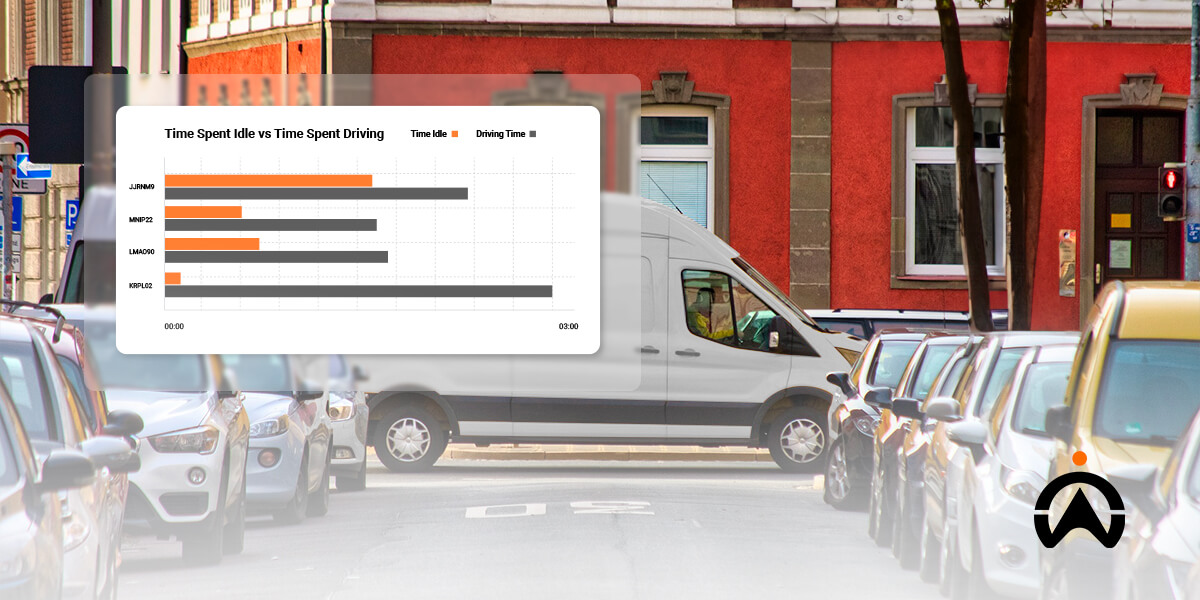
Did you know that speed, idling, poor driving techniques and habits can waste your fleet's fuel? Also, bad driving habits can lead to pollution. According to the Energy Department, idling for more than 10 seconds uses more fuel and produces more emissions than stopping and restarting the engine.
Do electric vehicles guarantee lower fleet CO2 emissions?
Electric vehicles (EVs) are revolutionising the way businesses operate, offering sustainability, cost savings, and competitive advantages. But what exactly are electric vehicles, and does their use guarantee lower fleet CO2 emissions?
Electric vehicles, commonly referred to as EVs, are vehicles designed to operate entirely or partially using electricity as their primary power source. Unlike conventional vehicles, which rely on gasoline or fossil fuels, electric vehicles use electric motors that draw energy from rechargeable batteries or fuel cells.
There are two types of electric vehicles:
-
Battery Electric Vehicles (BEVs): These are powered entirely by electricity stored in batteries.
-
Plug-in Hybrid Vehicle (PHEV): This has an electric motor and a regular gasoline/diesel engine.
Adopting low or zero emission vehicles has many benefits for businesses:
-
Positive impact on the environment
-
Sustainable energy sources
-
Reducing fleet fuel costs
-
Reduce maintenance costs
But this is often the most difficult solution to implement for business sustainability. Here are some factors that hinder this implementation:
-
High prices of electric vehicles
-
Availability of charging stations for vehicles
-
Battery breakdown and replacement costs for vehicles
While purchasing an electric vehicle may seem like the only impactful solution to improving sustainability in business.
There's another solution that companies often overlook which they can easily adopt, and that's a fleet management system.
Four ways Cartrack Indonesia fleet management software runs a sustainable business
Effective fleet management software can help businesses achieve sustainability and implement sustainable strategies for their fleets. Here are some ways Cartrack Indonesia's fleet management system helps achieve business sustainability:
Preventive Care
Cartrack Indonesia's fleet management system helps take care of all your fleet maintenance needs. Fleet managers can set up maintenance schedules, track maintenance intervals, and get reminders for service and repair dates. Plus, fleet managers can get real-time alerts about vehicle conditions like engine failures, brake pads, oil and water fluctuations, and other vehicle diagnostics. Preventive maintenance is a great way to keep your fleet in top condition for operations, and doing this helps ensure your fleet has a lower carbon footprint and reduces greenhouse gas emissions. Well-maintained fleets also minimise the negative impact of vehicles on the environment.
Route planning
Companies using Cartrack Indonesia's route optimisation feature have been shown to save more fuel. This is because Cartrack Indonesia's route optimisation tool selects the best route for drivers, allowing them to avoid traffic jams or drive shorter distances to reach their destinations. Route planning helps ensure fleets reduce their carbon footprint and fuel consumption. These two features can help businesses instill sustainable driving practices to reduce their impact on the environment.
Monitor Driver Behaviour
Reduce your carbon footprint by monitoring driver behavior. Driver behaviour reports from Cartrack Indonesia are sent directly to fleet managers, allowing them to identify when drivers are speeding, braking hard, idling for long periods, or driving recklessly. Monitoring driver behaviour helps fleet managers identify driver training needs and ensure safer and more environmentally friendly driving practices are implemented within the business.
Fuel Management System
Cartrack Indonesia's fuel monitoring system helps businesses easily track their fuel consumption, fuel costs, and fuel waste. Fuel monitoring accurately monitors fuel consumption with per-kilometer reporting. The fuel monitoring system enables fleet managers to easily identify and address fuel waste and uneconomical driving issues, helping to achieve a greener and more sustainable fleet.
What are the benefits of implementing sustainable practices in business?
Implementing sustainable practices isn't just an ethical obligation for businesses, or a box they can check to say they've done their part. Sustainable practices benefit not only the environment but also businesses.
Here are some of the benefits of adopting an environmentally friendly fleet:
- Improve fuel economy Since fuel is one of the largest costs for a fleet, adopting sustainable practices, such as fuel management, route optimisation, and environmentally friendly driving practices, will reduce fuel costs and improve your fleet's fuel economy.
- Less fleet maintenance Through preventative maintenance and keeping track of fleet needs, businesses can ensure fleets run smoothly. Ultimately, fleets will benefit from reduced maintenance and fewer unexpected costs.
- Improve reputation Using an eco-friendly fleet demonstrates a business's concern for its environmental impact. This will undoubtedly enhance its reputation with partners, customers, and other companies.
Make your vehicle environmentally friendly with Cartrack
Make your business sustainable and eco-friendly with Cartrack! Find out more by clicking the link below!