EN
EN  ID
ID 


What is the total fleet mileage?
Fleet mileage refers to the total distance traveled by a fleet of vehicles over a given period. It is an important metric for assessing vehicle usage, monitoring fuel consumption, determining maintenance needs, and overall operational efficiency, typically measured in kilometers.
What is fleet travel expense tracking?
Travel cost tracking for a fleet is the practice of maintaining records of the distance travelled by each vehicle within a fleet. Its purpose is to support tax deductions and help fleet managers optimise routes, reduce operational costs, and improve overall fleet management. Travel-related expenses include tracking fuel costs, maintenance, repairs, and other operational costs that are directly associated with vehicle mileage. Fleet travel cost tracking can be carried out manually or through the use of fleet management software, which automates the process and provides valuable insights for managing fleets more efficiently.
Benefits of fleet travel expense tracking
Fleet travel expense tracking is a valuable tool for running a fleet effectively. Here are some of its benefits:
- Cost management: Fleet mileage tracking is crucial for accurately budgeting and forecasting fleet costs, including fuel, maintenance, and other vehicle-related expenses. By accurately monitoring mileage costs, you can ensure your fleet is operating within its budget while identifying areas of inefficiency that require cost-saving measures. These measures can range from optimising routes and minimising fuel consumption to scheduling preventative maintenance and reducing vehicle usage.
- Reduce mileage: Fleet travel expense tracking plays a crucial role in reducing vehicle mileage by providing valuable insights into vehicle usage patterns and operational inefficiencies. By analysing detailed mileage data, fleet managers can identify areas for optimising fleet efficiency. An example of this is using real-time GPS tracking to implement route optimisation strategies, which helps avoid traffic congestion, which can significantly increase fleet mileage and vehicle wear and tear.
- Monitoring driver performance: Fleet trip expense tracking plays a significant role in understanding how drivers operate behind the wheel. By identifying and addressing the root causes of increased mileage, whether due to inefficient driving behavior or unauthorised vehicle use, fleet managers can ensure their drivers are operating safely and efficiently. To provide more detailed reporting, it can be integrated with other systems to provide a comprehensive solution for tracking and managing driver behavior. Trip expense tracking simplifies managers' calculations of fuel consumption and associated costs for each driver, enabling performance comparisons and creating tailored solutions for each driver.
- Optimising operations: Fleet travel expense tracking provides fleet managers with comprehensive insights into vehicle utilisation levels and associated costs. This makes it easier for them to identify inefficiencies, streamline processes, and make data-driven decisions that are crucial to maximising fleet productivity and efficiency. The benefits of tracking fleet travel expenses can have a significant positive impact on a fleet, and the best way to achieve these benefits is by implementing a fleet management system.
What is a fleet management system?
A fleet management system is a comprehensive software solution designed to simplify and optimise the management of a fleet of vehicles. It allows businesses to track vehicle location, mileage, and other data, helping streamline the fleet management process. Fleet management is the process of overseeing and coordinating various types of fleet vehicles. Key aspects of fleet management generally include vehicle tracking, vehicle acquisition, maintenance, driver tracking, and monitoring. A fleet management system streamlines all these processes, bringing them all together on a simple, easy-to-use platform, and helps improve fleet efficiency.
What are the elements of effective fleet management?
Real-time tracking: A crucial element of effective fleet management, real-time tracking involves the use of GPS technology to monitor the speed, location, and performance of fleet vehicles in real time. This plays a crucial role in providing fleet managers with a comprehensive view of their fleet's overall operations, making it easier for them to make informed decisions and optimise fleet performance.
Route optimisation: Route optimisation is closely related to real-time GPS tracking. Route optimisation focuses on finding and selecting the most efficient and cost-effective routes for fleet vehicles to travel for business purposes. Using GPS technology, advanced algorithms, and real-time road data, route optimisation not only identifies the shortest, fastest, and most fuel-efficient routes for drivers to reach their destinations but also prevents route deviations, which are a major cost driver for fleets.
Fuel monitoring: Fuel monitoring is a crucial element of effective fleet management, as it directly impacts operational costs and environmental sustainability. By closely monitoring fuel consumption, fleet managers can identify areas for improvement and implement strategies to reduce fuel use, ultimately resulting in cost savings. Fleet management system capabilities can provide real-time fuel consumption insights, streamlining the entire process.
Driver monitoring: Drivers are a critical part of a fleet, with their behavior having a significant impact on fleet success and efficiency. Effective fleet management requires integrating driver monitoring, as it helps fleet managers gain real-time insights into driving behavior, vehicle status, and operational efficiency, ultimately leading to improved safety, reduced costs, and increased fleet productivity.
What are the 3 main benefits of a fleet management solution?
Fleet management solutions are the key to a highly effective fleet, offering a wide range of benefits. Here are three key benefits that can improve overall fleet operations:
- Driver behavior improvements: Fleet management utilises various mechanisms designed to monitor driver safety and efficiency, including in-cab cameras and GPS tracking technology. This allows for real-time monitoring of driver performance metrics such as speed, acceleration, and braking. By triggering real-time alerts when abusive driving is detected, drivers can immediately correct their behavior. Fleet managers can then review these incidents, assist in developing customised driver training, and assist in improving driver behavior and overall fleet safety.
- Improved customer service: One of the biggest selling points of a fleet management solution is the complete visibility it provides managers. By helping fleet managers know exactly where all vehicles are at all times, fleet managers can provide customers with accurate information regarding deliveries and estimated times of arrival (ETAs). This allows them to optimise their routes based on real-time traffic and weather conditions.
- Increased fuel efficiency: Fleet management solutions provide detailed insight into how much fuel each vehicle is consuming. No more running to each vehicle at the end of the day to guess the fuel gauge. By helping assess driver behavior, fleet managers can identify and eliminate fuel-wasting behaviors, such as over-driving, ensuring the fleet remains fuel-efficient.
How fleet management can help simplify travel expense management
Automatic mileage tracking: Fleet management systems automate mileage tracking by using GPS technology to track the location and distance traveled by each vehicle. This data is automatically recorded and stored on the fleet platform, eliminating the need for manual mileage records. This is not only more convenient but also ensures accuracy in mileage tracking.
Real-time vehicle monitoring: Powered by GPS tracking technology, the fleet management system provides fleet managers with real-time data on vehicle location, speed, and status. This helps fleet managers easily verify mileage claims and ensure compliance with company policies.
Route optimisation: By providing real-time data on vehicle location, fleet management systems can suggest or optimise routes based on factors such as traffic conditions, distance, and fuel efficiency. This plays a crucial role in reducing mileage by finding the most efficient routes for drivers.
Expense reporting: By automating data collection, fleet management systems can generate detailed mileage reports for each vehicle or driver, simplifying the tracking and recording of trip expenses and facilitating the reimbursement process.
Integration with accounting software: Many fleet management systems integrate with expense management platforms, which help simplify the reimbursement process by automatically transferring mileage data and expense reports.

Here are some of the advantages of the fleet management system from Cartrack Indonesia:
- Driver behaviour monitoring: Track abusive driver behaviour with the Cartrack Indonesia driver scorecard. Driver behaviour can significantly impact vehicle mileage, with abusive driving behaviours like high speeding and harsh acceleration reducing fuel economy by up to 30% at highway speeds, and up to 40% in stop-and-go traffic. Use the Cartrack Indonesia driver scorecard to monitor high-risk driving behaviours like excessive speeding, harsh braking, long drives, and sudden acceleration. By providing this detailed insight into driver performance, fleet managers can identify behaviours that may be causing increased vehicle mileage and develop tailored solutions to correct them.
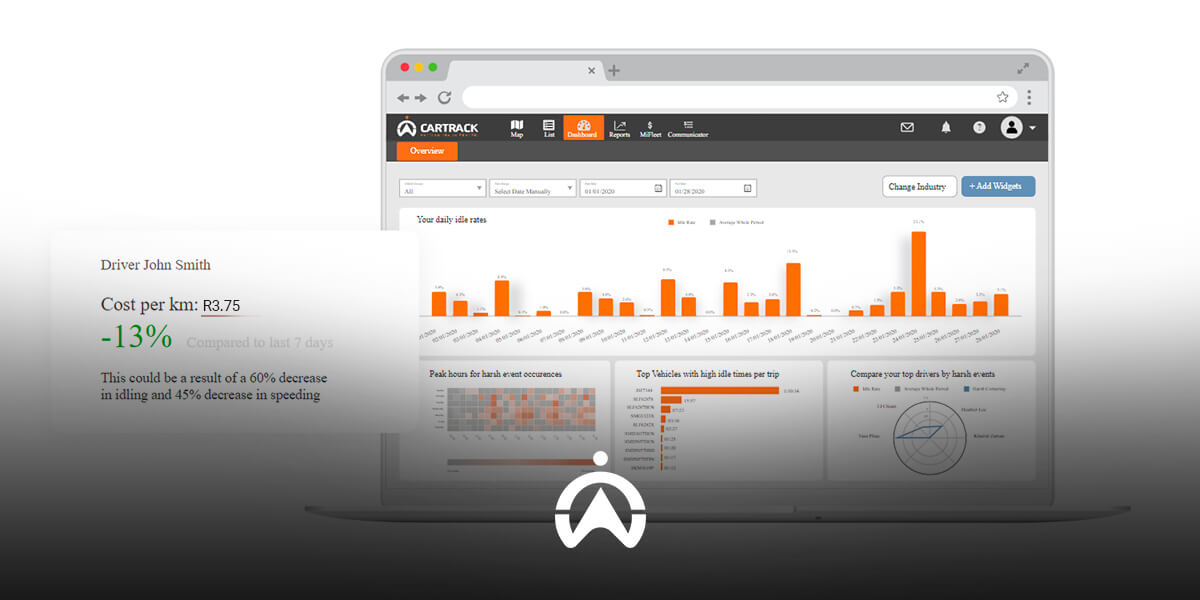
- MiFleet: Know exactly how much your fleet needs to operate effectively with MiFleet Cartrack. This easy-to-use vehicle cost accounting software simplifies fleet, driver, and operating cost management. By integrating, digitising, and automating fleet administration and cost analysis, this tool helps you understand fleet operating costs and accurately determine trip costs.
- GPS vehicle tracking: Know exactly how vehicles are being operated with our real-time GPS tracking. Our system doesn't just tell you where vehicles are in real-time. With access to a vehicle's complete trip history, fleet managers can track drivers' locations, along with gaining insights into driver status, fuel levels, and engine diagnostics. By knowing exactly how long drivers are operating vehicles, fleet managers will receive accurate reports on fleet travel costs.
Calculate fleet travel costs accurately with Cartrack Indonesia. A leading solution designed to help simplify the entire process.
Contact Cartrack today to save on your fleet's travel costs! Click the link below!