EN
EN  ID
ID 



For business owners who use operational vehicles, fuel consumption is undoubtedly a major concern. It's estimated that fuel costs can reach 30%–60% of total operational delivery expenses.
Therefore, businesses that do not record and manage their fuel expenses may continue to experience losses without realising it. So, how can this be addressed? In this article, we will introduce a fuel management solution known as a fuel management system.
What is a Fuel Management System?
A fuel management system is a combination of hardware and software used to optimise fuel usage. This system is used by industries that rely on operational vehicles, such as mining and transportation.
By using a fuel management system, you can monitor factors such as fuel consumption and engine performance. Both can help ensure that fuel is being used efficiently.
Read Also: Understanding Transportation Management Systems and Their Benefits for Businesses
How does a Fuel Management System work?
Fuel management systems generally work alongside fleet management systems to manage vehicles as a whole. The fuel management system reads data from telematics devices such as fuel sensors and GPS tracker.
This data is then processed and translated into easy-to-understand formats on dashboards and automated reports. This allows you, as a fleet manager or business owner, to analyse and make decisions about efficiency.
There are several main components needed in a fuel management system, namely:
-
Fuel sensor (fuel sensor) → A sensor installed in the tank to measure fuel entering, leaving, and being used.
-
GPS Tracker → Functions to track vehicle position and calculate fuel efficiency based on route and speed.
-
Control unit → Functions as a “brain” that collects data from sensors and GPS, then sends it to the central system.
-
Dashboard/software monitoring → A place for users to view real-time data and reports on fuel consumption, trip history, fuel refills, and so on.

What Are the Benefits of a Fuel Management System?
The use of a fuel management system is certainly highly beneficial for those who want to prioritise efficiency. Some of the benefits you can gain include:
1. Improved driver behaviour
Certain driving behaviours can affect fuel usage, such as excessive idling, frequent speeding, and harsh braking. A fuel management system allows you to monitor driver habits that lead to fuel wastage.
2. Reducing human error
Fuel management system technology simplifies administration and speeds up operations. Accurate and automated data management eliminates manual work, reducing human error.
3. Preventing fuel theft
You can integrate your fleet management system with fuel cards, allowing you to track and match fueling locations. You can also detect potential fuel theft early by monitoring tank levels.
4. Reducing maintenance and repair costs
The use of telematics to monitor fuel can help prevent sudden fleet breakdowns. You can quickly identify minor issues and fix them early, helping to avoid unexpected major repairs.
Read also: 4 Functions of Fuel Sensors in a GPS Tracking-Based Fleet Management System
What Kind of Business is a Fuel Management System Suitable for?
A fuel management system can be applied across all industries that rely on vehicle fleets for their core operations. Some of the business sectors that commonly use fuel management systems include:
-
Logistics → Improves operational efficiency and fuel usage by optimising delivery routes.
-
Car rental and heavy equipment → Track fuel usage by users and monitor risky driving behaviour.
-
Transportation → Improve security and prevent fuel theft, both by internal and external parties.
-
Company vehicles → Monitor fuel consumption, prevent misuse, and improve efficiency.
Optimise Fuel Savings with Cartrack
Cartrack's telematics fuel monitoring has helped companies across industries ranging from transportation and construction to mining save fuel. Some of Cartrack's fuel management solutions include:
MiFleet
Cost management software that allows you to detect fuel theft by validating transactions with vehicle telematics data. Validated data includes location, remaining fuel, and tank capacity.
MiFleet also allows you to receive alerts if potential theft or fraud is detected, enabling you to investigate further.
Fuel Sensor
With Cartrack, you have a choice of fuel monitoring devices or sensors that will help you know how much fuel is left in the tank.
-
Fuel Analog: Uses a float sensor in the vehicle’s fuel tank and connects it to an IoT device to translate the readings into easy-to-understand data.
-
Fuel Probe: Uses Cartrack hardware, namely a fuel probe, to measure the fuel level in the tank. Data from the fuel probe is also integrated into the telematics system, which can be monitored via a dashboard.
-
CANBus: CANBus connects the systems within a vehicle so they can “communicate” with each other. This allows the vehicle to detect fuel requirements more easily, and the data is then stored and sent to the dashboard.
Also Read: Monitoring Fuel Consumption with Fuel Sensor and Fuel Probe
Route Optimisation
Cartrack’s route optimisation helps drivers complete tasks using routes that reduce travel distance and fuel consumption. This helps prevent inefficient route choices that can lead to unnecessary fuel wastage.
Fleet Camera
You can also install external cameras mounted outside the vehicle, including on the fuel tank cap. This allows your fleet to be more closely monitored and helps minimise theft caused by insufficient security systems.
Driver Scorecard
As the name suggests, a driver scorecard reports data on driving behaviour, such as speeding, sudden braking, and sharp, fuel-guzzling turns. You can then use this data to train drivers to improve their driving performance.
Advantages of Fuel Monitoring from Cartrack
In addition to relying on the functional features above, Cartrack's fuel monitoring also has the following advantages:
-
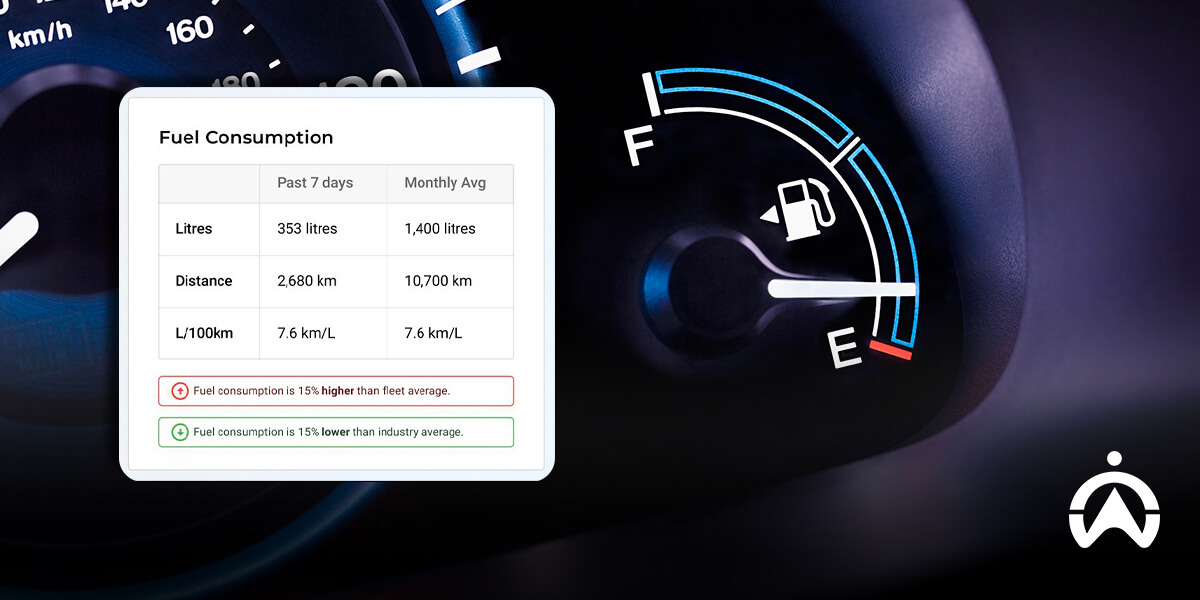
Time and distance tracking → You can track your fleet's fuel consumption based on time and distance traveled.
-
Anomaly Notifications → You can set up notifications if there's a sudden fuel drop above 10% capacity. This way, you can investigate potential fuel theft or fraud.
-
Daily/weekly reports → Receive automated weekly or monthly reports to gain insights into fuel usage for efficiency analysis.
-
Integration into fleet systems → Cartrack's fuel monitoring is integrated with the fleet management system, including a GPS tracker and other features.
These advantages will certainly make your monitoring more optimal and the data you obtain more comprehensive.
Read Also: Easy Ways to Calculate Fleet Fuel Consumption
A fuel management system allows you to manage your fleet's fuel more efficiently. This system is typically used in conjunction with fleet telematics such as GPS trackers, fuel sensors, and so on.
Cartrack's comprehensive solution offers a fuel management system that is integrated with the fleet management system. You can obtain data and validate it more accurately because of the interconnected systems.
For business owners who want to manage vehicles and fuel more efficiently, Cartrack’s fleet management solution is the right choice. Click the following link to receive a special offer for your business!
Read also: What Is a Fuel Management System and What Are Its Benefits?