EN
EN  ID
ID 


Why AI and ML important?
From using facial recognition to unlock our smartphones to asking Siri, Alexa, and Google Assistant to play our favourite songs, AI and ML have become part of our everyday lives. AI has many reasons why it is important in today’s world:
- Repetitive and manual tasks can be automated: AI and ML automate repetitive manual tasks such as business administration (filing, data entry, and scheduling meetings). This improves efficiency and productivity while saving time and money spent on human resources.
- Smarter products: By adding intelligence such as voice and speech recognition, as well as virtual assistance to existing products, AI and ML have opened up a world of advanced products and innovations. These products have enhanced the business world—from biometric systems for tighter security to data and behavioural analytics for detecting and preventing fraud.
- Customer service becomes instant and better: Thanks to AI and ML, chatbots can quickly process requests and answer questions accurately 24/7, allowing customers to get the help they need instantly. This automation of customer service saves time on routine tasks, reduces costs, and gives employees the freedom to focus on more complex tasks.
- Data becomes valuable: Data in today’s business environment is more important than ever as it can provide a competitive advantage. Fortunately, AI and ML have the ability to process large volumes of data. This data can be used to make accurate and informed business decisions.
- Personalised customer journeys: AI and ML enable the analysis of customer purchase history, shopping habits, search history, and other data. With this, businesses can personalise products and services to better suit existing customers and attract potential customers. A personalised customer journey not only improves customer satisfaction and brand loyalty but also increases sales.

How Artificial Intelligence (AI) and Machine Learning (ML) Are Used in Fleet Management
AI and ML have opened up new possibilities in the development of fleet management software. Let’s take a look at how different fleet industries use AI- and ML-powered fleet management software in their fleet operations:
Rental and Leasing
The use of AI and ML in the car rental and leasing industry is rapidly growing to enhance customer experience and business performance. Some of the ways AI and ML are being used in this industry include:
-
Customer service: Instead of visiting a car rental and leasing company, customers can interact with AI-powered chatbots and virtual assistants to book vehicle rentals, receive answers to frequently asked questions, and access personalised packages based on their preferences and rental history.
-
Predictive maintenance: Car rental and leasing companies can perform preventive maintenance to ensure vehicles are in optimal condition for rental or lease. This preventive maintenance uses AI and ML algorithms that analyse data such as vehicle mileage and the date of the last service to predict when a vehicle may require maintenance. In this way, rental and leasing companies can reduce breakdowns while vehicles are rented or leased, improve vehicle reliability, and increase customer loyalty.
-
Competitive pricing: By using AI and ML algorithms, rental and leasing companies can offer competitive prices by relying on vehicle preference data, demand, and rental and leasing habits to set strategic prices, as well as detect and report fake credit cards or false IDs, keeping losses minimal and prices competitive.
Construction
Construction companies are increasingly relying on AI and ML to improve safety, enhance efficiency, and reduce costs. Here are some of the ways AI and ML are being used in the construction industry:
- Improved safety: Given the nature of the construction industry and the high potential for safety hazards that can lead to accidents, injuries, and fatalities, construction companies must follow strict safety protocols. AI and ML technologies (such as AI-powered cameras) can detect and alert workers to potential safety hazards, including falling objects, unsafe working conditions, and individuals not wearing protective equipment. This helps reduce the number of accidents, injuries, and fatalities that may occur on construction sites.
- Resource optimisation: AI and ML systems can maximise the use of resources by scheduling equipment, vehicles, and labour efficiently. Large construction companies working on major projects, multiple projects, or renting out their assets to other businesses use AI and ML systems to avoid project scheduling conflicts and ensure that assets are utilised efficiently and productively.
- Quality control: Construction companies must ensure that all projects are completed to the highest standards. AI and ML can be used to monitor the construction process from start to finish. Data from sensors (for example, temperature sensors used to monitor site temperature, humidity, and vibrations) is analysed by AI and ML algorithms to detect even the smallest changes quickly and accurately, and to predict potential issues before they arise, enabling better quality control.
Transportation and Logistics
With the growth of e-commerce and increasing expectations for fast delivery times, goods are no longer simply moving from point A to point B within the supply chain, but also to homes, offices, and everywhere in between.
Here are some of the ways AI and ML are used in transportation and logistics:
- Route optimisation: Due to high demand, expectations for fast delivery times, and the transportation of sensitive products, the fastest and safest routes are essential. AI and ML systems are used to analyse traffic patterns, weather conditions, and other data to optimise routes and avoid potential delays, reducing delivery times and fuel consumption.
- Asset tracking: Asset tracking is an important part of transport and logistics because it ensures goods are safe from pickup to delivery. In this case, AI and ML can be used to improve visibility and prevent loss and damage to cargo. For example, AI and ML technologies like GPS can be used to track the location and condition of vehicles and cargo, and AI and ML systems can monitor driver performance in real-time, analysing data such as driving speed, braking patterns, and other behaviours—making sure safety is covered at every point in the supply chain.
- Enhanced security: Cargo theft in the supply chain can lead to significant losses. AI and ML-supported security, such as cameras installed in warehouses and vehicles to detect suspicious activity, as well as driver identification tags to prevent unauthorised vehicle use or warehouse access, can help prevent theft and losses by providing real-time notifications and alerts.
AI and ML Innovations for Fleets
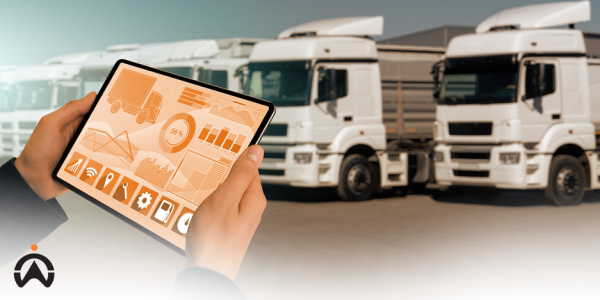
Cartrack Indonesia is a leading global Software-as-a-Service (SaaS) platform. With Cartrack Indonesia, you can transform fleet operations and achieve operational excellence through the power of AI- and ML-driven fleet management solutions, such as:
- AI-powered cameras and live streaming technology: Using AI-powered LiveVision, you can equip your fleet with up to eight internal or external cameras to ensure the safety of drivers, vehicles, and cargo. With AI-based cameras, you can monitor your entire fleet in real time. In addition, LiveVision cameras can detect potential frontal collisions, drivers smoking, driver fatigue, and mobile phone usage. This, together with ML-based alerts, enables drivers to immediately correct their behaviour and ensures road safety.
- Fuel monitoring software: Save fuel costs with the fuel monitoring software MiFleet, which collects fuel cost data. MiFleet shows how much fuel a vehicle uses during trips. In addition, this software can also detect fuel card fraud, fuel theft, and fuel wastage, helping reduce fuel expenses so you only pay for what is actually used.
- GPS vehicle and asset tracking: Track accurately and gain full real-time visibility over your entire fleet with GPS technology. GPS collects vehicle and asset location data so you can monitor job completion rates, productivity, and efficiency, while also receiving actionable insights (such as idle status, fuel levels, and engine diagnostics) to support informed business decisions.
- Specialised sensors: Our specialised sensors provide fleet managers with detailed insights into fleet operations. Cargo door monitoring systems and temperature sensors can be used in cold chain logistics to deliver real-time monitoring of cargo temperature and doors, and send alerts to fleet managers immediately whenever temperature fluctuations occur or cargo doors are opened. This allows them to quickly contact drivers to resolve issues or dispatch replacement trailers if necessary to protect goods and prevent loss of profit.
- Automated preventive maintenance: Our platform automates maintenance schedules for each vehicle by using vehicle usage hours and the last service date to create an effective maintenance plan without complexity. This helps reduce maintenance costs, extend vehicle lifespan, and minimise unnecessary downtime.
That’s AI and ML innovations for your fleets! Click the link to find out more!