EN
 ID



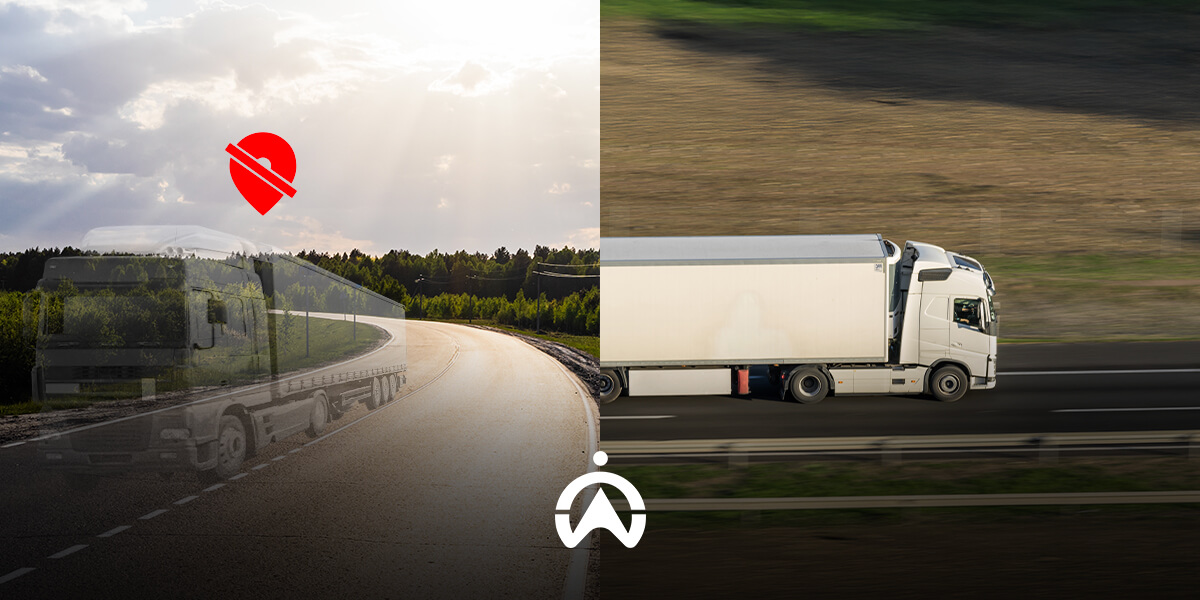
Although commonly referred to as GPS trackers, these devices do not rely solely on GPS, they also utilise multiple satellite systems to improve location accuracy. This accuracy reflects how closely the satellite-based measurement matches the actual position.
Although commonly known as a GPS tracker, a vehicle tracking device uses not only GPS but also several other satellite systems, so that the estimated location is more accurate. This accuracy indicates how close the satellite measurement is to the actual position.
What are the main factors that affect the accuracy of GPS vehicle tracking? Here's an explanation
1. Number and Position of Satellites
To provide a more accurate location estimate, a vehicle tracking device needs at least four satellites, consisting of GNSS and its augmentation systems. These augmentation satellite systems are needed to improve navigation system performance, such as accuracy, reliability, and availability. The more satellites used to calculate a position, the better the level of accuracy.
In addition to the number of global navigation satellites and their augmentation, the position or distribution of the satellites providing positioning also has a significant impact on accuracy. Generally, a set of satellites spread over a wider area of the sky will provide more accurate location readings (the greater the angle between the receiver's position and the satellites used, the more accurate).
2. Obstacles to Signal Propagation
Signals from satellites to GPS receiversmust travel long distances. The propagation space of the signal, both in the atmosphere and on Earth, greatly affects signal strength and positioning accuracy. The ionosphere, the fourth layer of the Earth’s atmosphere, slows down GPS signal speed due to the ionisation of particles. The troposphere, the lowest layer of the Earth’s atmosphere, can sometimes cause radio signal reflections.
Once the signal reaches Earth, several obstructions can block or reflect GPS signals, resulting in positioning errors or delays. These include tall buildings, tunnels, flyovers, steel-plate or concrete roofs, trees, land formations (mountains, cliffs, and so on), heavily tinted window film (a maximum of 60% is recommended), and even the human body. The position of the device inside the vehicle also affects signal propagation, so try to keep it from being blocked by too many surfaces.
Cartrack's own tracking devices have an accuracy of 2.5–5 metres, with two types of GNSS and four types of satellite-based augmentation system (SBAS). This allows users to get reasonably accurate location information. To address signal propagation obstructions, Cartrack will add an external antenna. This signal booster is usually needed for vehicles operating in areas with poor signal, such as vehicles on palm oil plantations and speedboats. Click here to start your vehicle tracking experience with Cartrack!