EN
EN  ID
ID 


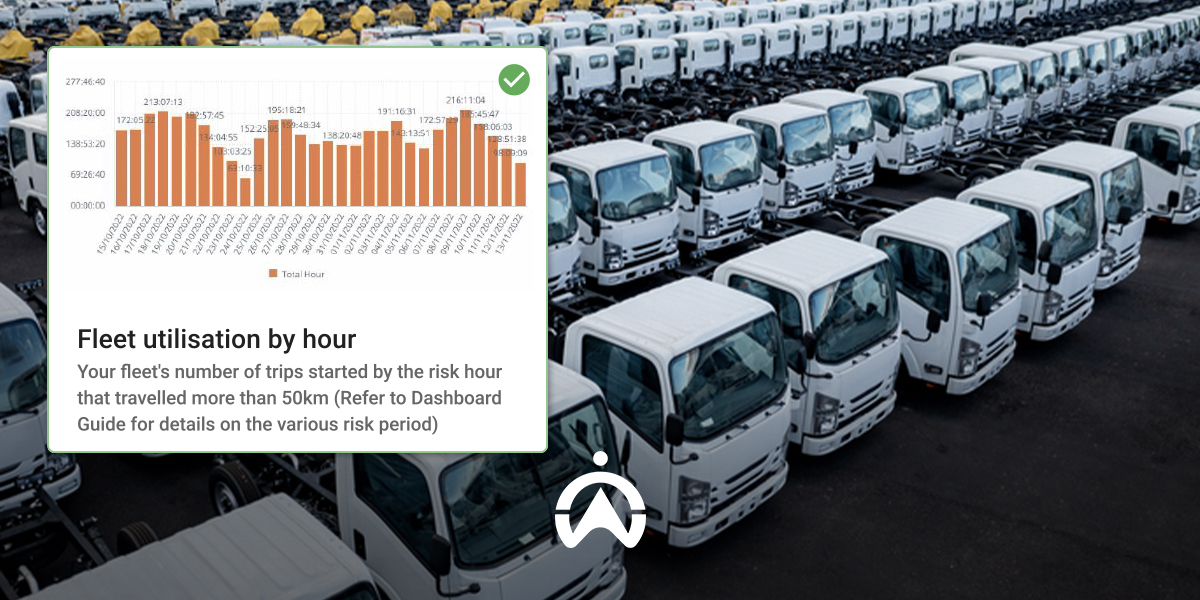
There are many parameters that can be used to evaluate vehicle usage in the context of a company's fleet productivity. It is easier and more accurate if data for each of these parameters can be captured and analysed automatically, such as if you use a fleet management system, rather than collecting it from paper documents or spreadsheets. Here are some common parameters available in a fleet management system that you can observe to track the productivity of each vehicle in your fleet.
1. Distance Travelled
This odometer data is used to compare the distance travelled by different types or groups of vehicles in your fleet, such as motorcycle groups, cement mixer trucks, or operational cars. These comparison categories are important because they determine average productivity. A cement mixer truck will have a different odometer reading compared to a logistics truck, even if both are used over the same period. By comparing distance travelled per vehicle group, you can determine the average daily mileage per vehicle group and identify which vehicles are below the average.
2. Operating Duration
This parameter helps you gain a deeper understanding of vehicle productivity. Within a working day, you may find differences in operating duration between vehicles used for short-distance and long-distance deliveries, or between vehicles with fewer stops and those with more stops. The more stops there are, the shorter the vehicle’s operating duration may be, for example because the vehicle is switched off to unload goods. You can view the average daily operating duration compared with the number of working hours per day and assess whether it is effective.
3. Idle Duration
One of the parameters you need to pay attention to from the operational duration is the idle duration. Idle is a condition where the engine is left running when the vehicle is in a stopped position. Idle can be distinguished into productive idle and unproductive idle. Unproductive, for example, the driver starts the engine to rest in the vehicle. Productive idle, for example, the operator is operating the digger but the excavator is stationary. You can consider the productivity of working hours by comparing the average duration of unproductive idle and the average daily operational duration.

4. PTO Usage Duration
For those of you who operate heavy equipment fleets, you need to install a power take-off (PTO) sensor in order to distinguish between productive and unproductive idle time. This PTO sensor is installed to detect the activity of peripheral features on heavy equipment, such as cranes on trucks, tipper mechanisms on dump trucks, and excavators on excavators. In this way, you can determine whether heavy equipment idle is productive or not, and calculate how much time is truly productive out of the total operating duration of the equipment.
5. Number of Stops
This parameter can indicate the number of trips or tasks completed, particularly for delivery fleets. By looking at the number of stops and filtering only those related to assignments, you can determine the average number of tasks completed per day. You can also take into account the average time spent per stop. Of course, you need to distinguish between short-distance, medium-distance, and long-distance delivery vehicles so that comparisons of the number of stops are appropriate. In this way, you can set accurate productivity standards.
Understanding vehicle usage productivity will help you uncover challenges in fleet operations and obtain effective solutions. Through statistics, smart reports, and data analytics, the Cartrack fleet management system provides you with significant insights into the productivity of your fleet’s vehicle usage. Send us a message here and get the opportunity to request a product demo from the Cartrack team to learn more about how our platform can benefit you.