EN
EN  ID
ID 


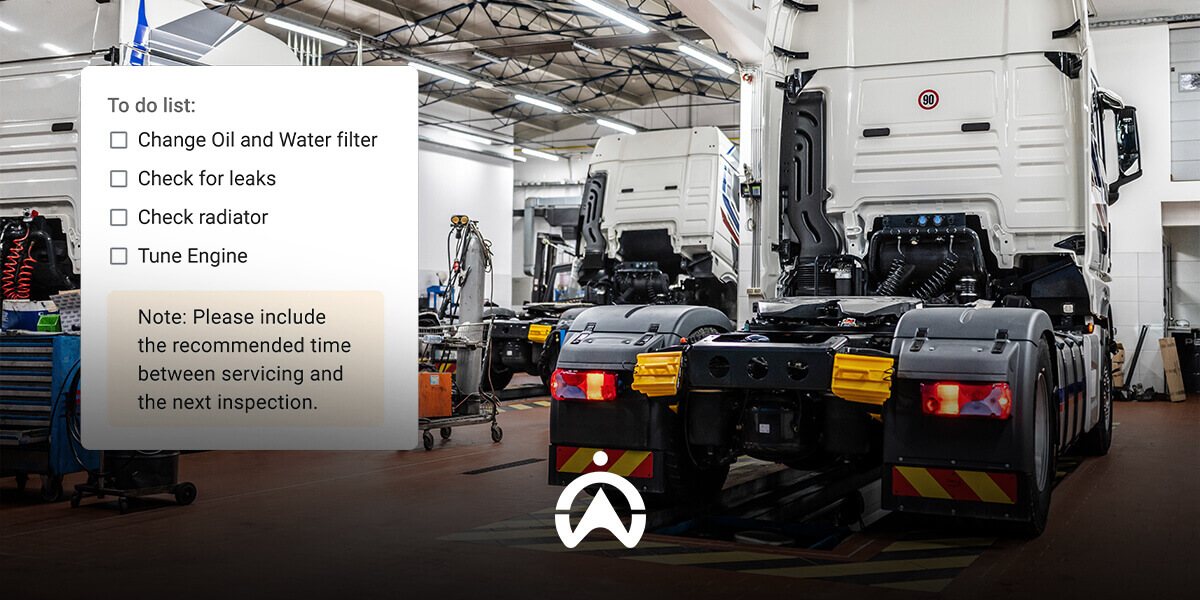
As a commercial vehicle owner or user for business operations, you're likely familiar with the term "vehicle inspection." However, if you're new to the commercial vehicle business world, you might not fully understand the term. Find out more about vehicle inspections, including their definition, procedures, and costs, in the following article.
What is the Kir Test?
A roadworthiness test (KIR) is an inspection of motor vehicles, particularly for business vehicles such as buses and trucks. This inspection is mandatory every six months to inspect vehicle components to ensure safe driving.
According to Indonesia's Minister of Transportation Regulation No. 19 of 2021, the following types of vehicles are required to undergo periodic inspections:
-
Public passenger cars
-
bus
-
Goods truck
-
Trailer
-
Patch train
Regulations regarding this matter are discussed in Law Number 22 of 2009 concerning Traffic and Road Transportation, Article 53 paragraph 1. In addition, this inspection is also regulated in Minister of Transportation Regulation No. 133/2015.
As a mandatory requirement stipulated by law, there are of course sanctions stipulated in Article 76 paragraph 1 of Law Number 22 of 2009 concerning Road Traffic and Transportation (LLAJ). These sanctions include written warnings, fines, suspension of road permits, and even revocation of road permits. Therefore, vehicle roadworthiness tests are mandatory for all business/company operational vehicles.
By conducting regular vehicle inspections, you ensure smooth operations and ensure road safety. This, of course, also indirectly minimizes losses for both the company and other road users.
In addition, you will also avoid lengthy matters with the authorities when random inspections occur which of course disrupt operations.
Also Read: Improving Road Safety with Fleet Management Technology
Vehicle Inspection Test Implementation Time
Indonesian Minister of Transportation Regulation No. 19 of 2021 also regulates the timing of periodic inspections, as follows.
1. Periodic Registration Test
In other words, the Periodic Registration Test is the first time your vehicle will undergo a roadworthiness test. The requirements are as follows:
-
You can register within 13 working days from the issuance of the STNKB (Motor Vehicle Registration Certificate) for passenger cars, buses and goods vehicles.
-
For trailers and attached trailers, you can register 13 working days from the issuance of the SRUT (Type Test Registration Certificate).
-
Valid for one year from the date of issuance of the STNKB or SRUT.
2. First Periodic Test
The First Periodic Test is the first periodic test or inspection after the Registration Periodic Test. The following are the provisions:
-
It is carried out after the periodic registration test period ends (after 1 year).
-
Valid for 6 months.
3. Periodic Test for Extension of Validity Period
The Periodic Renewal Test is a mandatory periodic test that must be performed within a specified period, namely every six months. At this stage, you no longer need to register the vehicle, making the process shorter than before. The requirements are:
-
It is carried out after the first periodic test period ends (after 6 months).
-
Repeated every 6 months.
Also Read: Pre-Trip Checklist: Safety Steps in Fleet Management
Procedures and Stages of Car Vehicle Inspection Test
After understanding the timing and flow of vehicle inspections, here are the procedures and stages you will go through when conducting periodic inspections.
1. Registration
Registration for the vehicle inspection test can be done directly or online via the website/application.
Offline Registration
Offline registration can be done by visiting the Transportation Agency office in your city or district.
-
Visit the registration counter.
-
Complete the registration files.
-
Heading to the pre-test and roadworthiness inspection location.
Online Registration
Several regions, such as Jakarta and Tangerang, have implemented online registration systems, both through websites and smartphone apps. To find out if your region has implemented an online registration system, you can check on the Play Store.
-
Open PlayStore on your smartphone (Android)
-
Ketik “kir [nama kota/kabupaten]” pada kolom pencarian
-
Download and install
-
Perform user registration by filling in the data
-
Select the “First Test List” or “Regular Test List” service.
-
Prepare supporting documents in scanned format as well as photos of the front and side of the vehicle in JPEG/JPG/PNG format.
2. Checking the required documents
After registration, you will enter the required file check, which is as follows:
-
BPKB (Motor Vehicle Ownership Certificate)
-
STNK (Vehicle Registration Certificate)
-
Original ID card of the owner or power of attorney if the person requesting the inspection is not the owner.
-
Route permit for public transport or operating permit for passenger transport
-
Type Test Registration Letter (SRUT)
3. Pre-Test Inspection
At this stage, Transportation Agency officers will conduct a visual inspection to ensure the completeness of the components that ensure driving safety. Some of these include:
-
Frame number and condition
-
Number and type of drive motor
-
Condition of fuel tank, fuel filler funnel, fuel line pipe.
-
Condition of the converter kit system for those using high pressure fuel
-
Condition and position of the drain pipe
-
dll.
4. Roadworthiness Inspection
Next, the officer will check the roadworthiness requirements which include:
-
Exhaust emissions
-
Noise level
-
Main braking capability
-
Parking brake capability
-
Front wheel cup
-
Headlight beam capability and direction
-
Accuracy of speedometer
-
Tire tread depth
5. Submission of Vehicle Inspection Test Results
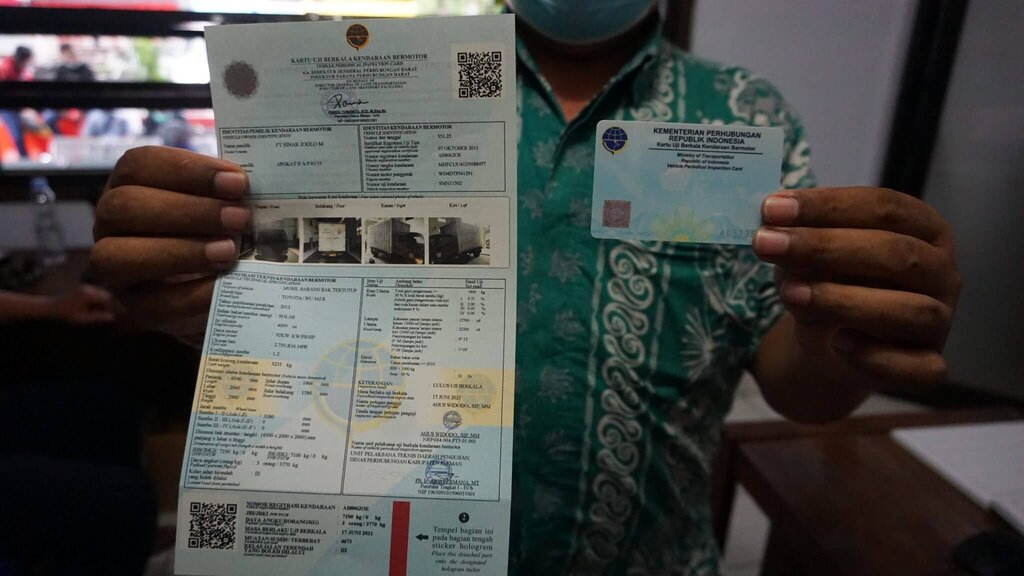
After a series of inspections, you will receive a proof of passing the vehicle inspection. Since 2020, the vehicle inspection certificate, which was previously in book form, has been replaced by an electronic form, BLU-e (Electronic Proof of Passing the Vehicle Inspection). The BLU-e itself consists of:
-
Two certificates of passing the examination
-
Hologram sticker with QR code attached to the windshield
-
One smart card with NFC technology
Source: Sleman Regency Transportation Agency
The vehicle inspection certificate is valid for six months after the inspection. Therefore, you must ensure your vehicle is registered for the inspection on time. You can also check by entering your vehicle registration number on the Transportation Agency's dedicated website.
-
Visit spionam.dephub.go.id
-
Select “Check Vehicle”
-
Enter the license plate number using capital letters and numbers. (Example: B1234FG)
-
Click “Search”
The results of this search will be in the form of information including vehicle number, company name, and SRUT number (Type Test Registration Letter).
Also Read: What is a Driver Monitoring System?
2025 Vehicle Inspection Test Costs
Since January 5, 2024, vehicle inspection fees have been free. This policy is based on Law Number 1 of 2022 concerning Financial Relations between the Central Government and Regional Governments and Government Regulation Number 35 of 2023 concerning Regional Taxes and Levies.
That concludes the discussion and complete information regarding the ins and outs of vehicle roadworthiness tests. If you own a commercial vehicle, don't forget to ensure your fleet undergoes regular inspections.

Ready for the KIR Test with Maintenance Management from Cartrack
To ensure your vehicle is always ready for roadworthiness tests and passes them without any issues, you must perform routine maintenance and constantly monitor its condition. Cartrack offers a fleet maintenance management solution that helps you, as a business owner, maintain your vehicle's condition. With automation, you can:
-
Schedule regular servicing according to vehicle mileage and usage.
-
Receive automatic alerts before the KIR test expires, so there are no delays.
-
Monitor the condition of machines and critical components in real-time to avoid sudden breakdowns.
-
Analyze vehicle maintenance history to make it easier to budget for repairs and spare parts replacement.
With vehicle management from Cartrack, you can ensure compliance with vehicle regulations while avoiding downtime due to unexpected problems.
Manage your commercial vehicle maintenance with Cartrack to keep every unit in top condition. Get a free demo now by filling in your details. form follows!