EN
EN  ID
ID 


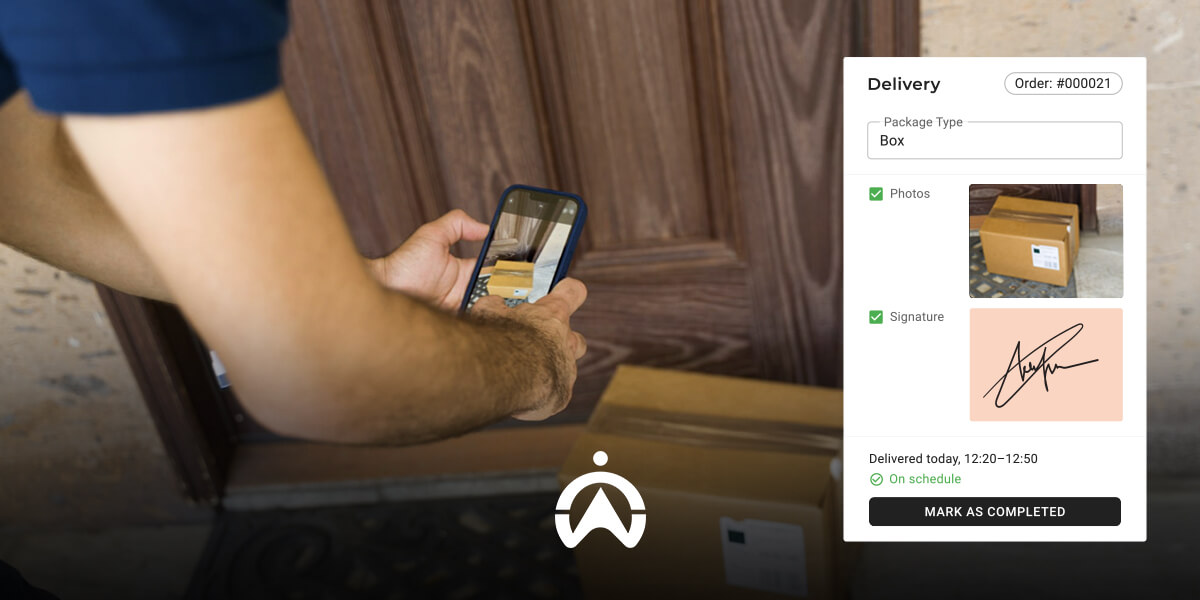
In the past, when you received a package or letter, the courier would ask you to sign a special piece of paper. However, in the last decade, couriers have abandoned the paper signature, replacing it with a photo of the package you received.
Although the formats are different, both of these items are mandatory parts of a delivery, indicating that you have received the item. Now, we'll discuss proof of delivery in more detail.
Find an explanation of what proof of delivery is, its benefits for businesses, the types of PoD, and its features and how it works in the following article.
What is Proof of Delivery (PoD)?
Proof of delivery (PoD) is a document used to indicate that a package has been received and that delivery has been completed. This document can be either physical or digital and includes the delivery time, location, and recipient.
Whether you're a business owner or a customer receiving a package, you can check whether it's been received by viewing the PoD. You can also see who received it and where the package is located if you're not at home.

Benefits of PoD for Business
So, why is PoD important for business?
If you are in a shipping related business, then PoD is very important because of the following benefits:
1. Become official proof of delivery
With PoD, you have valid proof that the order has been shipped and received by the customer. This minimises fraud or false claims that a package has not arrived when it has.
2. Monitor courier performance
The PoD also serves as proof that the courier you assigned to deliver the package has completed their task correctly. A PoD with photos, the date and time, and coordinates can serve as proof that the package has arrived at its destination.
3. Building long-term trust
You can build customer trust by providing a system that allows for a fair delivery process for both parties. Customers can use the PoD as evidence if they feel they've been wronged by a late or incorrectly shipped order.
4. Facilitates resolution of shipping issues
Besides serving as evidence, the PoD can also be used for investigations if customers complain about packages not being received, exchanged, or misdelivered. This way, you can immediately initiate an investigation and resolve the issue promptly.
5. Reduce operational and administrative costs
The most common type of PoD used today is the digital PoD, which allows you to document the PoD paperlessly. This saves you money by eliminating the need to produce printed proof of delivery documents.
Also Read: How to Build a Successful Delivery Business
Types of PoDs
In terms of format, there are two types of PoD commonly used as proof of package receipt: physical PoD and digital/electronic PoD. Physical PoD is proof of delivery that uses paper/forms that must be signed to prove that the order/package has been received.
Meanwhile, electronic PoD is the most common proof of delivery, where the data is stored digitally. There are several types of electronic/digital PoDs you can find today:
-
Digital signature → The recipient digitally signs the package on a smartphone or tablet carried by the courier. This method is commonly used by e-commerce companies and logistics companies.
-
Proof-of-delivery photo → Often combined with GPS coordinates and the time and date of delivery. This photo can serve as proof that an order has arrived at its destination, even if the recipient is not present.
-
Barcode or QR code → Usually used in warehouse deliveries where the recipient or courier will scan to confirm that the order has been received by the person in charge.
In addition to the three PoD types mentioned above, there are also One-Time Password (OTP) and biometric (fingerprint) methods, which offer higher security. However, both are relatively rare in the general logistics industry, especially in Indonesia.
OTP PoD is often used as a contactless delivery alternative to photo PoD, although it's not commonly used. Meanwhile, deliveries using biometric PoD typically involve luxury goods, pharmaceuticals and medical equipment, or other high-value items. Receipt of these items will require in-person identification of the authorised recipient.
Recruitment Process & How PoD Works
Now that you know the above, you might be curious about how PoD works and how it's implemented. Here's how the process from delivery to PoD can be accessed.
-
Courier gets delivery assignment → First, the courier is assigned to make a delivery to a customer at a specific address.
-
The courier will validate the delivery → When it arrives, the courier will hand over the package and collect proof of delivery which can be in the form of: a photo with GPS coordinates and time and date, a digital signature, or a barcode/QR code scan.
-
The courier uploads the PoD to the system → Next, the courier uploads the PoD that has been picked up to the system.
-
Businesses and customers can access PoD → You as a business owner or customer can access PoD for needs such as audits, claims, and operational analysis.
What Can Be Confirmed with PoD?
As a business owner, a PoD allows you to confirm things that often serve as clues and evidence in the event of a dispute with a customer. Some things you can find out and confirm are:
1. The goods have arrived at the delivery destination
A PoD, such as a photo with GPS coordinates and the date and time, can confirm that the package is at the correct address. A photo of your home can also show where the courier placed your package.
2. The courier has completed the task
The most important thing for you as a business owner to know is that the delivery is complete and the package has arrived at its destination. Submitting the PoD signifies the completion of the courier's task.
3. Who received the package?
If the customer is not home, the courier can take a photo of the recipient along with the package. This way, the customer knows who to contact about their package without having to contact the business first.
4. Time and date of delivery
The PoD, which takes the form of a photo with GPS coordinates, usually includes the date and time of delivery. If you're a business owner, this also confirms that the order arrived on time and without delay.
5. Condition of goods when received
Photos taken by the courier can also show the condition of the item upon receipt. This can serve as evidence if you receive a complaint alleging damage by the courier, when in fact someone else was responsible.
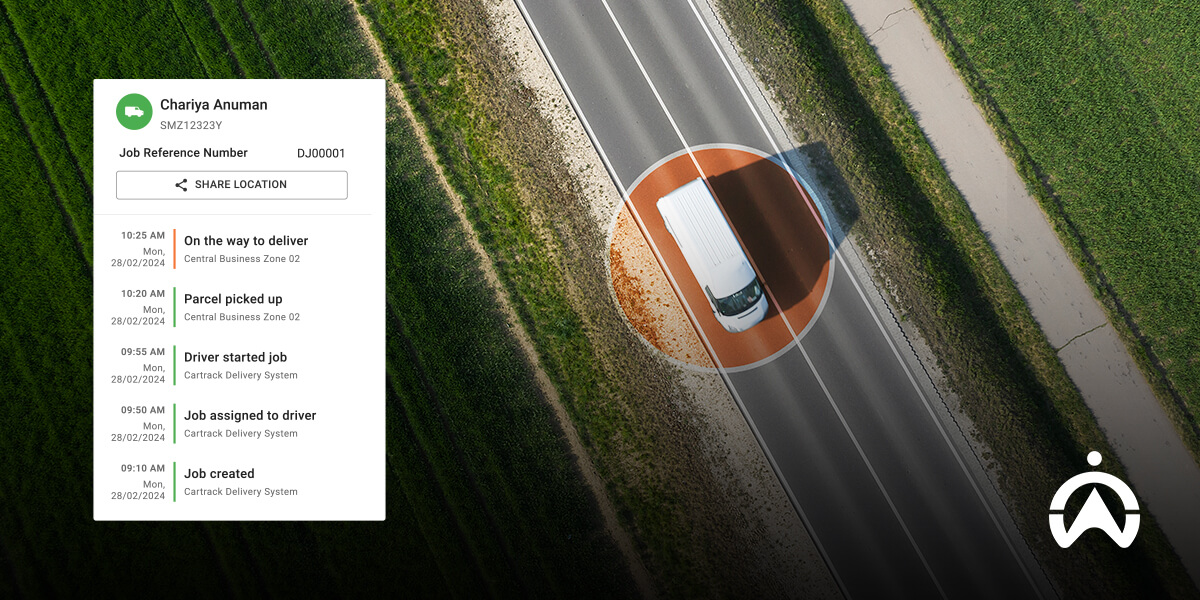
Optimise Deliveries with the PoD Feature in Cartrack Delivery
Imagine a customer complaining that they haven't received a package delivered by your courier. Meanwhile, the courier has no proof that they delivered the order, even though they claim to have.
Customers may commit fraud because they know the courier has no concrete evidence. Conversely, couriers are also very likely to steal or damage packages that should have been received safely by customers.
Problems like this will be easier to resolve if you have a delivery management system that also offers a PoD feature like Cartrack. You'll have proof that the order has arrived intact at the recipient's address.
Cartrack Delivery's PoD features include:
-
Digital signature → Suitable for sending important documents
-
Photo → Suitable for shipping goods
-
Scan barcode/QR → Suitable for shipping from/to warehouse
All three are equipped with GPS coordinates along with the date and time, so you know when the evidence was taken. You can also download photos and digital signatures for archiving or investigative purposes.
Also Read: 5 Ways to Improve On-Time and On-Time Delivery
Proof of delivery is a crucial document in the shipping business. Its benefits include serving as official proof of completed delivery, dispute investigation material, and even monitoring courier performance.
Therefore, if your business involves deliveries, the PoD feature should be a key consideration when choosing a delivery management system (DMS). The good news is, Cartrack Delivery could be the perfect DMS solution for your business, thanks to its PoD feature.
Complete your details in the following digital form to get a special offer from Cartrack for your business and company!
Also Read: With a GPS Tracker, Your Shipping Service Customers Can Also Track Shipments