EN
EN  ID
ID 


What Is Gravitational Force?
Gravitational force is defined as a measure of acceleration. When we stand on the ground, our weight and the force preventing us from floating are the gravitational force. This measurement is used to quantify acceleration, making it important across a range of industries, including aviation, the military, and the automotive sector. In the aviation world, gravitational force is how far you are pushed or pulled when accelerating, braking, or turning.
What Is Rough Driving?
Harsh driving can be defined as a sudden change in the direction or speed of a vehicle or truck that is traveling at a steady speed. This is often recorded as a sudden change in speed that can be monitored by an accelerometer, a device that measures changes in the speed or direction of a moving object (in this case, a vehicle).
When an accelerometer is at rest, it measures one G force, which is the gravitational force acting on it. When an accelerometer moves, it measures the difference between the gravitational force and the acceleration force acting on it. An accelerometer measures acceleration in meter per second squared (m/s²), and this can be converted to G-force by dividing the acceleration by the acceleration due to gravity (about 9.81 m/s²).
Accelerometers are widely used in transportation, including in airbags, where they detect sudden changes in a car's speed, signaling an impending collision, and triggering an electrical circuit that inflates the airbag.
How Does Gravity Relate to Rough Driving?
Rough driving behaviour is typically expressed in terms of G-forces due to its role in monitoring behaviour. This is done by measuring the magnitude of acceleration and deceleration experienced by a vehicle. Because rough driving exposes the vehicle to sudden changes in speed, direction, or both, sudden increases in G-forces experienced by the driver, passengers, and the vehicle itself are key indicators of rough driving.
Rough driving is expressed in terms of G-forces, because of their crucial role in measuring the amount of acceleration or deceleration experienced by a vehicle.
What Are The Forms of Rough Driving?
Abusive driving is a broad term used to describe a variety of driving behaviours. Here are the four most common forms of abusive driving:
- Hard braking: Harsh braking occurs when a driver uses more force than necessary to stop the vehicle. While there are some understandable situations where harsh braking is unavoidable (such as stopping to prevent an accident), unnecessarily harsh braking may indicate distracted driving, as it is a common effect of drivers failing to maintain a safe following distance. This increases the likelihood of a rear-end collision, as there is insufficient following distance to allow for sudden but safe deceleration.
- Hard acceleration: Accelerating hard occurs when a driver uses more power than necessary to move the vehicle after stopping. Often seen when a driver is waiting at a traffic light and presses the accelerator to get moving as quickly as possible, when a driver accelerates rapidly in an attempt to pass a traffic light, or when the driver is not paying attention to the flow of traffic and needs to move quickly, accelerating hard can indicate distracted driving. It often indicates a lack of focus, impatience, or an attempt to make up for lost time while not paying attention to traffic signals or the surrounding environment.
- Sharp turns: Sharp turns are defined as a driver accelerating while turning, causing them to turn too quickly. This is quite dangerous because it puts more stress on the vehicle's tires. This means a driver could lose complete control of the vehicle, causing an accident with another vehicle. Furthermore, it can cause tall vehicles to roll over. It also reduces visibility of the road beyond the turn, putting the driver at risk of encountering obstacles.
- Changing lanes: Lane drifting is defined as a driver inadvertently leaving their lane and crossing into another lane or onto the shoulder. When a driver takes their attention off the road, even momentarily, their chances of drifting significantly increase. This is dangerous, as it increases the likelihood of a collision with an adjacent vehicle and poses a risk to oncoming traffic. Lane drifting can indicate distracted driving, as taking your eyes off the road can lead to a lane change. Lane drifting can also indicate a lack of proper safety distance, increasing the risk of a rear-end collision.
How Does Rough Driving Impact a Fleet?
Harsh driving can have a significant negative impact on fleet vehicles, affecting not only safety but also overall fleet efficiency. These impacts include:
- Reducing the lifespan of fleet vehicles: Rough driving significantly affects the life of a vehicle.
- Causes tires to wear out quickly: Harsh acceleration forces tires to grip the road tightly, increasing friction and generating heat. This excess stress causes premature tire wear, reducing their lifespan and compromising their structural integrity. Harsh braking can also cause uneven wear patterns on tires, reducing their lifespan and requiring more frequent replacement.
- Increasing the pressure on the brake system: Frequent harsh braking results in increased wear on the brake pads, and this intense friction results in reduced brake pad life, which compromises vehicle safety.
- Increasing the pressure on the suspension system: Rough driving puts stress on vehicle suspension components, such as shocks, struts, and bushings, reducing their effectiveness. These components are crucial for maintaining vehicle stability and proper steering function, making the vehicle more susceptible to mechanical failure.
- Improving fleet fuel consumption: Rough driving has been shown to increase the amount of fuel used by a vehicle.
– Increased fuel consumption due to downshifting: Harsh braking has been shown to drastically increase a vehicle's fuel consumption, thereby reducing fuel efficiency. When a driver brakes hard, the vehicle's transmission downshifts to the lowest gear. While this downshift is necessary to compensate for the sudden drop in speed, a lower gear requires higher engine rpm to maintain movement, which means more fuel is burned. Tests have shown that aggressive driving can increase fuel consumption by approximately 40%.
– Reduced fuel efficiency: Increased fuel consumption caused by harsh driving negatively impacts fleet fuel efficiency. A study by Oak Ridge National Laboratory showed that aggressive driving can reduce fuel economy by 15%-30%. - Reduced tire performance: Harsh driving can have the following negative impacts on vehicle tire performance:
– Causes uneven wear: Harsh driving causes uneven resistance on the tires. Harsh acceleration causes the tires to struggle against intense friction, unevenly wearing down the tread. Harsh braking also forces the tires to fight against the road surface, resulting in uneven wear patterns that reduce tire life.
– Causes of flat-spotting: Harsh braking can cause flat spotting, which occurs when a tire slips or locks, causing it to slide along the road surface. Flat spotting causes certain parts of the tire tread to wear faster than others, creating an uneven wear pattern and reducing the tire's effectiveness and lifespan.
– Increasing heat: Rough driving produces excessive friction, which causes the tires to heat up. This heating causes the tire's rubber compound to decompose, making it more susceptible to rupture and structural damage. - Increases the risk of collision: Rough driving increases the risk of vehicle collisions in the following ways:
– Increases the risk of rear-end collisions: Rough driving reduces the safe distance between vehicles, reduces the driver's ability to respond to sudden changes in traffic flow, and increases the risk of collisions. - Reducing response time to potential hazards: Rough driving compromises a driver's ability to respond quickly to unexpected situations, such as vehicles suddenly changing lanes, pedestrians suddenly crossing the road, or obstacles in the road. This reduced response time increases the likelihood of accidents because drivers don't have enough time to avoid potential road hazards.
- Compromising vehicle stability and control: Rough driving makes the vehicle unstable, which affects its ability to drive. This makes it more difficult to maneuver safely, especially in emergencies where drivers need to quickly adjust their driving style and take sudden action. This impaired control significantly increases the risk of an accident.
- Increasing fleet maintenance costs: Rough driving increases fleet maintenance costs.
– Increased wear on vehicle components: Harsh driving behaviour puts stress on critical vehicle components such as brakes, tires, suspension systems, transmissions, and engine components. This puts premature stress on these components, causing them to wear out faster than planned. This means fleet managers need to allocate more time and resources to frequent maintenance, part replacement, and repairs, leading to unplanned vehicle downtime and increased maintenance costs. - Detrimental to driver performance: Rough driving affects driver performance in the following ways:
- Reduces their response time: Rough driving behaviour reduces the driver's ability to react immediately to unexpected situations, causing delayed reactions and increasing the likelihood of accidents. – Increase their stress levels: Harsh driving has been shown to induce a physiological stress response, which increases driver anxiety and tension. This increased stress not only impacts drivers' mental well-being but also their cognitive functioning, affecting their decision-making ability and reaction time.
– Increase fatigue: Physical stress caused by rough driving, such as harsh acceleration, braking, and steering, can increase driver fatigue. Over time, this constant stress leads to increased fatigue and decreased focus, especially during long-distance driving. This reduces the driver's situational awareness, impairs their judgement, and increases the potential for accidents.
To track abusive driving, fleet managers need to closely monitor driver behaviour. While this may seem challenging, a driver monitoring system is key to streamlining the entire process.
What Is a Driver Monitoring System?
A driver monitoring system is an advanced vehicle safety technology that combines hardware and software to consistently track and assess driver behaviour, sobriety, and overall condition while behind the wheel. This advanced technology combines sensors, cameras, and sophisticated data processing mechanisms that work together to provide unparalleled access to fleet driver behaviour. The primary goal of this safety-oriented system is to improve safety, prevent accidents caused by driver distraction or fatigue, enhance overall driver performance, and increase overall fleet efficiency.
How Does Driver Monitoring Work?
Driver monitoring systems are complex, utilising a variety of components that work together to effectively monitor driver behaviour. These components include:
- Camera: The camera is the foundation of the driver monitoring system. Using a driver camera equipped with an infrared light system, it can track the driver's head position, eye movements, and facial expressions. The camera is also equipped with advanced AI algorithms that work to continuously analyse driver behaviour and recognise signs of distraction, drowsiness, or impairment.
- GPS tracking: GPS tracking is another crucial component of a driver monitoring system. By leveraging GPS tracking, fleet managers gain access to data on driver routes, stop locations, and the real-time location of their vehicles. Comprehensive video of vehicle movement provides valuable insights into driver behaviour, such as speeding, excessive driving, or unauthorised detours.
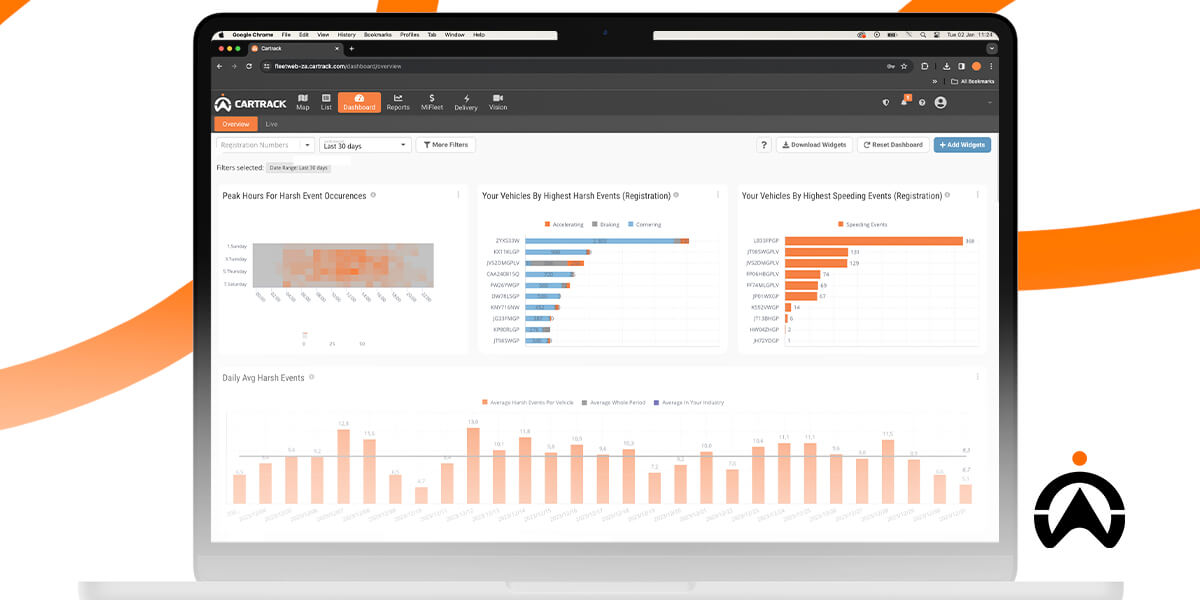
- Driver scorecards: Driver scorecards is a comprehensive performance evaluation tool that can assess driver behaviour within a fleet. It provides fleet managers with detailed insights into driver behaviour, including factors such as speed compliance, harsh braking, and adherence to assigned routes.
- Data processing and analysis: Data processing and analysis are integral to effective driver behaviour monitoring. By collecting and presenting a variety of data related to driver patterns, vehicle movements, and locations, the system helps fleet managers detect patterns, easily identifying cases of abusive driving.
What Are the Benefits of a Driver Monitoring System?
While the primary reason for implementing a driver monitoring system may be to eliminate abusive driving, these systems offer a variety of benefits that positively impact the entire fleet operation. These benefits include:
- Improving fleet driver safety: Driver monitoring systems provide a combination of hardware and software that monitors driver behaviour around the clock. This sophisticated software works to detect signs of distraction, drowsiness, and fatigue, making it crucial for accident prevention, as these behaviours can significantly increase the risk of a crash.
- Reducing the risk of accidents: Driver monitoring systems help prevent potential accidents by identifying and alerting drivers to behaviours that significantly increase the risk of a collision and loss of vehicle control. When these signs are detected, the system can issue a warning to the driver, prompting them to refocus.
- Reduce fleet maintenance costs: By promoting smoother and safer driving habits, driver monitoring systems help reduce wear and tear on vehicle components. They extend the life of brake components, suspension systems, and tires, directly reducing maintenance and repair costs.
- Improving fleet fuel efficiency: Driver monitoring systems detect and alert drivers to various fuel-wasting driving behaviours, such as excessive idling, harsh acceleration, and high speeds. This helps drivers promptly correct their behaviour, thus playing a significant role in improving fleet fuel efficiency. This contributes to cost savings by reducing fuel consumption across the fleet.
- Improve overall fleet efficiency: Driver monitoring systems significantly reduce accidents, resulting in reduced downtime. Reduced downtime due to accidents or breakdowns allows for uninterrupted fleet operations, ensuring timely completion of tasks, deliveries, or services. This leads to increased customer satisfaction and loyalty, and improves overall fleet efficiency.
Get Unrivaled Driver Behaviour Insights with Cartrack Indonesia's Driver Monitoring System
Cartrack Indonesia is here to deliver a world-class driver behaviour monitoring system directly to fleets. Equipped with a range of technologies that help take driver behaviour to the next level, our system is what you need to improve fleet driver behaviour and reap the benefits of safe fleet functionality.
ADAS
Ensure drivers are aware of their surroundings with Cartrack Indonesia's Advanced Driver Assistance Systems (ADAS). This is technology designed to improve fleet safety and efficiency. By alerting your drivers to potential road hazards, detecting and responding to obstacles, and helping them maintain a safe distance from other vehicles, ADAS works to improve driver awareness of their surroundings.
This functionality is made possible through the integration of camera-based sensors, artificial intelligence, and intelligent algorithms, all working together to provide driver assistance features to enhance driver safety. These include:
- Data processing
- Driver assistance features, including:
– Automatic emergency braking: This feature quickly identifies potential collisions and automatically applies the vehicle's brakes. This helps minimise the impact or prevent a collision altogether.
– Forward collision warning: This feature quickly alerts drivers when their vehicle is approaching an obstacle or travelling too fast, which can help them prevent rear-end collisions.
– Blind spot detection: This feature quickly alerts drivers to vehicles in their blind spots, helping them reduce the risk of accidents when changing lanes.
AI Live Vision Camera
Get 24/7 visual access to your fleet with Cartrack Indonesia's AI Live Vision cameras, an AI-powered live streaming technology. This cloud-connected video management solution uses artificial intelligence analytics to provide real-time driver behaviour monitoring and alerts. The technology can also detect various forms of distracted or dangerous driving, including:
- Exceeding the speed limit
- Smoking
- Fatigue
- Cellphone usage
When any of the above behaviours are detected, an in-cab audio alert is triggered, immediately notifying the driver. This helps them correct their actions in real-time and prevent potential accidents. Additionally, fleet managers can receive real-time alerts and access live footage, helping them ensure preventative measures are implemented immediately.
Driver Scorecard
Get insight into each driver and their behaviour with Cartrack Indonesia's driver scorecard, which helps determine how safe they are. This is done by tracking any high-risk behaviours, such as:
- Rough acceleration
- Rough braking
- Excessive driving
- Excessive speed
This scorecard helps identify specific areas where drivers need training. This helps provide tailored training to help them improve their driving behaviour. This is a crucial part of an effective driver monitoring system, as it helps identify specific indicators of abusive driving, along with the drivers who engage in those behaviours.
Fuel Monitoring System
Track your vehicle's fuel level and quickly identify rough driving with Cartrack Indonesia's fuel monitoring system. Our real-time fuel level monitoring uses advanced sensors installed inside the fuel tank, allowing for real-time fuel consumption monitoring through our fleet management platform. By helping monitor fuel levels, fleet managers can quickly identify sudden spikes in fuel consumption, which can be an indication of rough driving, with behaviours such as over-driving, excessive speeding, and harsh braking contributing to increased fuel consumption.
Collision Detection
Ensure drivers receive immediate assistance in the event of a car accident or crash with collision detection. While drivers can employ safe driving strategies, there's no guarantee that other drivers will practice the same vigilance and safe driving habits on the road. By using our smart devices that detect collisions or crashes using specialised g-force sensors and artificial intelligence algorithms, we can detect and pinpoint the exact location of an accident in real-time. This allows us to immediately contact and dispatch emergency services directly to the driver's location if they are involved in a car accident or crash.
Let Cartrack Indonesia Helps Simplify Driver Behaviour Monitoring
Are you ready to create a safety-first driving culture in your fleet? Start your journey to better driver safety with Cartrack Indonesia and gain access to world-class technology.
Contact us today, by clicking the following link!