
Vehicle Tracking at Your Fingertips

Vehicle tracking systems have created a world where fleet management is easier. With vehicle tracking, you'll be aware of the entire process, from when goods leave the warehouse until they reach you. 

Technology continues to make our lives easier, including smartphones and household appliances like washing machines. In the transportation industry, one highly influential technology is GPS tracking, which enables companies to monitor their entire operations.

So, how do you find the best GPS tracking software among the many available options? By the end of this blog post, you will understand what GPS tracking is, what features tracking software should include, and how it can benefit your business.

What is a Vehicle Tracking System?

A vehicle tracking system is software used to determine a vehicle's location in real-time. To obtain this information, the tracking device is connected to the vehicle using Global Positioning System (GPS) technology.

How Exactly Does GPS Tracking Work?

GPS stands for Global Positioning System, a satellite constellation used for highly accurate positioning, navigation, and timing. This satellite system was originally developed in the 1960s for military purposes but became available to the public in 1983.

Today, GPS has a wide range of uses in agriculture, maritime affairs, and even fleet management. This technology is used to determine when, where, and how vehicles are used, including driver behaviour, service reminders, and more. 

This is accomplished using a Global Navigation Satellite System (GNSS) network, consisting of satellites that communicate with GPS tracking devices to provide information on vehicle location, route, time, and speed.

How Do You Know If You Need a GPS Tracker?

Not limited to vehicle fleets, the use of GPS in management systems can also be used for asset tracking. 

Fleet tracking uses telematics technology to collect real-time data from each vehicle. This allows fleet managers to efficiently monitor and manage their entire fleet and make strategic operational decisions. 

Here are some indications that your fleet business needs a GPS tracker:

  • Fleet managers are unable to manage tasks and task completion targets are not achieved.
  • Poor oversight of your fleet and drivers, and poor job development
  • Fleet managers are unable to assign and communicate critical tasks during emergencies
  • Fleet businesses have poor customer experiences due to an inability to meet high customer expectations. 
  • Signed delivery documents and proof of delivery are missing

Two professionals are analyzing data on a vehicle tracking device via a laptop to monitor the operational status displayed in a colored graph.

4 Benefits of Fleet Tracking

On the other hand, effective fleet tracking will go hand in hand with the smooth running of any fleet, regardless of its size. Productivity will increase, time will be more efficient, and customer experience will also be improved, all of which will benefit the business. Here are four benefits of vehicle tracking for fleet businesses:

  1. Driver visibility and asset tracking: Previously, fleet managers could not precisely determine the fleet's geographic location or monitor the delivery process. GPS tracking systems enable fleet managers to create, assign, and monitor driver tasks.
  2. Reduction of operational costs: By cutting both costs and time, GPS tracking enables fleet managers to manage their fleets efficiently, boost productivity, and minimise delays and delivery errors.
  3. Positive customer experience: With vehicle tracking, customers can monitor the real-time location of their cargo from departure to arrival at the destination. Upon delivery, customers can sign for electronic proof of delivery and receive a delivery confirmation email.
  4. Reduced administrative work: Vehicle tracking enables fleet managers to reduce administrative burdens through task assignment, driver and fleet tracking, and the storage of electronic proof of delivery—all within a single platform.

But with so many tracking systems to choose from, how do you know which one is best? Let's find out. 

How to Know Good GPS Tracker Software

Vehicle tracking devices come in all shapes and sizes, from plug-in, embedded, and battery-operated. Here's how to choose the best fleet tracking software: 

  • Find a user-friendly platform: With an easy-to-use platform, you can ensure your fleet doesn't waste time, resources, or energy. Look for software that meets all your needs within a single platform, allowing management to focus on business growth.
  • Get real-time tracking: Efficient fleet operations management requires access to real-time information when needed. Look for tracking solutions that provide real-time data—including HD video and AI-powered cameras—so fleet managers can use that information to make strategic decisions.
  • Accessible from anywhere: To ensure smooth fleet operations, you need a management system that allows access from any location. This enables you to manage all operations—from assigning tasks to determining departure and arrival routes—directly from your smartphone.

Get Vehicle Visibility from Anywhere with the Cartrack App

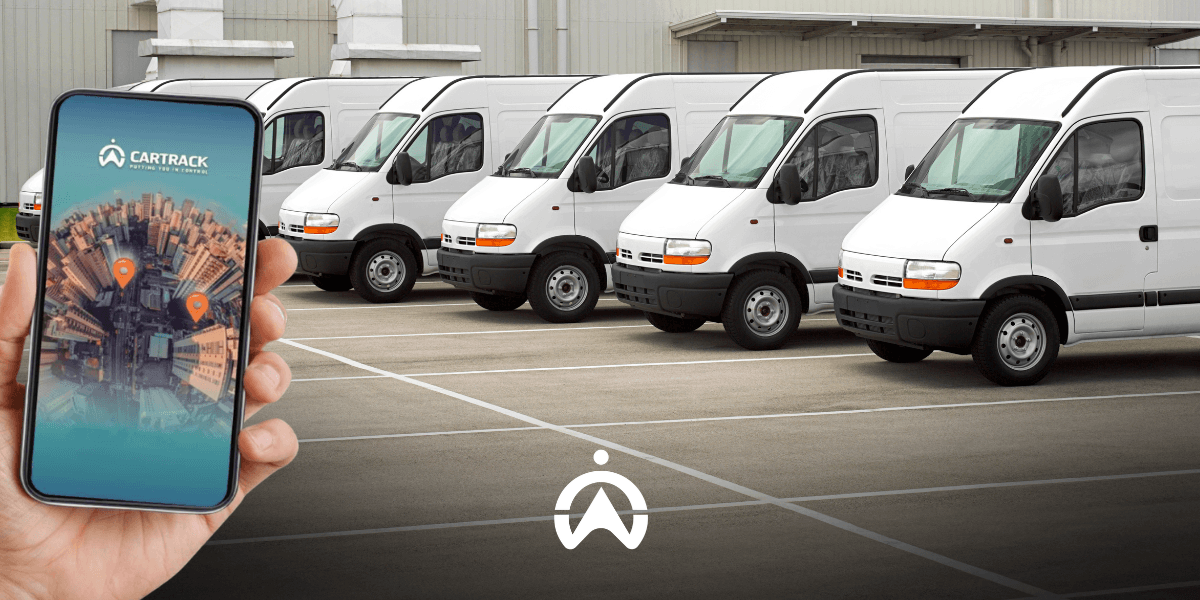
Cartrack provides an easy-to-use vehicle tracking and fleet management platform. The software enables fleet managers to gain full control over their fleets, drivers, and assets.

Some popular features of Cartrack's fleet management software include:

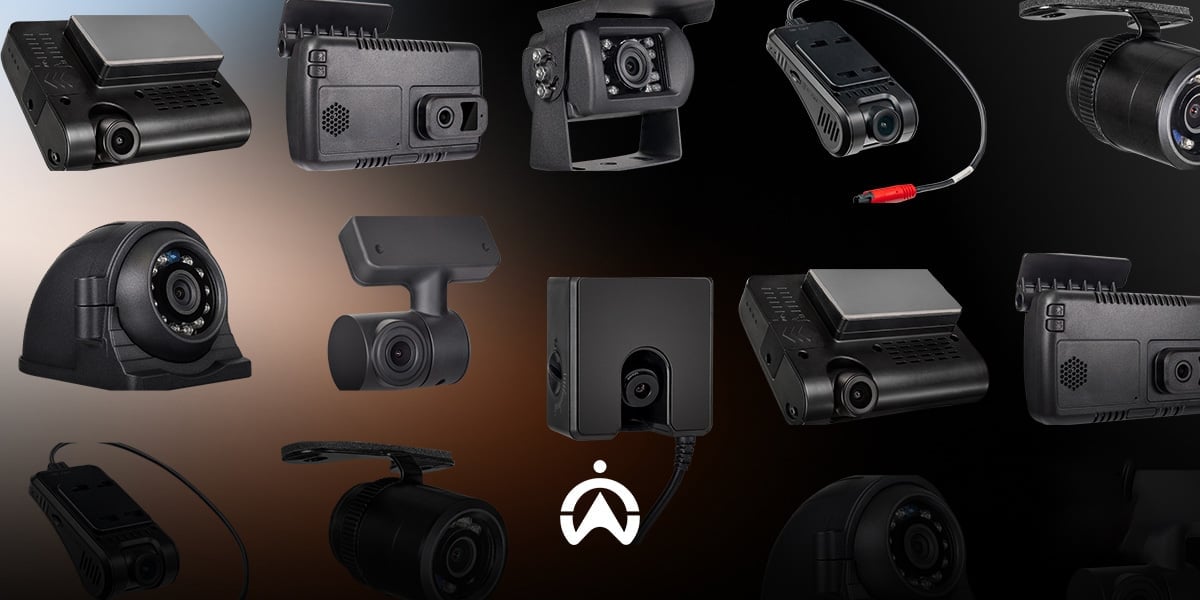
  • AI Vision: Cartrack’s video system provides real-time visibility of your fleet, cargo, and drivers. This AI-powered live-streaming camera technology supports up to eight cameras—both internal and external—making it invaluable for ensuring the safety of your drivers, fleet, and cargo, as well as capturing live footage of driver behaviour.
  • Geofence: Leveraging accurate GPS positioning and comprehensive map-based routing, fleet managers can establish virtual boundaries known as geofences. Managers can also configure the system to send SMS and email notifications whenever a vehicle enters or exits these designated areas.
  • MiFleet: MiFleet is fleet operational cost management software that drives overall efficiency. With MiFleet, fleet managers can easily submit fuel transaction records, monitor the risk of fuel theft, receive alerts regarding potential fraud, and identify ways to save on fuel and costs while reducing administrative tasks.

Manage Your Vehicle Fleet with Cartrack

Fleet managers' jobs are made easier with Cartrack's vehicle tracking and telematics platform, along with an administration system that provides security, safety, and control anytime, anywhere. Contact Cartrack today for more efficient fleet management. 
Rising Incidents of Truck Hijackings: Anticipate with These 11 Measures

Many criminal incidents occur on the roads, with truck drivers often being the victims. Business owners and truck drivers are therefore left with no choice but to look for strategies to prevent criminal activities that pose serious risks and financial losses. This can be done by preparing for, preventing, and responding to truck hijackings. Here are some practical steps that business owners and truck drivers can take.

1. Avoid stopping on the hard shoulder

Many hijacking incidents occur when drivers pull over on the hard shoulder to rest. It is better for drivers to take breaks at motorway rest areas, truck depots, or common driver stop points (not on the hard shoulder). Avoid isolated, dark, or poorly lit areas. If necessary, business operators can allocate funds for drivers to stay overnight in safe accommodation.

2. Driving side by side

Truck drivers look out for one another on the road, one way of doing this is by driving in convoy. In addition to reminding each other to stay focused while driving, drivers can also assist one another in the event of hijacking incidents.

3. Be cautious of strangers

While on duty, drivers must remain vigilant at all times, even when eating or resting. For example, they should not disclose information about the type or value of their cargo to newly met individuals, should not stop when someone signals them to pull over in the middle of the road, and should ignore greetings from people who appear overly familiar or suspicious.

4. Equip drivers with legal self-defence tools

Drivers need to equip themselves with legally permitted self-defence tools, such as pepper spray, stun guns (close-range electric shock devices), and high-powered torches. It is important to note that these tools are intended to help drivers protect themselves until they can escape and move the truck away from the hijackers.

5. Sound the horn continuously when confronted by hijackers

One reason to avoid isolated locations is to ensure that drivers can receive help or at least have witnesses present if a hijacking occurs. In such situations, sounding the horn continuously can be an effective way to attract the attention of people nearby. A portable horn, such as the SABRE Bear Horn, can also be used for the same purpose if the driver is far from the truck’s horn.

6. Recognise the characteristics of the perpetrators and the vehicle used

It is important for drivers not to panic and not to hesitate when taking appropriate action when confronted by hijackers. In doing so, drivers are not only able to defend themselves, but also gather information about the perpetrators and the vehicle used by them. For example, the perpetrators’ physical appearance and the type of vehicle used.

The act of theft in a car by a masked perpetrator is an illustration of the dangers of truck robbery that need to be anticipated.

7. Carry out regular vehicle inspections and maintenance

Make sure the truck is always in good condition to prevent sudden breakdowns while driving on the road. Besides helping to avoid accidents, this can also minimise the risk of truck hijackings. Since truck tyres can heat up quickly, drivers should also stop and rest the truck at least every 100 km to prevent tyre blowouts on the road. To make servicing and maintenance easier to manage, you can use Cartrack's service reminder feature, which automatically detects the odometer reading and engine hours.

8. Install a vehicle tracking device

Vehicle tracking devices, such as the Cartrack GPS tracker, can help reconstruct incidents that occur on the road. The vehicle's location at the time of the incident can be identified using the vehicle trip history. Operators can also use this data to consider alternative routes or different travel times when passing through the same area.

9. Install cameras in vehicles

In addition to GPS trackers, cameras can provide important visual evidence in the event of a truck hijacking. With the Cartrack smart camera, you can view live footage and download recordings through the Cartrack app or web platform whenever the vehicle is active.

10. Implement an emergency communication system

An emergency communication system is essential for requesting assistance from the relevant authorities or support teams. One example is the implementation of the Cartrack panic button. This panic button is usually installed near the steering wheel, allowing drivers to press it discreetly in an emergency. A notification is immediately sent to the fleet operator's email, enabling them to check the vehicle's real-time location and send assistance immediately.

11. Install an authorised driver identification system

Truck hijackings can result in the theft of both the truck and its cargo. Therefore, you need to install a security system in your truck to ensure that only authorised drivers can operate it. Cartrack provides driver ID tags that can be combined with a starter immobiliser. Drivers must first tap their tag against the reader before they can start the engine.

Minimise the risk of truck hijackings and losses during deliveries by following the tips above. Take further preventive measures with Cartrack. Cartrack's technology, including GPS tracking devices, panic buttons, smart cameras, driver ID tags, starter immobilisers, and the Cartrack app and web platform, can help protect your trucks against hijackings. Contact us today.

The Dangers of Using a Mobile Phone While Driving and the Cartrack Camera Solution

Using a mobile phone while driving—even at low speeds or on empty roads—can have serious consequences. Driving requires visual, physical, and cognitive concentration, yet mobile phone use disrupts all three areas. It diverts the driver's gaze from the road (visual), reduces control over the steering wheel (physical), and distracts the mind (cognitive).

Reduces alertness

As mentioned earlier, using a mobile phone disrupts visual, physical, and cognitive attention. The driver’s eyes shift from the road to the phone, at least one hand is taken off the steering wheel, and mental focus is divided. Concentration is further reduced, especially if the information on the phone requires the driver to think more deeply or affects the driver’s emotions. As concentration decreases and alertness is reduced, the response to the surrounding driving conditions also becomes slower.

Increases the risk of accidents

Driving while using a mobile phone can reduce vehicle control and slow down reactions to surrounding conditions. In the event of a sudden incident, a driver may lack alertness, leading to ineffective responses and an increased risk of accidents. Within mere seconds, accidents caused by such negligence can result in significant losses, including medical expenses and compensation for the driver and other affected parties, vehicle repair costs, and lost working hours.

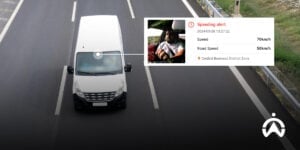
White van on the highway with overspeed notification as Cartrack camera solution to monitor safety and prevent danger while driving.

Subject to criminal liability

Drivers can face legal sanctions if they operate a cell phone while driving. Law No. 2 of 2009 concerning Traffic and Road Transportation, Article 106, states, "Every person who drives a motorized vehicle on the road is obliged to drive the vehicle properly and with full concentration." The use of cell phones is one of the prohibitions mentioned in the Explanation of Article 106. The penalty is a maximum of 3 months imprisonment or a maximum fine of IDR 750,000, as written in Article 283.

One way to prevent this risky behaviour is by installing a camera inside the driver's cabin. Cartrack offers the Smart Cabin camera, which not only enables live monitoring but also detects driver behaviour using Artificial Intelligence (AI) technology. The camera automatically records when a driver makes a call while holding their phone and issues an in-cabin alert to the driver.

Send us a message here for more information about Cartrack's camera systems and other features.


5 Key Parameters for Tracking Vehicle Usage Productivity within a Fleet Context

There are many parameters that can be used to evaluate vehicle usage in the context of a company's fleet productivity. It is easier and more accurate if data for each of these parameters can be captured and analysed automatically, such as if you use a fleet management system, rather than collecting it from paper documents or spreadsheets. Here are some common parameters available in a fleet management system that you can observe to track the productivity of each vehicle in your fleet.

1. Distance Travelled

This odometer data is used to compare the distance travelled by vehicle type or group within your fleet, for example a group of motorcycles, cement mixer trucks, or operational cars. What you compare matters, because it determines the average productivity. A cement mixer truck will have a different odometer reading from a logistics truck, even if both are used over the same period of time. By comparing distance travelled per vehicle group, you can find the average daily distance travelled per vehicle group and see which vehicles fall below that average.

2. Operating Duration

This parameter helps you gain a deeper understanding of vehicle productivity. Within a working day, you may find differences in operating duration between vehicles used for short-distance and long-distance deliveries, or between vehicles with fewer stops and those with more stops. The more stops there are, the shorter the vehicle’s operating duration may be, for example because the vehicle is switched off to unload goods. You can view the average daily operating duration compared with the number of working hours per day and assess whether it is effective.

3. Idle Duration

One of the parameters you need to pay attention to from the operational duration is the idle duration. Idle is a condition where the engine is left running when the vehicle is in a stopped position. Idle can be distinguished into productive idle and unproductive idle. Unproductive, for example, the driver starts the engine to rest in the vehicle. Productive idle, for example, the operator is operating the digger but the excavator is stationary. You can consider the productivity of working hours by comparing the average duration of unproductive idle and the average daily operational duration.

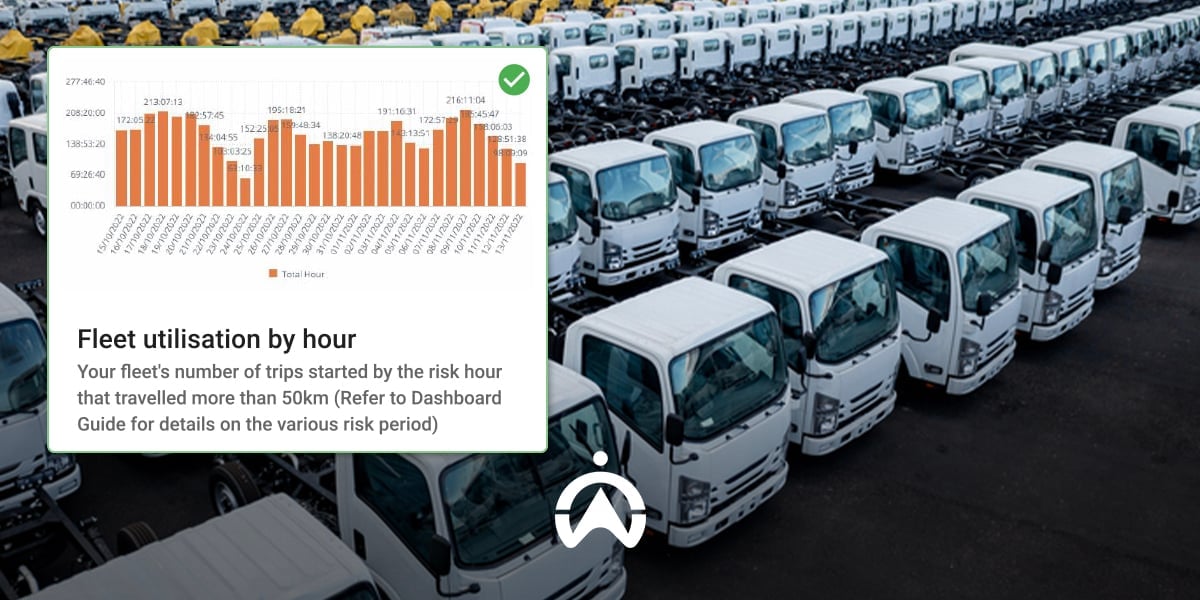
Display of fuel monitoring dashboard interface and vehicle usage productivity in fleet management system.

4. PTO Usage Duration

If you own a fleet of heavy equipment, you should install a power take-off (PTO) sensor to distinguish between productive and unproductive idling. This PTO sensor is designed to detect the activity of a machine's peripheral features—such as a crane on a truck, the hoist mechanism on a dump truck, or the bucket/arm assembly on an excavator. Consequently, you can determine whether the equipment is idling productively or not, and calculate the actual duration of productive activity relative to the total operational time of the machinery.

5. Number of Stops

This parameter can indicate the number of trips or tasks completed, particularly for delivery fleets. By examining the number of stops—filtering specifically for those related to assigned tasks—you can determine the average number of tasks completed per day. You can also calculate the average time spent at each stop. Naturally, it is necessary to distinguish between short-haul, medium-haul, and long-haul delivery vehicles to ensure that comparisons regarding the number of stops are fair and meaningful. This allows you to establish productivity standards that are accurate and well-targeted.

Understanding vehicle usage productivity helps you uncover operational challenges within your fleet and identify effective solutions. Through statistics, smart reports, and data analytics, Cartrack’s fleet management system provides significant insights into the productivity of your fleet’s vehicle usage. Send us a message here and request a product demo from the Cartrack team to learn more about how our platform can benefit your business.