

GPS Tracker or Vehicle Telematics: What's the Difference?

Most of the general public know a GPS tracker as a satellite-based vehicle tracking device. In fact, modern vehicle tracking devices do not rely solely on GPS satellites. To understand this better, you first need to know what GPS actually is.

GPS, or the Global Positioning System, is a global navigation satellite system (GNSS) owned by the United States government. There is not just one GNSS in the world; several other nations also operate navigation satellites that can be used globally, such as Russia with GLONASS, China with BeiDou, and the European Union with Galileo.

GPS Tracker

A GPS tracker refers to a device installed in a vehicle to continuously track its position. As explained above, despite being called a “GPS” tracker, this device does not rely solely on GPS satellites for positioning.

For more accurate positioning, trackers use more than 1 satellite, which not only consists of GNSS, but also its augmentation system. For example, 1 GPS tracker uses 2 GNSS (GPS, GLONASS) and 3 augmentation systems (WAAS, EGNOS, MSAS). These augmentation systems improve GNSS performance by providing range, integrity, and correction information, thus increasing accuracy to below 1 meter.

A person holds a smartphone displaying digital navigation icons to monitor the vehicle's GPS tracker and telematics in real-time.

Telematics Overview

Telematics is a combination of telecommunications and informatics, describing the integrated use of long-distance communication and information technologies. This combination of technologies enables telecommunications devices to send, store, and receive information to and from remote objects over a network.

This technology is widely used for vehicles or fleets, which is why it is also frequently referred to as vehicle telematics. Compared to a GPS tracker, telematics has a broader scope. However, the two are closely linked, as a GPS tracker is actually a component of a telematics solution. The telematics solution retrieves data from the GPS tracker (and other IoT devices) and transmits it over a cellular network to a central server. From there, the data is processed into actionable information within the software or application.

The presence of a GPS tracker and vehicle telematics provides visibility, flexibility, and efficiency in fleet management. Fleet managers can know exactly where all vehicles are and monitor their activities, allowing them to work from anywhere and manage the fleet more easily through digital means. For a comprehensive vehicle telematics solution, start with Cartrack today. Click here.
Reduce Excess Fuel Costs with Fuel Sensors and Cartrack MiFleet

Fuel prices across the world remain high, while fuel represents one of a fleet's largest operational expenditures. Companies that rely on a fleet of vehicles as a source of income are forced to increase service prices. This is certainly undesirable for customers. Is your company among those experiencing this?


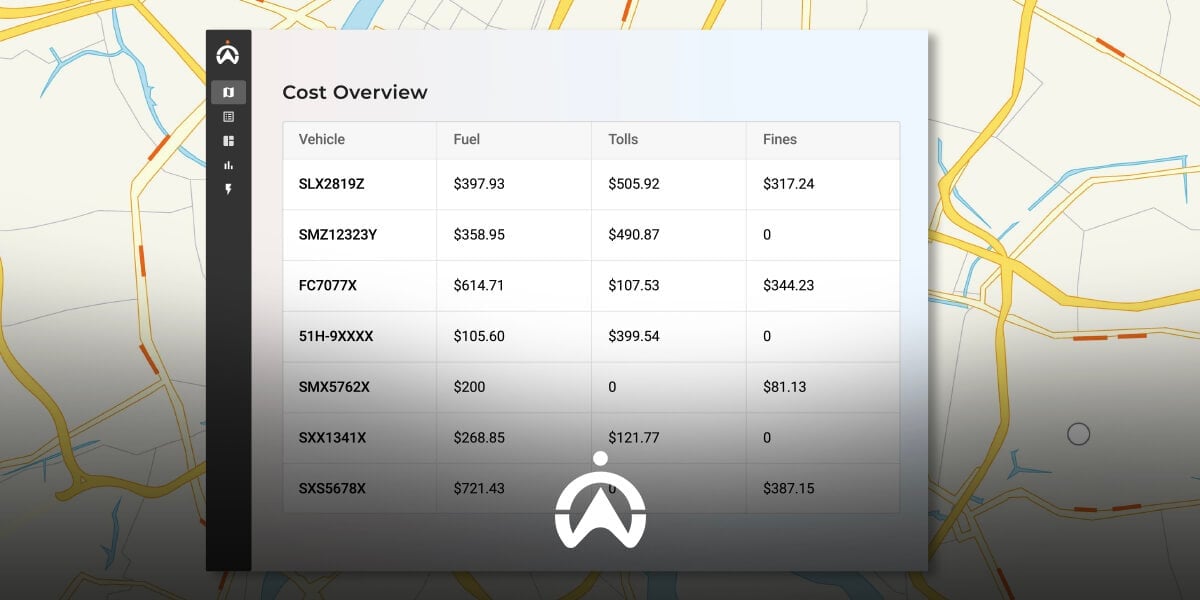
Cartrack has a solution for you: fuel sensors and MiFleet—as well as the Cartrack GPS tracker. This Cartrack solution is highly effective for managing and maintaining your fleet's fuel costs more efficiently. Cartrack's fuel sensors monitor vehicle fuel consumption and efficiency. MiFleet, a cost-management feature within Cartrack Fleet Web, ensures fuel consumption is within its intended use.

1. Prevent the misuse of fuel cards

Cartrack's telematics solution connects to your fuel transaction data and alerts you when it detects potential fuel card fraud. If your company uses fuel cards, you can import card transaction data into MiFleet in less than a minute.

2. Identifying the risk of fraud in fuel claim submissions

Cartrack's intelligent algorithm automatically matches fuel receipts with the vehicle's advanced telemetry data. You can determine whether the vehicle was actually present at the fuel station on the date and time of the fill-up. Furthermore, you can track whether the number of litres filled corresponds to the actual number. Any discrepancies identified are highlighted as risks, which you can immediately validate.

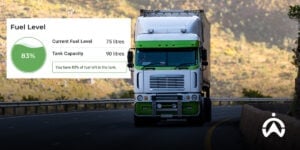
A green truck traverses a winding road with a MiFleet fuel sensor indicator showing a fuel efficiency level of 83%.

3. Comparing costs and fuel consumption between vehicles

MiFleet provides complete transparency into your fleet's fuel consumption and costs. Comprehensive MiFleet fuel reports compare fuel consumption between vehicles and show the number of litres used per kilometre. You can act on this data to save fuel and optimise your business.

MiFleet offers automated alert functions for potential fuel anomalies, an advanced Artificial Intelligence (AI) algorithm, practical and user-friendly features, as well as actionable fuel data. You will, of course, need to install a fuel sensor so the system can retrieve your fleet's fuel consumption data and process it in MiFleet.

The combination of these two features has proven highly effective for managing and reducing fuel expenditures. Our team in South Africa even trialled it for their internal fleet operations. The implementation of MiFleet technology and fuel sensors helped Cartrack South Africa save millions of rands (equivalent to billions of rupiah). Want to try Cartrack’s fuel efficiency solution? Send us a message here.