
5 Signs Your Fleet Management Is Inefficient

Managing a fleet is a complex undertaking. You must prioritise profitability, productivity, and efficiency, while also monitoring driver behaviour, vehicle maintenance, and operational data and performance. The sheer scale of responsibility demands that fleet managers be as efficient as possible. How do you know if your fleet management isn't efficient? Here are five signs.

1. Using Manual Methods to Track Your Fleet Activities

Do you rely primarily on manual communications (such as phone calls, radio, and instant messaging) to monitor your fleet's activity? If so, you're not yet in full control of your fleet. You need technology that gives you full visibility into your fleet's activities.

This visibility allows you to track vehicle locations in real-time without having to disturb drivers while they are on the road, monitor delivery progress, identify the trips taken by drivers, detect vehicle misuse, and much more. Imagine how many aspects of your fleet operations you could improve with all of this valuable information.

2. Using Multiple Platforms to Manage Your Fleet

Switching from one platform to another to manage your fleet is cumbersome—time-consuming and tedious. For example, you might use different platforms for vehicle tracking, driver assignment, reporting, and fleet administration and expense management. It's better to use one robust, user-friendly, integrated platform to handle everything.

Cartrack can be the best solution for you. Various functions are available in one platform, Cartrack Fleet Web, such as tracking vehicle position and trips travelled, monitoring driving behaviour, assigning drivers, scheduling services and document processing, managing costs, generating reports, planning routes, and much more. You can even save shared documents on the same platform and access them anytime and anywhere via an internet connection, because Cartrack uses cloud-based storage.

3. Ineffective Data Management

Effective fleet managers make important decisions based on data. Therefore, fleet data management must be reliable—complete, accurate, with minimal human error, securely stored, and able to deliver quick insights. Operating a single vehicle alone can generate a large amount of data, such as maintenance records, fuel transactions, usage time, daily mileage, and more.

If you don't effectively manage all your fleet data, you'll spend a significant amount of time collecting, searching, and analysing it. This difficulty is compounded if you're still using paper documentation, which is prone to damage and loss. Therefore, you need a system that can accurately record all fleet data, facilitate data retrieval, store large amounts of data on a secure server, and process and present the data instantly. This not only saves time and workload, but also allows you to make strategic decisions quickly.

Logistics manager standing in front of a row of trucks

4. Spending Too Much Time on Administrative Work

Many administrative activities are a daily requirement in fleet management, including report generation, scheduling vehicle servicing and document renewals, as well as general record-keeping. Spending too much time on these tasks will inevitably drain your productivity. That is why you need a system that helps you work more efficiently.

Cartrack's fleet management system offers automation functions for administrative tasks, especially repetitive ones. These include automated report generation and delivery; service scheduling based on date, time, and distance; iterative route assignments; and fuel purchase verification. These functions not only streamline work time but also minimise human error.

5. No Clear Benchmarks for Assessing Performance

Your fleet is likely to operate inefficiently without clear performance benchmarks. Various assessment parameters are needed to drive your fleet's operations toward your desired targets. For example, to assess driving safety, you monitor parameters such as speeding, harsh braking, sudden acceleration, and sharp turns. To ensure on-time deliveries, drivers should not start trips late, should not linger in certain areas because they need to move to other areas, and so on.

An effective fleet management system turns data into easy-to-understand information and delivers insights that can be acted on immediately. With Cartrack, you can monitor and evaluate several areas of your fleet operations, such as driving safety, fuel efficiency, vehicle productivity, delivery progress, effectiveness of area-to-area visits, and more, using clear parameters. You can also quickly compare the performance (and other aspects) of all similar vehicles within your fleet.

Are any of the five signs above affecting your fleet? Don't delay in addressing your fleet management issues, as they can have a greater negative impact on your business if left untreated. Use Cartrack's fleet management system to address these five issues. Contact us here to learn more about how our system can make your fleet management more efficient.

3 Reasons You Shouldn't Leave Your Engine Idling

Idling is a condition where the engine is running while the vehicle is stationary (not moving). In driving, idling may be unavoidable, for example in heavy traffic. However, if left unchecked, idling can become a bad habit that ultimately harms the company.

The impact of idling on a single vehicle with an engine capacity of 1,500 cc or less may not be noticeable. However, it is different if you manage a large fleet of vehicles with higher engine capacities, and idling is carried out on a large scale by all your drivers. This results in large-scale fuel wastage, which becomes a significant blow to your business profits.

Recognising the significant impact of idling on company profits, it is important to start monitoring idling during every instance of vehicle use. Beyond the financial cost, idling also causes engine wear and air pollution.

1. Wasting fuel

For every hour of idling, a heavy-duty truck consumes approximately 0.8 gallons of fuel, while a semi-truck uses about 0.64 gallons of diesel when unloaded. Long-haul trucks typically idle for around 1,800 hours annually, consuming approximately 1,500 gallons of diesel. Just imagine the financial waste if this figure were multiplied by the size of your entire fleet and the average fuel price. Unless the stop lasts less than 10 seconds, you should instruct your drivers to avoid idling. There is a good reason for this: idling for 10 seconds or longer actually consumes more fuel than turning off the engine and restarting it.

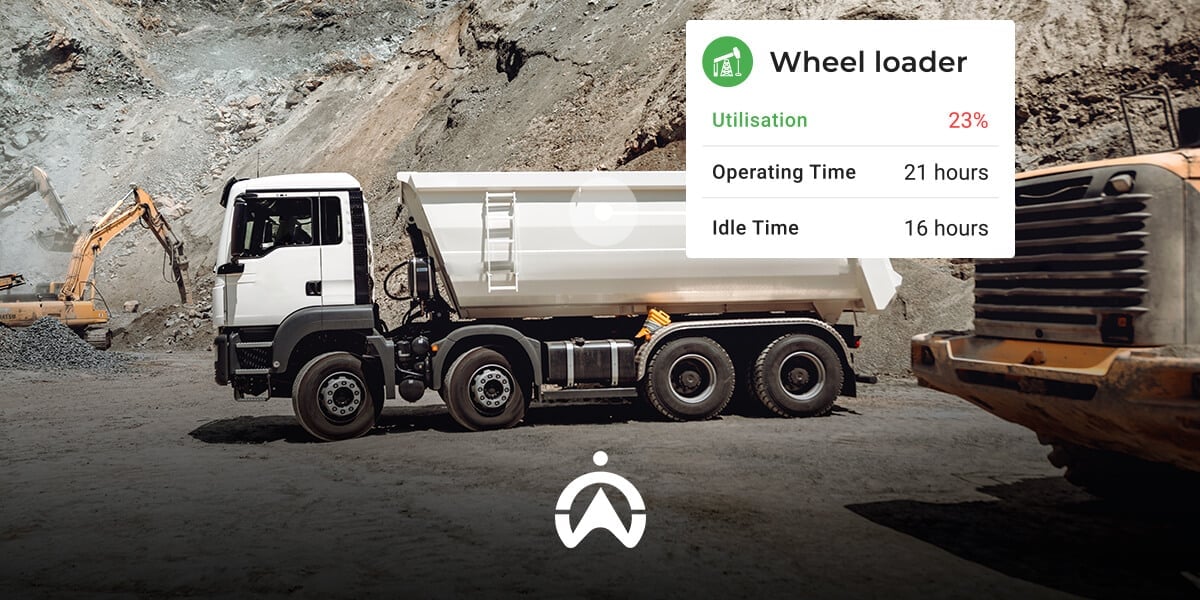
The lawn mower tractor is working with a performance indicator to minimize the duration of the engine running while idling.

2. Causes Engine Wear

Long periods of idling have a negative impact on the lifespan of your vehicle’s engine. Because the engine does not operate at optimal temperature during idle, fuel is not fully combusted. This incomplete combustion leaves behind residue, which can contaminate engine oil, foul spark plugs, and damage the exhaust system. As a result, you will incur higher costs for servicing and earlier replacement of parts. If your drivers are idling to warm up the vehicle before starting a trip, a better alternative is to drive the vehicle gently at a low speed.

3. Increased Air Pollution

Beyond wasting fuel, idling vehicles also produce exhaust emissions that are toxic when inhaled. For every 10 minutes of idling, one pound (0.45 kg) of carbon dioxide is released into the atmosphere. In addition to gases, idling vehicles release harmful chemicals and particulate pollution (soot) into the air, contributing to ozone formation, regional smog, and global climate change. Pollution levels increase further if the vehicle's catalytic converter is not functioning properly; ask your technician to check it during vehicle servicing.

Although it may seem trivial, idling actually has a significant impact on companies, vehicles, and the environment. Start monitoring the idling activity of your vehicles and take steps to reduce it. Cartrack’s fleet management system offers an idling monitoring feature that sends alerts via email or SMS whenever idling occurs. Cartrack also provides automated Idle Reports detailing start and end times, locations, durations, and total idling time for your selected period. Leverage Cartrack’s advanced monitoring technology—contact us here today!

Telematics Devices You May Need to Monitor Your Trailer Truck

To transport larger loads or specialised cargo, trucks require trailers. A trailer is an additional cargo-carrying unit attached to a truck. There are many types of trailers, each with different load capacities and requirements. Some of the commonly found trailer types in Indonesia include flatbed, refrigerated trailers, dry vans, and dump trailers.

Do you own or manage multiple types of trailer trucks in your fleet? Managing the operational risks of your trailer truck fleet is certainly an important consideration. Telematics can help you manage these risks, specifically through vehicle monitoring devices. Because trailer types and purposes vary, you may also need different monitoring devices. This article will help you determine which monitoring devices are most needed for your trailer truck fleet.

1. GPS Tracker

This device must be installed on each of your trailer trucks before adding other monitoring devices. Basically, a GPS tracker allows you to monitor the location of each of your vehicles in real-time. Currently, GPS tracker features have advanced. You can monitor vehicle activity by using geofencing and aggressive driving behaviour (sudden acceleration, hard braking, sharp turns, and speeding). These two features are important for monitoring productivity and safety in the use of your trailer truck.

2. Door Sensor

For enclosed trailers, both dry vans and refrigerated units, you will need to add a door sensor. This device monitors cargo door open-and-close activity. You can track the time, location, and duration of when the door is opened or closed. It helps you monitor loading and unloading activities, as well as possible deliveries outside the assigned schedule. You can also set alerts to be notified when the door is opened and/or closed, allowing you to take immediate action if the door is opened at an incorrect location.

Open cargo monitoring footage on a trailer truck with security system notifications from a telematics device.

3. Temperature Sensor

If you have a truck with a refrigerated trailer, a temperature sensor will be very useful for you. With a temperature sensor, you can ensure the temperature inside the trailer is optimal during the trip, so that the quality of the food or beverages being delivered is also maintained. To be immediately informed when the refrigerated temperature exceeds the upper or lower limits you set, you can set instant alerts.

4. Sensor Power Take-Off (PTO)

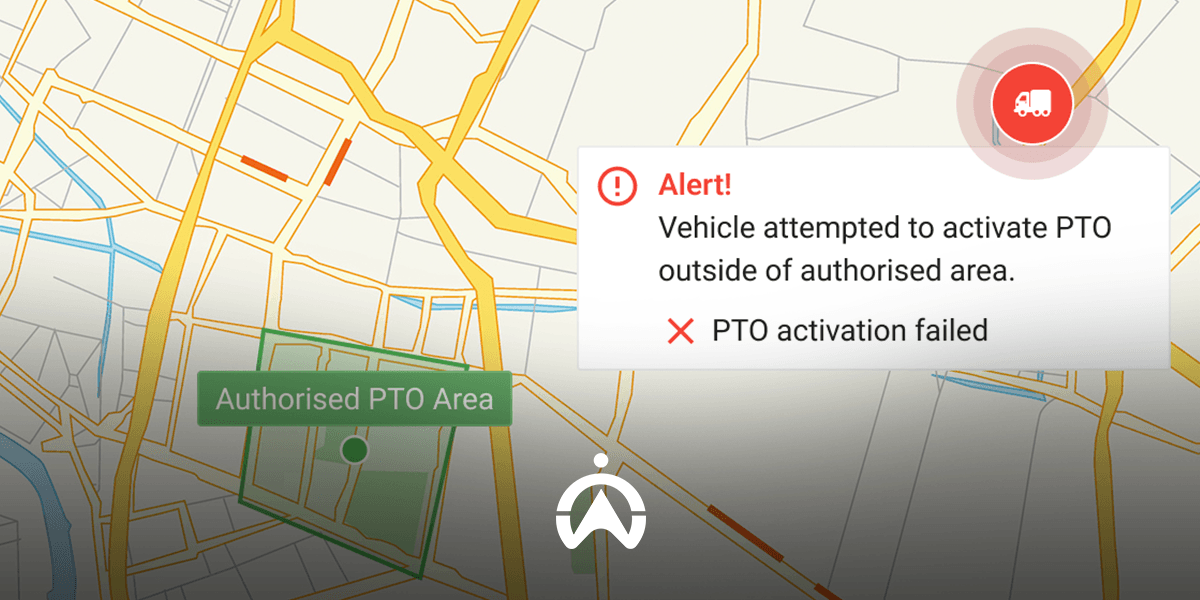
The use of mechanical devices on trucks, such as a dump trailer bed that is raised using a specific button or switch, can be monitored with a PTO sensor. This device allows you to track the time, location, and the geofence area where the PTO is activated and deactivated. This data is useful for monitoring operator and vehicle productivity as well as detecting truck misuse. You can also set alerts to be notified instantly when the PTO is turned on and/or off.

5. Camera

For more comprehensive monitoring, you can add cameras inside or pointing at the trailer. This way, you can visually monitor how the trailer is being used, the loading and unloading process, and the security of the goods inside the trailer. With Cartrack, you can install up to four cameras in one vehicle, allowing you to monitor from four different angles.

Many trailer trucks carry high-value cargo, which is why a monitoring system is essential. Telematics helps monitor your trailer truck more efficiently and ensures safety while travelling. You can add a GPS tracker and several monitoring devices to your trailer truck as needed. Choose Cartrack as the best telematics provider for your trailer truck operations. Send us a message here for more information and an online product demonstration from the Cartrack team.

Can a Vehicle GPS Tracker Be Installed on a Ship?

You may already be familiar with the use of GPS trackers for various types of land vehicles such as motorcycles, passenger cars, trucks, and even heavy equipment. However, have you ever wondered whether these GPS trackers used for land vehicles can also be used on ships?

Basically, as long as the area is within mobile network coverage, the use of a GPS tracker is still possible. This is because a GPS tracker uses a mobile network to communicate wirelessly with the server.

The challenge of using a GPS tracker on ships is mobile network coverage in the areas being travelled. Although mobile network coverage has now extended to offshore areas, signal stability remains unpredictable. So, what is the solution to ensure that vehicle GPS tracking devices can be installed on ships?

1. Connection to the Ship’s Electrical System

In land vehicles, a GPS tracker is connected to the battery. Ships and other motorised watercraft also use batteries. The function is the same, namely to store and supply energy for the vehicle’s electrical system. A GPS tracker can still be connected to the battery in certain types of motorised watercraft, such as jet skis and motorboats, using a “wired connection” method. With extended wiring, the GPS tracking device can be connected to the battery and placed in another area where it can receive a better signal.

Kapal layar di perairan tenang dekat pesisir

However, many ships have their batteries located deep inside (in the engine room), making it impossible to connect a GPS tracker directly. This is also due to various structures or materials that block the device from receiving signals. Another factor is that some vessels only use high-voltage generators, while GPS trackers typically only support 12V and 24V input. In such cases, you will need a GPS tracker that can be connected to a USB port or a power outlet linked to the ship’s electrical system.

2. Addition of a Satellite Signal Booster Antenna

A GPS tracker is effective when it receives signals from multiple satellites. Satellite signal interference can lead to inaccuracies or a failure to pinpoint the tracker's location. To overcome issues with suboptimal satellite signal reception while a vessel is underway, GPS tracking devices require an external antenna. This satellite signal-boosting antenna connects to the GPS tracker, enabling it to capture signals from greater distances. The GPS antenna converts radio signals from various satellite frequencies into electronic signals, allowing the GPS tracker to calculate its position more accurately.

3. GPS Tracker Protection from Water

Protecting the GPS tracking device from water—especially saltwater, which can cause short circuits and corrosion—is crucial. Even if the GPS tracker is located indoors, it could still be exposed to water from passengers who are wet after being in the sea. Therefore, the device requires waterproof protection for its surface and cable connections, such as a rubber pouch or waterproof tape.

Do you own a boat, jet ski, or other motorized watercraft and want to monitor your assets? Cartrack can meet your needs by modifying devices to suit the vessel's structure and operational areas. Consult with our sales team and expert technicians now—click here.