
Benefits of Using an Integrated Fleet Management Platform

Imagine a single platform that has everything you need. For example, an online shopping platform selling everything from fashion to mobile phone credit to airline tickets; offering games with various shopping rewards; and a digital wallet feature. All of this would undoubtedly enhance your shopping experience and make online shopping more convenient.

You can also find similar value in other types of integrated platforms, such as the fleet management platform developed by Cartrack. The Cartrack platform is designed to meet the unique needs of users in managing their vehicle fleets. In addition to being flexible and customisable, everything you need to manage your fleet is accessible from one place.

1. Completing Work is More Practical

As a fleet manager, you are responsible for several different tasks, such as assigning deliveries, monitoring vehicle operations, scheduling maintenance, generating reports, and managing expenses. You may be accustomed to using multiple programs or platforms for each type of task, with complex systems that reduce your effectiveness. Switching from one platform to another can waste a lot of time. A single platform that allows you to do everything seamlessly and integrates all functions will undoubtedly make completing tasks much more streamlined.

2. End-to-End Control and Visibility

Not only can an integrated fleet management platform handle various types of tasks, it also enables end-to-end monitoring. You do not need separate platforms to monitor vehicles across different regions. In fact, your department and other departments can share a single platform using a sub-user system (with restricted access) for end-to-end control and transparency, for example across manufacturing, distribution, and warehousing within the supply chain.

Hand holding a digital globe with logistics icons to illustrate the benefits of an integrated fleet management platform in modern business.

3. More Integrity and Quality Data

With an integrated platform, data comes from a single source. Although it is used for different purposes, data consistency is still maintained. In addition, data recording is carried out automatically, thereby minimising the risk of human error. This automated data recording is made possible through the installation of IoT devices in vehicles, which are connected to the fleet management platform. With a single data source and automated data input, all data used is ensured to have integrity and quality.

4. Better Collaboration

The various functions within this fleet management platform enable smoother cross-department collaboration. Not only the Operations department can benefit from the fleet management platform, but also Human Resources (HR), General Affairs (GA), Finance, and Health, Safety, and Environment (HSE). For example, the HR team can view driver locations and working hours to verify overtime claims; the GA team can automatically schedule vehicle maintenance; the Finance team can review fuel transaction details to verify reimbursement claims; and the HSE team can develop driver training materials based on Driver Scorecard reports.

5. More Cost Efficient

You'll likely incur higher costs using separate programs, including upgrades and maintenance, as well as document storage. With an integrated fleet management platform, you'll significantly reduce IT costs. Furthermore, a single integrated fleet management platform can be used across departments, significantly saving each department's budget.

There is no doubt that an integrated fleet management platform> is a solution for improving the efficiency of your business operations. With a wide range of features and a robust, user-friendly system, the Cartrack platform is the best solution for your fleet management needs. Interested in starting to use Cartrack’s integrated fleet management platform? Contact us here.
Ambulance Services Become More Efficient with Vehicle Tracking Systems

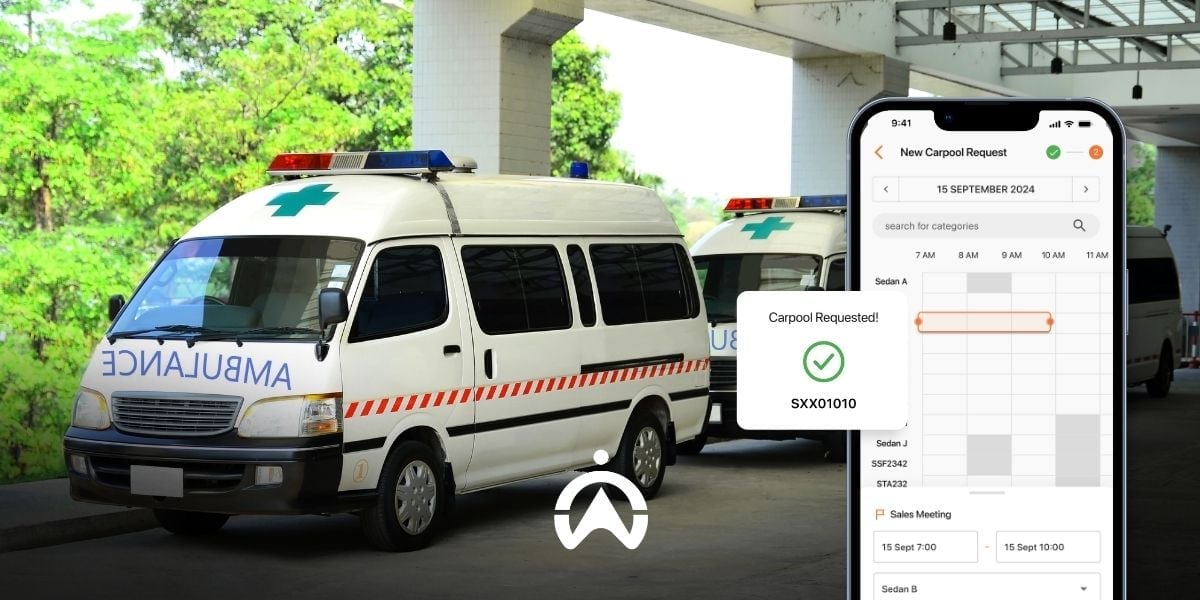
In ambulance operations, every second counts. For this reason, technology is needed to improve operational efficiency. Systems such as vehicle tracking can help improve ambulance response times. The platform (mobile application and web-based software) also makes overall ambulance fleet management more practical.

1. Track the nearest ambulance to the location

A fast response rate is crucial for people who require emergency care. For this reason, it is important for operators or dispatchers to have access to the full locations of all ambulances belonging to the provider. Ambulance deployment becomes more effective because operators can identify the nearest ambulance to the patient’s location and estimate the arrival time.

2. Know the traffic situation

Operator dapat melihat situasi lalu lintas melalui platform pelacakan kendaraan yang terintegrasi dengan Google Maps. Informasi ini dapat membantu operator saat mengirim ambulans ataupun menavigasi pengemudi dalam pengambilan atau pengalihan rute perjalanan dengan sesedikit mungkin hambatan.

3. Accelerate the Provision of Information to Related Parties

The vehicle tracking platform has a real-time location sharing feature with an adjustable validity period. In urgent situations, operators can share ambulance location information with relevant parties who can assist, such as certified paramedic responders, police, and emergency department staff.

Paramedics are preparing medical equipment inside the ambulance with vehicle tracking system for efficient emergency services.

4. Know the Patient Transport and Drop-off Times

Sistem pelacakan kendaraan biasanya juga menyediakan beragam fitur tambahan, salah satunya sensor pintu. Sensor ini memberikan informasi aktivitas buka-tutup pintu, seperti lokasi, waktu pintu dibuka dan ditutup, serta durasi pintu terbuka. Dengan memasang sensor ini pada pintu kabin pasien, penyedia ambulans dapat mengetahui kapan serta seberapa efisien proses pengangkutan dan penurunan pasien.

5. Detecting the Driver on Duty

For this requirement, ambulance providers need driver identification tags (DID). Each driver is assigned a unique tag (an iButton device), which must be tapped on a reader installed in the ambulance. This allows operators to identify which driver is assigned to each trip.

6. Have Accurate Evidence for Billing

With a vehicle tracking system, ambulance providers have comprehensive historical data, such as the ambulance units dispatched, distance travelled, destination locations, arrival times, stop durations, and more. This detailed information makes it easier for ambulance providers to calculate charges.

Vehicle tracking systems improve professionalism in ambulance services by enhancing response times. Faster ambulance response times can help patients receive treatment more quickly, thereby reducing mortality rates. Are you involved in ambulance services? Contact us here to find out more about how Cartrack’s vehicle tracking system can improve the efficiency of your ambulance services.

Fuel Prices Rise, Streamline Your Fleet’s Fuel Consumption with Cartrack

As is well known, the geopolitical crisis between Russia and Ukraine triggered a surge in global oil prices, reaching over US$100 per barrel. Consequently, fuel prices worldwide, including in Indonesia, also soared. To reduce the company’s burden, Pertamina decided to raise the prices of non-subsidised fuels such as Pertamax, Pertamax Turbo, Dexlite, and Pertamina Dex. Following Pertamina, Shell, Vivo, and BP-AKR also increased their fuel prices.


High fuel prices naturally affect the operational costs of companies, particularly those in sectors such as logistics, transportation, and vehicle rental. Companies that rely on vehicle fleets inevitably need to start improving fuel efficiency. To ensure efficiency is properly targeted, you need accurate data that provides insight into vehicle usage and fuel consumption. Cartrack’s fleet management system can be a solution that helps companies improve fuel efficiency.

1. Reduce Idle Habits

Idle activity, which refers to leaving the engine running while the vehicle is not moving, is proven to waste fuel. Vehicles waste an average of 2–4 litres of fuel for every hour of idling. For this reason, you need to take steps to Cartrack’s real-time alerts and idle reports help you monitor and evaluate this inefficient behaviour.

The idle threshold set by Cartrack is 5 minutes, where you will receive a notification once the vehicle’s idling duration reaches the sixth minute. You can check the vehicle’s location and traffic conditions at that time on the Cartrack map to determine whether idling is truly necessary or whether you need to address the driver. On the other hand, Cartrack’s Idle Report provides information on the time, duration, and location of vehicle idling to help you evaluate drivers’ idling behaviour and reduce it.

2. Control Speeding Habits

Driving at high speeds, starting at around 95 km/h, increases fuel consumption. Over the same distance, fuel consumption is approximately 7–14% higher at speeds above this threshold. To control this behaviour, you can use Cartrack’s speeding alerts and reporting features.

Cartrack’s speed threshold for speeding alerts is 130 km/h, although you can request a different setting. For more details, you can download the Overspeed Report, which highlights trips exceeding 80 km/h, 100 km/h, 120 km/h, and 140 km/h using colour indicators. You can view the location and time of each speeding incident and analyse trends to identify preventive, corrective, or punitive actions.

A driver fills up a silver car with petrol as an illustration of the operational costs resulting from unsafe driving behaviour.

3. Prevent Vehicle Misuse

Operational vehicles should be used to support company work or business activities. Using vehicles outside their intended purpose increases fuel costs. With a vehicle monitoring system like Cartrack, you can detect unauthorised side jobs or personal use of company vehicles.

Several Cartrack features can be used to detect vehicle misuse that leads to these losses, such as out-of-schedule usage alerts, geofence, stop reports, and cargo door sensors. Through these features, you can be notified whenever there is vehicle activity unrelated to assigned tasks, such as engine start-ups outside working hours, visits to restricted areas, route deviations involving prolonged stops unrelated to the assignment, and unloading of cargo at locations different from those specified in the task.

4. Fuel Loss Detection

One thing that is often overlooked in fuel efficiency efforts is ensuring there are no fuel leaks. A drastic drop in fuel volume can occur due to fuel theft or vehicle malfunctions, among other things. With Cartrack’s fuel sensor and fuel loss alert feature, you can quickly identify any irregularities in fuel consumption.

The Cartrack system will send an automatic alert if it detects a significant decrease in fuel volume. You can also check your fuel graph, fuel consumption, and fuel efficiency reports to determine whether this is a frequent occurrence. You can then conduct a data-driven investigation to determine the cause.

Red fuel nozzles fill truck tanks to monitor fleet fuel consumption data showing efficiency of liter usage per distance.

5. Verify Fuel Purchase Claims

Excessive spending on inappropriate fuel consumption needs to be curbed. While there are tolerances or ceilings for fuel claims, this does not mean there is no oversight at all. With trip reports, sensor and fuel reports, and Cartrack’s MiFleet (a cost management feature), you can estimate your fuel consumption rationally.

From trip reports or Google Maps integrated into the Cartrack fleet management platform, you can see the distance travelled by your vehicle. From there, you can estimate the amount of fuel required, taking into account traffic conditions (available in the map filter) and the vehicle’s fuel consumption trends (based on fuel reports). This also makes determining fuel claim limits more accurate.

For instant verification, you can compare your claim with your fuel report, which shows the number of litres, the volume before and after refuelling, and the refuelling location. You can also use the MiFleet feature to simplify verification by entering your fuel receipt details and viewing the location shown on a map when your vehicle refuels.

6. Manage Vehicle Maintenance Better

Delayed oil changes, underinflated or worn tyres, and clogged air filters are some vehicle issues that can lead to fuel wastage. One of the causes of such vehicle problems is irregular maintenance. Cartrack’s maintenance reminder features and CAN bus sensors can help schedule maintenance more efficiently, ensuring that nothing is missed.

Cartrack can automatically detect each vehicle’s mileage and engine hours, enabling scheduling to be automated. If your vehicle is equipped with a CAN bus system, for example European brands, you can install CAN bus sensors and receive notifications related to engine diagnostics, temperature, and over-revving. This CAN bus data helps technicians accurately identify vehicle issues and repair them before they become more serious. By keeping vehicles in optimal condition, fuel consumption will also become more efficient.

Ensure your vehicle fleet’s fuel consumption remains efficient. Use Cartrack with a range of standard and advanced features to support the fuel cost efficiency of your fleet. Contact us here for orders, enquiries, or to request an online Cartrack demo.

4 Tips for Optimising the Utilisation of Official Vehicles with a Fleet Management System

Considering the sheer number of departments, divisions, and regions, the government undoubtedly has a large fleet of official vehicles. This is not only a matter of quantity but also a significant responsibility, as the budget for these vehicles comes, in part, from public funds. Therefore, the government must ensure that official vehicles and related costs are used responsibly.


To ensure efficiency in carrying out duties using official vehicles, the government needs to measure vehicle utilisation down to the individual level. However, analysing data at an individual level can be challenging. The implementation of a fleet management system based on GPS vehicle tracking will simplify this analysis process, with results that are naturally more accurate. If you work within the government sector related to official vehicle management, here are several tips for improving the utilisation of official vehicles using a fleet management system.

1. Analyse Usage Trends and Set Standards

To understand usage trends, determine several parameters that provide important insights, such as mileage, duration, and fuel consumption. Then, set minimum and maximum usage standards based on these parameters and the vehicle type, for example, a minimum of 300 km per month and a maximum of 150 litres per month for saloons or SUVs.

Features: fuel sensor, aggressive driving behaviour monitoring (hard braking, sudden acceleration, speeding, and sharp cornering), idle monitoring (leaving the engine running while the vehicle is stopped), trip history, stop history, route replay

2. Identification of Inefficiencies Based on Usage Standards

Identify inefficient use of official vehicles by analysing work trip history. For example, note where vehicles travel, as well as their arrival times and the duration of their stops. You can then determine how actual vehicle usage compares with the standards you have established (see point 1). If vehicle usage is below the standard, you may wish to consider adjusting the number or types of official vehicles in your department.

Features: trip reports, stop reports, idle reports, idle alerts, geofence alerts, vehicle misuse alerts, trip replay, driving behaviour monitoring, fleet performance dashboard.

A line of police service vehicles in a parking area managed using a fleet management system for operational optimization.

3. Set Usage Warnings

Ensure that official vehicles are genuinely used to support work activities (PMK No. 76/2015, Article 1), and are only used during office hours and not taken out of town unless with written permission from the head of the institution (PERMENPAN No. 87/2005, Appendix II). Set up real-time alerts regarding usage, such as use outside working hours and outside the city. You can create and use geofence alerts to be immediately informed whenever an official vehicle is taken out of town.

Features: geofence, geofence alerts, out-of-schedule usage alerts.

4. Schedule Better Maintenance

Poorly managed vehicle servicing schedules can disrupt productivity in vehicle usage. A fleet management system can help you schedule preventive maintenance more efficiently by automatically detecting each vehicle’s mileage and engine operating hours. The system can send notifications a certain number of kilometres or time in advance, helping you adjust vehicle usage so that operations are not disrupted.

In addition to preventive and regular maintenance, a fleet management system can also manage predictive maintenance by integrating vehicle CAN bus data (if your vehicles are equipped with a CAN bus electrical system) into the system. You can receive notifications related to engine diagnostics, temperature, and over-revving based on Diagnostic Trouble Codes (DTCs) detected by the vehicle’s CAN bus. This CAN bus data helps technicians accurately identify vehicle issues and fix them before they become more serious, which helps reduce disruptions to productivity.

Features: reminder (service schedule reminders), CAN bus sensor, alerts (for configuring diagnostic notifications from the CAN bus).

The government has both a responsibility and a moral obligation to control budgets and deliver efficient public services. Optimising the use of official vehicles can reduce costs and maintain productivity during working hours. For this purpose, you need the right parameters and technology to help you understand the performance of the official fleet, including identifying issues and areas that require improvement. With Cartrack’s fleet management system , you can do all of this from a single platform. Contact us here for orders, enquiries, and to request an online product demo.