
The Best Way to Prevent Fuel Theft in Your Fleet

Many businesses don't realise they're experiencing fuel theft due to a lack of dedicated monitoring. If left unchecked, your business could lose millions of rupiah each month. To combat this, you need fleet management software equipped with a fuel monitoring system.

What is Fuel Theft?

Fuel theft occurs when someone takes gasoline or diesel from a vehicle without permission. In business, this can occur in various ways, including direct tank siphoning or misuse of the vehicle for non-business purposes.

The larger your business fleet, the greater your potential losses. The same applies if your business involves large vehicles or heavy equipment that consume more fuel.

Common Types and Modes of Fuel Theft in the Field

Fuel theft and fraud pose a challenge to businesses because they are often perpetrated internally. Therefore, it's important to understand common methods used to prevent it.

1. Direct suction

Siphoning is the most classic and most common method of fuel theft. Perpetrators typically use a hose and a special pump to siphon gasoline from the tank into a storage container.

This method is very likely used by theft syndicates, who exploit opportunities such as illegal parking. It's also not uncommon for drivers to carry out the theft themselves, then sell the fuel to fuel fences.

2. Manipulation of purchase receipts

Another common method is manipulating purchase receipts to allow drivers to profit. Drivers often collaborate with gas stations to manipulate data so that purchases are counted as higher than they actually are.

For example, if you budget to fill your vehicle's tank to 100 litres of fuel, the driver can work with the attendant to only fill up and pay for 80 litres, with any excess funds going directly into the driver's pocket.

3. Fake transactions and misuse of fuel cards

Although fuel cards are not very common in Indonesia, some big companies are already using them. Regarding fuel cards, drivers can also collaborate with petrol station attendants to carry out fake transactions.

The perpetrator can ask the officer to tap or swipe the card twice in a single transaction. They can also use the company card for other transactions unrelated to business needs.

Read Also: How to Easily Calculate Fleet Fuel Consumption

The Serious Impact of Fuel Theft on Your Business

These irresponsible actions have significant impacts on businesses, affecting many aspects of operations. Potential losses include:

1. Financial loss

The first impact is significant financial loss for a business or company. This includes not only the loss from the theft itself, but also the time and expense spent investigating the fraud.

2. Damage to the vehicle

The siphoning method can damage the fuel tank and lines, which in the long run lowers engine performance. This requires expensive repairs and also unproductive downtime.

3. Security risks

Besides the potential damage, fuel theft is also associated with leaks and spills. Under certain circumstances, this can lead to explosions and fires, which pose a safety hazard.
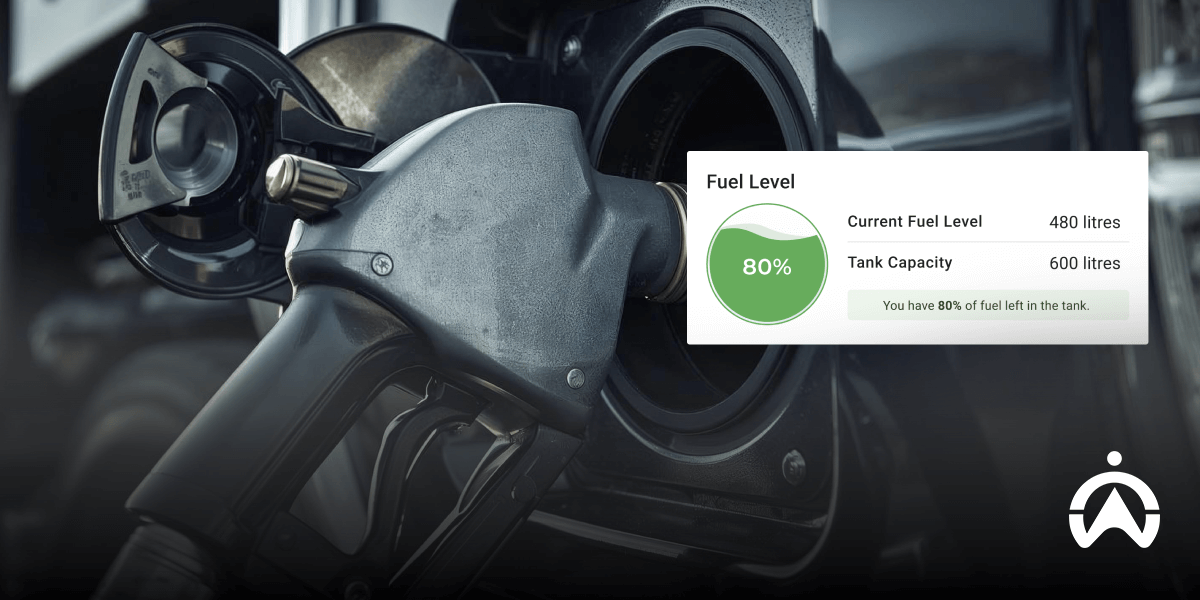
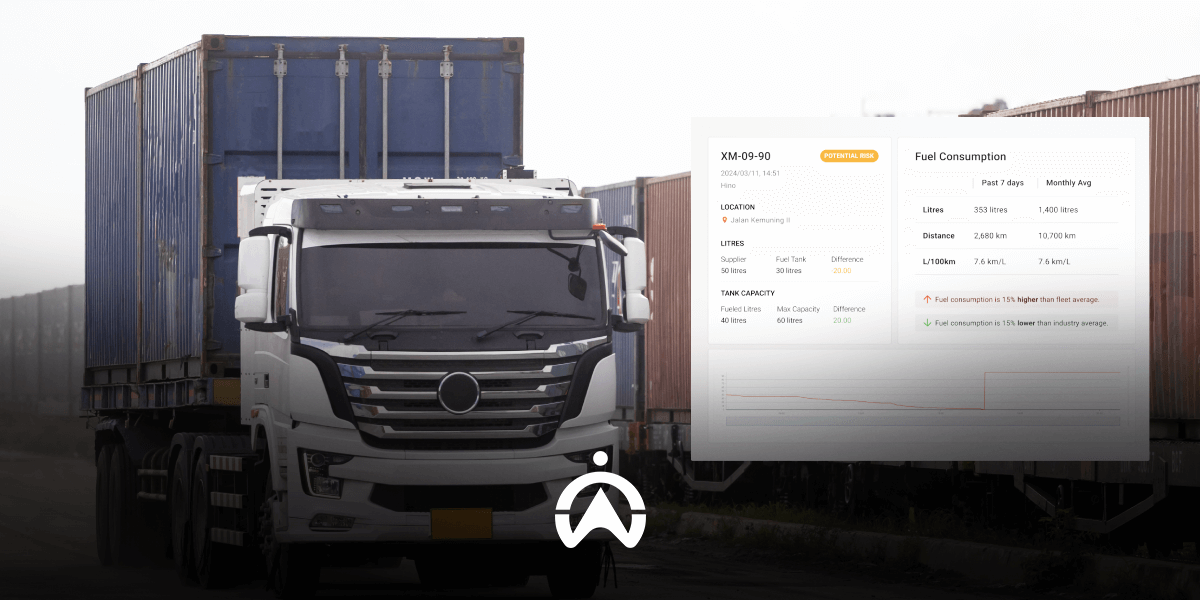
Vehicle fuel tank monitoring to monitor liter volume as a way to prevent fuel theft in the fleet.

How to Detect Fuel Theft?

1. Physical and behavioural inspection of the vehicle

Forced fuel siphoning usually leaves visible marks, such as gouges or damage to the fuel tank cap or fuel hose. This damage can impact vehicle performance, such as sluggishness, stuttering, or lack of power.

You may also smell gasoline in or around the vehicle after the theft. However, this characteristic may not be present if the perpetrator is a driver familiar with the vehicle.

2. Utilising fuel monitoring technology

By using Fleet Management System and fuel monitoring technology, you can definitely know your petrol usage. Other potential wastages like speeding, idling, and so on will also become visible.

Not only that, you can also set up notifications if there's a sudden significant drop. This way, you can promptly investigate and address suspected theft.

Effective Steps to Prevent Fuel Theft with a Fleet Management System

Every fleet manager's priority is efficiency and keeping operations running smoothly and under control. One way to do this is by using a Fleet Management System to monitor fuel transactions in the following ways:

1. Real-time notification and monitoring

You can set your settings to receive notifications if there's a significant increase or decrease in fuel volume. This allows you to detect suspicious fuel-related activity and respond quickly.

2. Validate location with GPS

By using a GPS tracker within your fleet management system, you can validate GPS locations and fueling transactions. This can prevent unauthorised purchases or transactions made under the guise of gasoline purchases.

3. Setting purchase limits

This system involves synchronising approved fuel purchase limits with each vehicle's actual tank capacity. Managers will set a limit on the number of litres of fuel that can be purchased based on tank capacity, so purchases exceeding the limit will be investigated.

Baca Juga:Memantau Konsumsi BBM dengan Fuel Sensor & Fuel Probe

How Cartrack Helps Prevent Fuel Theft

1. Fuel Monitoring feature with a fuel sensor

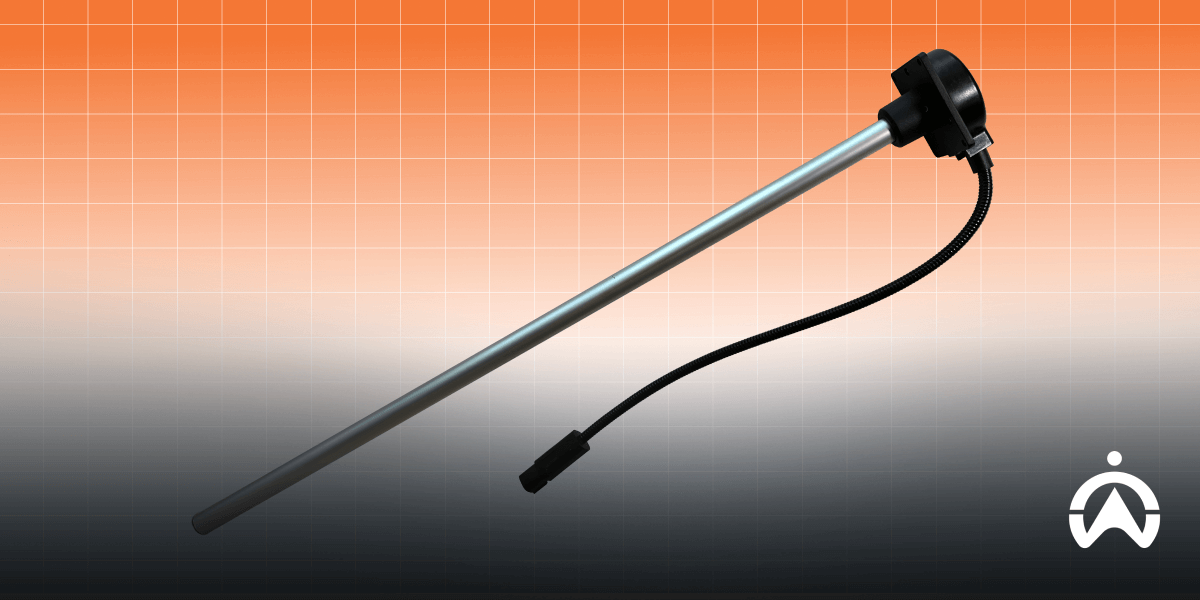
Fuel monitoring from Cartrack provides three types of sensors: floater, fuel probe, and CANbus. These sensors give you fuel usage data and let you get notified if there's a significant drop.

2. Fleet cameras for monitoring activity around the vehicle

With real-time video recordings and advanced analysis, Cartrack's fleet cameras can help you identify fuel theft suspects. The recordings also serve as evidence and a deterrent, as perpetrators will think twice when they see the camera.

3. MiFleet feature to detect theft

MiFleet is a cost management system that tracks all fleet administration and operating costs, including fuel. In case of fuel theft, MiFleet can analyse fuel card transactions to spot the theft.
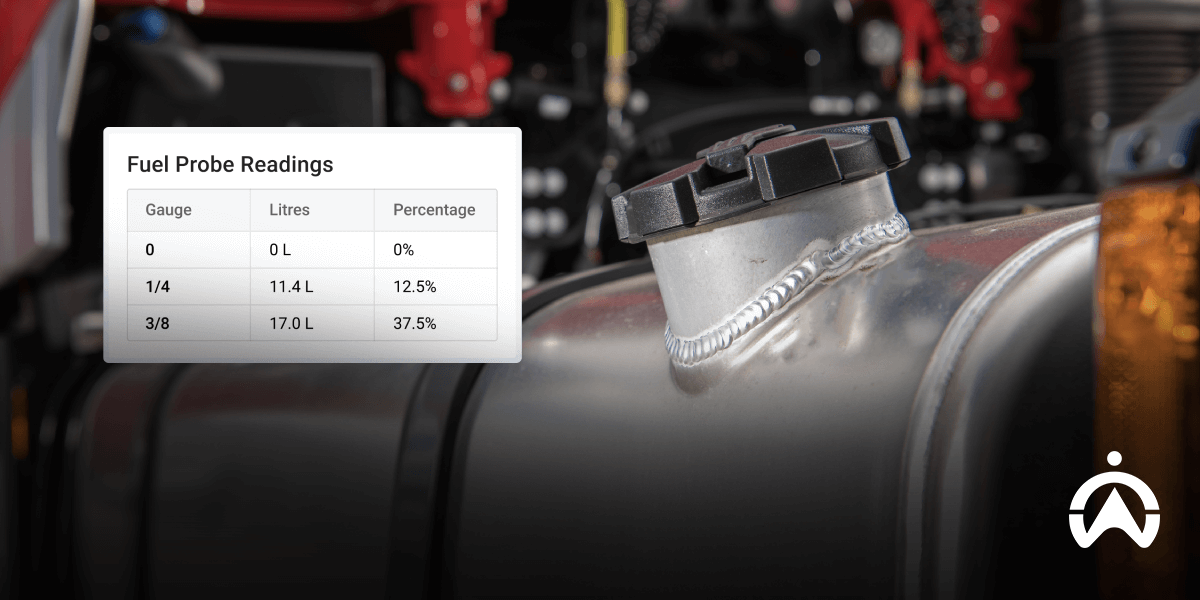
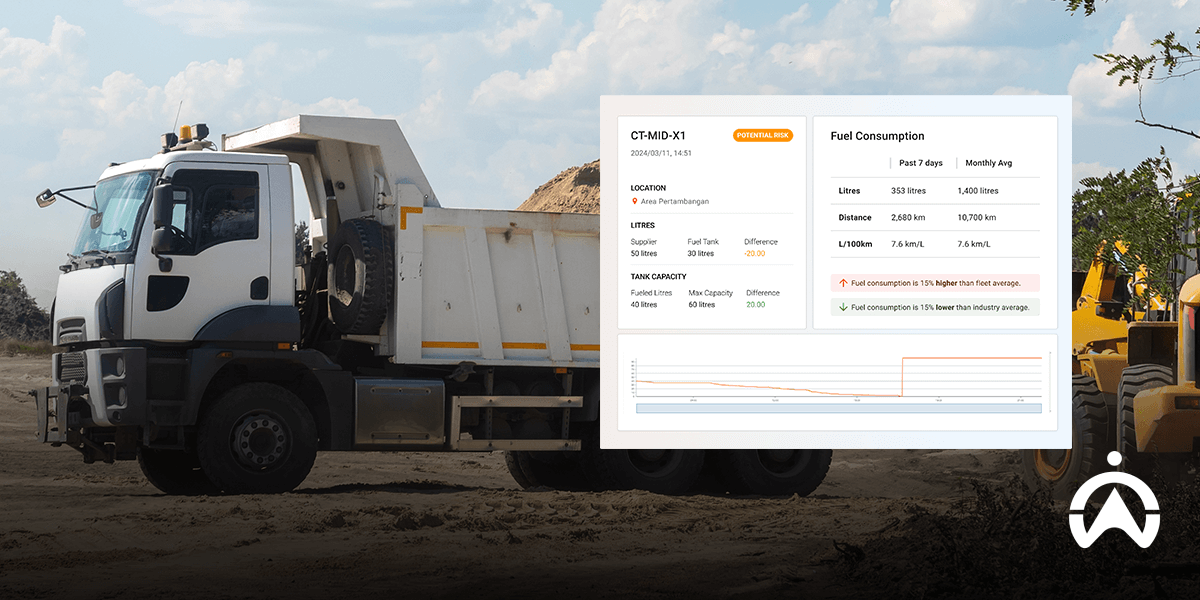
Fuel sensor data table on tanks to prevent fuel theft in truck fleets.

Why Do Many Businesses Choose Cartrack?

Some of the things that make Cartrack trusted by many transportation and logistics companies are:

  • Ease of data presentation and import: Companies can avoid manual administrative work. Using Cartrack simplifies tasks that would normally take days to mere minutes.

  • Early detection of fuel waste: Risk reviews for fueling transactions help fleet managers detect potential waste early. This effectively eliminates the possibility of human error.

  • Operational cost savings: With insights and information on vehicle usage, companies can take immediate action to reduce the risk of fuel theft, thereby saving operational costs.

  • Preventing drivers from cheating: Cartrack's ability to detect potential theft will create awareness among drivers to avoid it as there are consequences to bear.

Combat Fuel Theft with Cartrack!

Monitor every transaction and fuel consumption across your fleet with Cartrack's comprehensive fleet management solution. By implementing security measures, Cartrack not only reduces fuel costs but also reduces the risk of theft.

With subscription rentals starting from Rp140,000/unit/month, you can prevent losses of up to millions of rupiah every month. Fill out the form or click the WhatsApp button now to get a demo and the best offer from the Cartrack Indonesia team.

Baca Juga: Apa Itu Route Optimization dan Manfaatnya untuk Bisnis?
How Much Does a Fuel Management System Cost?

Salah satu kendala terbesar dalam mengelola armada operasional bisnis adalah kasus pencurian bahan bakar. Untuk mengatasinya, bisnis Anda perlu menggunakan teknologi fuel management system sehingga pemborosan dan pencurian bisa terdeteksi sejak dini. Namun, berapa harga fuel management system? Cari tahu jawabannya di sini!

Fuel Management System Price

Fuel Management System It's a combination of hardware (sensors) and software that monitors and manages fuel usage. You can purchase this system through two options: outright purchase or subscription.

  • Buy outright: Prices vary from millions to tens of millions of rupiah, depending on the features and type of device.

  • Subscription: If you choose a provider like Cartrack, monthly rental fees start from IDR 180,000/unit, including the device and supporting services.

fuel management system price

Factors Affecting Fuel Management System Prices

Fuel Management System prices may vary depending on the following factors:

1. Device

Fuel monitoring requires appropriate hardware such as sensors, pumps, card readers, flow meters, and tanks. The cost of these devices is often passed on to the customer, increasing your expenses.

2. Software features

Automatic reporting and alerting features are generally included in fuel management system subscription packages. However, you may incur additional charges for advanced features or other automation.

3. Fleet size and business scale

The size of your business's operational fleet is often a determining factor in the cost of a fuel management system subscription. It's not uncommon for companies or businesses with large fleets to receive special discounts from service providers.

4. Installation and maintenance

Another factor is device installation and maintenance costs. Self-installation typically requires wiring, calibration, and field testing, which are costly.

5. Training and customer service

For those of you who involve a large number of staff in fleet operational management, training on how to use the system is required. This training also contributes to your subscription costs.

Benefits of Using a Fuel Management System

By using Fuel Management System, you can have data related to vehicle usage that can be used for policy making.

1. Improve driving habits

Kebiasaan mengemudi seperti mengebut tidak hanya meningkatkan risiko kecelakaan tetapi juga boros BBM. Fuel Management System memungkinkan Anda untuk memantau aktivitas berkendara dan menegur pengemudi bila diperlukan.

2. Minimise errors

The use of technology in fuel management simplifies workflows and administrative tasks. Automated reporting can minimise calculation errors and reduce time-consuming administrative tasks.

3. Better route planning

Fuel management is usually bundled with fleet telematics devices such as  . Perangkat ini bisa Anda manfaatkan untuk memantau rute sehari-hari pengemudi dan merencanakan rute baru yang lebih efisien waktu dan biaya.

4. Prevent fuel theft

Dengan mengintegrasikan fuel monitoring dengan fleet management system, Anda akan lebih mudah untuk mendeteksi dan mengidentifikasi pencurian bahan bakar. Tidak hanya itu, kecurangan terkait BBM pun juga bisa divalidasi dengan pengecekan data lokasi dengan GPS.

5. More environmentally friendly

Dengan menghemat BBM, Anda juga telah mengurangi emisi karbon dan berkontribusi untuk operasional yang lebih ramah lingkungan. Anda tidak hanya mengurangi pengeluaran, tetapi juga berpartisipasi dalam memanfaatkan sumber daya tidak terbarukan dengan lebih efisien.

Fuel Management System Price From Cartrack

Fuel Monitoring from Cartrack uses three types of sensors, namely:

  • Fuel Floater (analog)

  • Fuel Probe (stick)

  • CANbus

Some of the benefits you will get by monitoring fuel usage with this technology include:

  • Real-time fuel consumption tracking across the entire fleet

  • Alert for anomalies or suspected fuel theft

  • Integrasi dengan data perilaku pengemudi dan performa kendaraan

  • Automated reporting to reduce administration time

  • Reduction in fuel costs by up to 24%

  • Tools that help you optimise routes, reduce downtime, and tighten control.

Subscription price Fuel Management System at Cartrack starting from Rp180.000/unit, including GPS and a Fleet Management System. With a subscription rental system, you won't be charged for equipment and installation, as our technicians will assist you directly.

Don't wait for the losses to get worse, equip your business fleet with Fuel Management System from Cartrack now. Contact Cartrack by pressing the button WhatsApp or with fill out the form on this page.

fuel management system price

Where to Buy a GPS Tracker in Jakarta

Fleet operations in a major city like Jakarta require comprehensive monitoring using a GPS tracker. Find out where to get a GPS tracker installed in Jakarta to help protect your transport, logistics and vehicle rental business from losses and misuse.

Why are GPS Trackers Important for Businesses in Jakarta?

1. High risk of loss

The number of vehicles in the city of Jakarta has reached 24 million, based on the latest data from the Electronic Registration Identification (ERI) POLRI. With such a high number of private and business vehicles, the risk of loss without being able to detect it is highly likely.

2. Monitoring business fleets

A GPS tracker allows you to monitor your business fleet, whether for logistics, rental or expedition services, from a single dashboard. Vehicle monitoring improves operational efficiency, simplifies task allocation and helps prevent misuse.

3. The need for real-time tracking

Driving in a major city like Jakarta requires real-time monitoring to ensure that deliveries stay on schedule. This is because factors such as traffic congestion, roadworks and other disruptions can delay journeys.

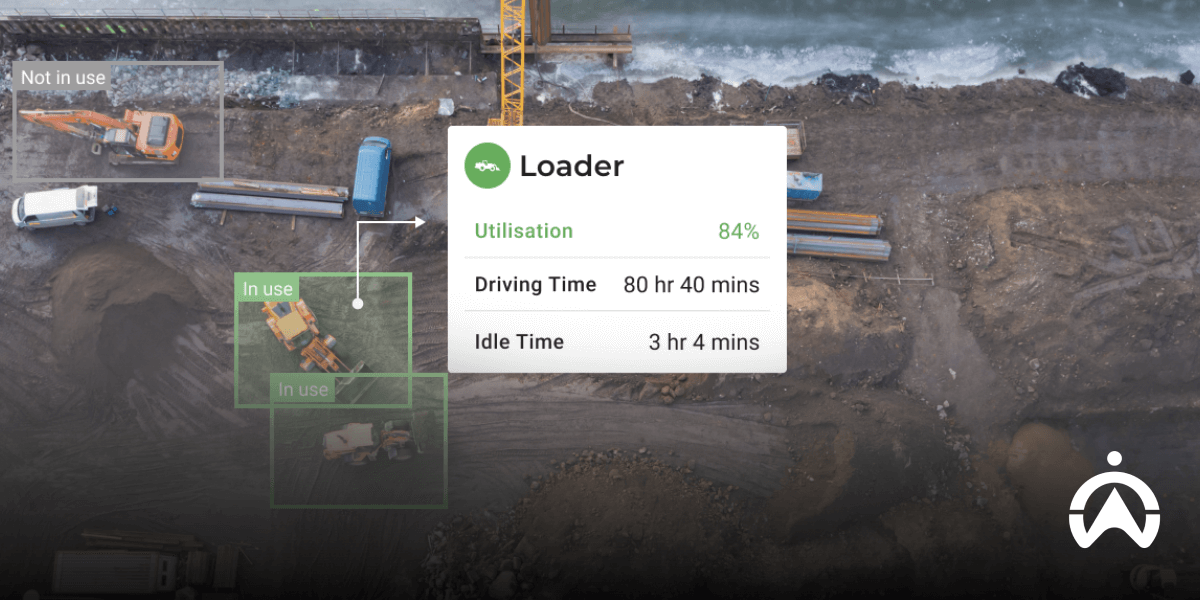
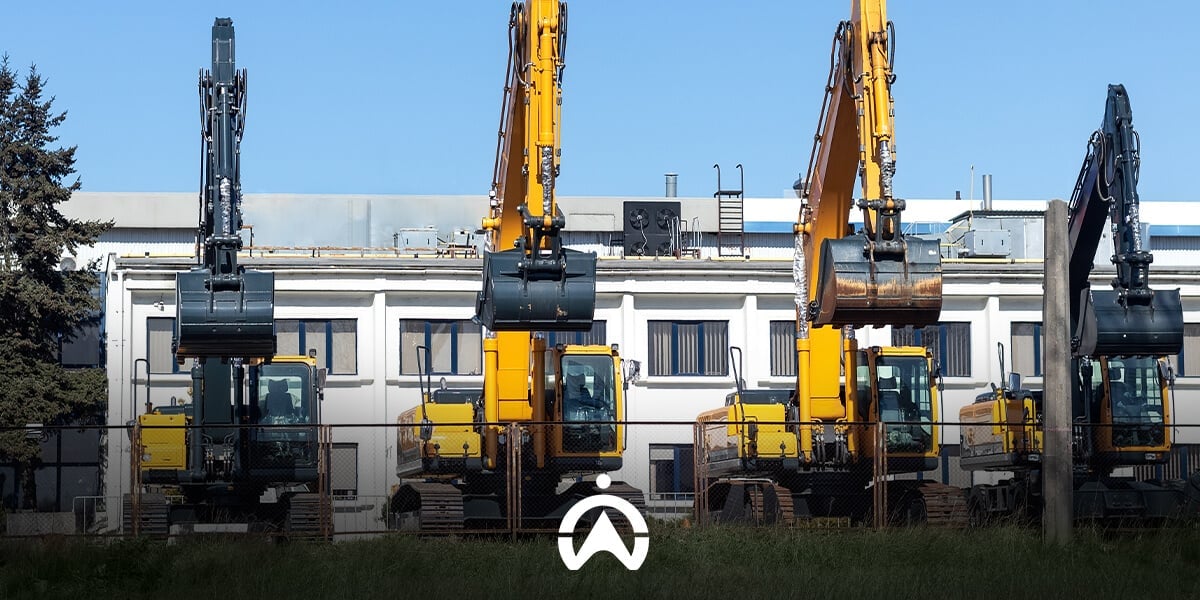
Aerial view of the construction area with heavy equipment loaders monitored using a Jakarta GPS tracker to track work and idle time.

Advantages of Using a GPS Tracker in Jakarta

1. Real-time location monitoring via web/app

As a major city, Jakarta boasts advanced infrastructure and excellent connectivity, making real-time vehicle tracking highly feasible. You can access your vehicle's location through a dedicated website or mobile app.

2. Security features

With the geofencing feature, you can set boundaries for your operating areas and receive notifications if a fleet vehicle leaves the designated zone. You can also enhance security with the immobiliser feature and verify deliveries using trip history.

3. Operational efficiency for transport businesses

A GPS tracker can also record important data, such as speeding habits and stopping with the engine running (idling), which affect fuel consumption. By understanding this data, you can establish policies to improve efficiency.

4. Responsive local technician support

Another advantage of running a business in a large city is easier access to after-sales service. You do not need to worry if there are any issues while using the GPS device, as technicians from the service provider can arrive promptly.

Cartrack Jakarta GPS Tracker Installation

Cartrack offers GPS trackers integrated into its Fleet Management System for comprehensive fleet monitoring. The advantages of Cartrack's GPS trackers include:

  • Real-time GPS tracking

  • Vehicle trip history

  • Geofence Configuration (work zones/restricted zones)

  • Detect aggressive driving behaviour (harsh braking, rapid acceleration and sharp cornering)

  • Security notification

  • Automatic and periodic reports

  • Access dashboard via web & app

  • 24/7 customer support

More than just a tracking device, Cartrack's Fleet Management System also allows you to add various other features, such as:

  • Fuel Monitoring: Fuel monitoring to reduce wastage and prevent fraud and theft.

  • AI & Non-AI Camera: Pemantauan visual dengan kamera untuk mengetahui perilaku berkendara pengemudi, mengawasi operasional, serta mengurangi blind-spot.

  • Delivery: A delivery management feature that allows you to schedule deliveries, manage assignments, and track shipments.

  • Maintenance: A maintenance management feature to schedule routine servicing and report accident damage to minimise downtime.

  • CarPool: A scheduling management feature for operational fleet usage to ensure all assets are used efficiently.

  • Mi-Fleet: A cost management feature to manage all fleet operational requirements, from tolls and fuel to traffic fines, and more.

  • Various IoT sensors: A range of additional sensors such as cargo door, temperature, cement mixer rotation, power take-off (PTO) sensors, etc.

  • Driver Identification: Identification of drivers using special tags, codes, and cards to ensure authority to use vehicles/heavy equipment.

  • Start Prevent: An immobilizer feature that prevents the vehicle from starting again after stopping and turning it off.

  • MiKey: Digital key for easy rotational use and to maximise security.

  • Panic Button: A panic button that can notify the fleet manager if there is an emergency situation so that the company can immediately send help.

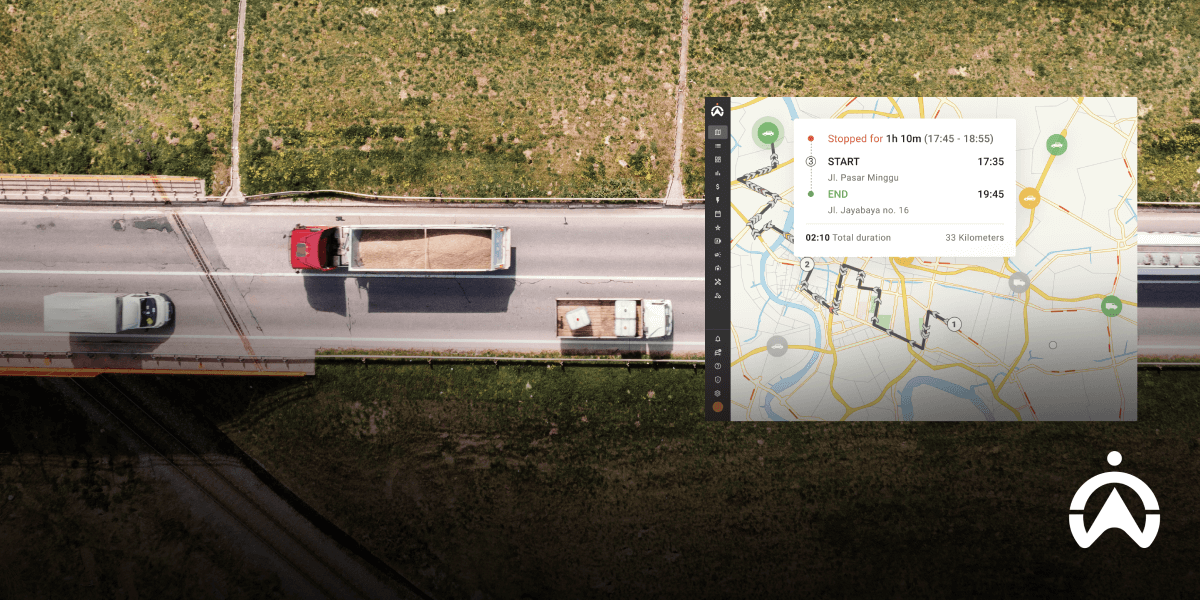
Map view of container truck tracking route on toll road, illustration of system using device from GPS tracker purchase place in Jakarta.

Pricing & How to Subscribe to Cartrack GPS Tracker Jakarta

You can get a GPS tracker from Cartrack with a subscription starting at Rp140,000/unit/month. Prices vary depending on the package you choose and the additional features you choose. The price includes:

  • Free device and installation

  • Free monthly internet quota

  • Software usage training by the Cartrack team

Complete the form on this page or contact us via the WhatsApp button below so our team can get in touch with you. Get the best offers for your business or company’s fleet operational needs.

Excavator GPS for more efficient performance monitoring

In the construction and mining industries, every minute of heavy equipment, such as excavators, counts. However, it's difficult to track fleet performance without a proper monitoring system like an excavator GPS.

With a GPS tracker, you can monitor location, working hours, and even fuel efficiency in real time. This technology allows you to control field operations and save costs without having to monitor the site directly.

Also Read: Best Recommended GPS Applications for Trucks

Main Functions of Excavator GPS in Daily Operations

Here's how excavator GPS helps you monitor your fleet's daily operational performance.

1. Real-time tracking of tool position and movement

You can see the real-time location of all excavators, ensuring your fleet is on-site. Furthermore, you can see which equipment is active, idle, or inactive.

2. Monitoring fuel consumption and operator working hours

By adding sensors, you can also monitor fuel usage on each fleet. You can also find out the working hours of each heavy equipment operator so that field worker management is more efficient.

3. Detect misuse or movement outside the project area

The geofence feature helps you define work areas for each fleet. If an excavator moves outside the project site, it could indicate misuse or theft, and the system will immediately notify you.

4. Automatic care and maintenance reminders

One of the challenges in managing heavy equipment is its maintenance and upkeep. Excavator GPS will help you automate maintenance and upkeep within a single dashboard.

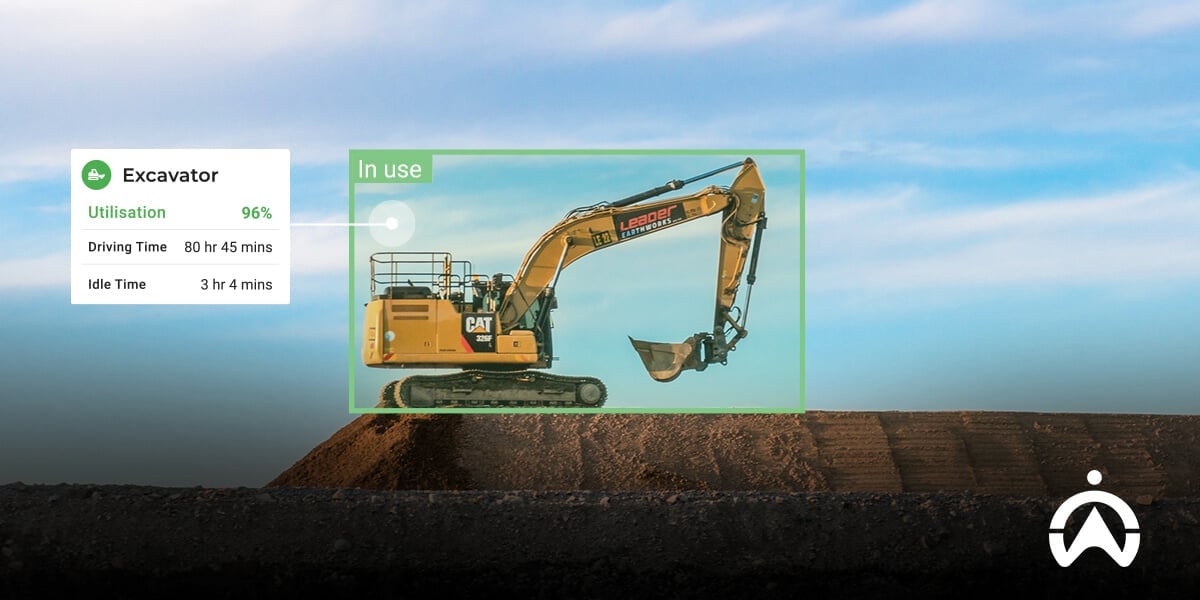
Yellow excavator heavy equipment is operating in the project area with excavator GPS system for efficient performance monitoring.

Why Excavator GPS is Important for Business

For those of you who own a business that involves the use of heavy equipment, here are the benefits of using an excavator GPS for your business.

1. Operational and fuel cost efficiency

A GPS tracker allows you to monitor fuel consumption and detect potential waste. You can also perform operational evaluations based on data from aggressive driving behaviors such as speeding and excessive idling.

2. Prevent downtime due to unmonitored damage

Machine diagnostic data will help you monitor potential damage. The maintenance feature also makes it easier to schedule maintenance, allowing you to better manage your maintenance costs.

3. Increase security and reduce the risk of loss

Even if you have to manage multiple excavators at once, you can monitor them all from a single dashboard. You can also set work zones for each excavator and receive notifications if the unit leaves those zones.

4. Assist in analyzing the productivity of the excavator fleet

The data available from a GPS tracker isn't limited to location data, but also excavator usage data. You can find out when the unit is turned on, turned off, or when it's on but not moving (idling).

See Also: GPS Tracker for Bus: Easy Monitoring and Security Solution

How to Track an Excavator with GPS

A GPS tracker isn't a common feature on excavators, either as a navigation tool or a tracking device. To track the position and performance of your heavy equipment, you'll need to install a dedicated device called a GPS tracker.

Once the tracking device is installed on your heavy equipment, you'll be given access to a website or app that allows location monitoring. This allows you to obtain various data related to the excavator's operation.

You can get this tracking device by subscribing to a specific GPS tracker or Fleet Management System provider. One reliable option is Cartrack's Fleet Management System and GPS excavator.

GPS Excavator and Fleet Management System from Cartrack

Cartrack offers GPS trackers and a Fleet Management System suitable for various types of heavy equipment, including excavators. Some features that will make it easier for you to track and manage your fleet include:

  • GPS Tracker: GPS tracker for monitoring vehicle location while preventing misuse and theft.

  • Fuel Monitoring: Monitoring fuel usage to avoid waste and detect fraud.

  • AI & Non-AI Camera: Camera monitoring to ensure operator performance and risky activities such as smoking and drowsiness while the excavator is operating.

  • PTO sensor: A special sensor to ensure the excavator is actually working when the engine is running by tracking the activity of the excavator arm.

  • Maintenance: Software to manage excavator maintenance to minimise downtime due to previously undetected problems.

  • Driver Identification: An operator identification system in the form of a tag, code, or card to restrict access to heavy equipment.

Track and manage your heavy equipment more easily with a GPS tracker from Cartrack. With subscription prices starting at Rp140,000/unit/month, you can track and manage your fleet of excavators and other heavy equipment more efficiently.

Pricing varies depending on the package you choose and the features you wish to use. Complete the form on this page, and our team will contact you shortly with the best Cartrack offer.

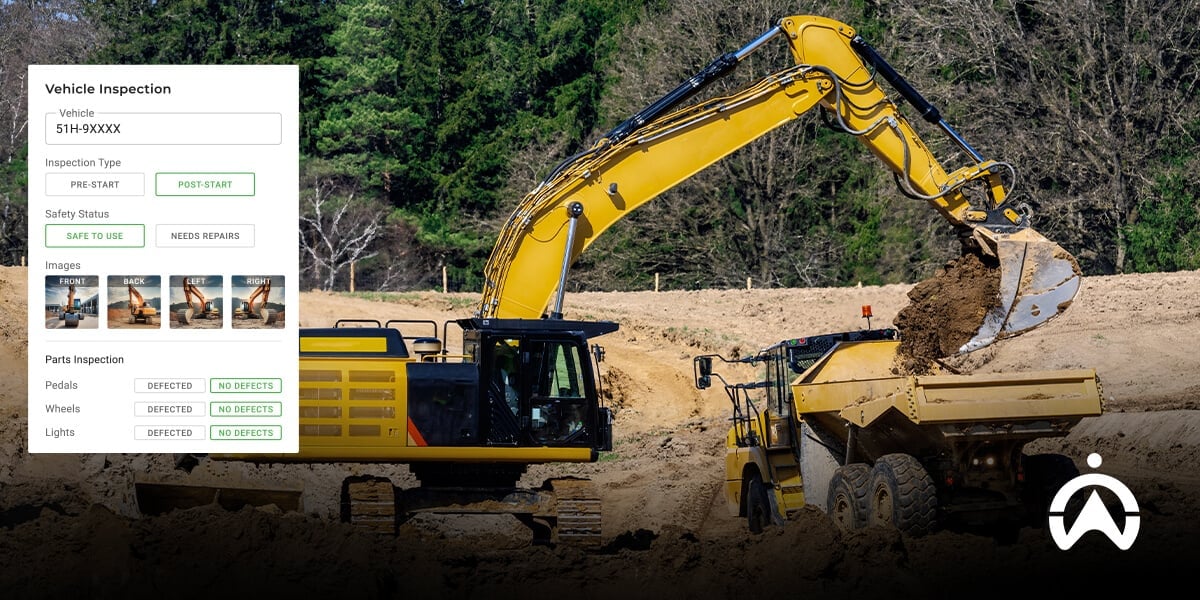
A yellow excavator loads soil into a truck at a construction site, equipped with an excavator GPS system for efficient performance monitoring.

Types of trucks by function and configuration

Trucks are the backbone of land transportation that plays an important role in logistics, construction, to the distribution of everyday goods. Each type of truck has different specifications, ranging from function, load capacity, and wheel configuration.

This time, we'll discuss various types of trucks based on these three aspects. Understanding these aspects will make it easier for you to determine the type of truck to use for various operational needs.

Types of Trucks Based on Bodywork and Their Uses

Each vehicle has its own type and function according to the size and shape of the body (body) that becomes the cargo of the truck.

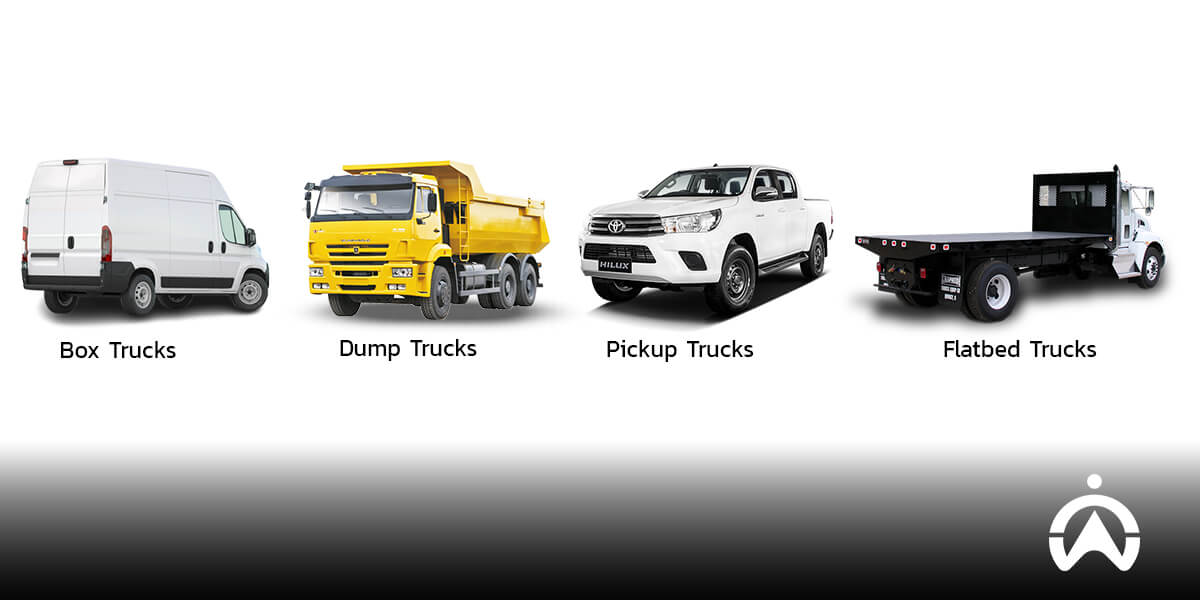
1. Pick Up Truck

A pickup truck is a small, open-backed vehicle typically used to transport small quantities of goods or for short-distance deliveries. These trucks are often used by moving companies or retailers offering intracity delivery services.

2. Box Truck

Also known as a box truck, this vehicle is equipped with a box-like body to protect goods from rain, dust, and the risk of damage. Box trucks are ideal for distributing retail, electronics, or other fragile goods.

3. Tank Truck

Specially designed with cylindrical tanks, these vehicles are specifically used to transport liquids such as fuel, water, or chemicals. Because the cargo is liquid, tank trucks are constructed of highly durable materials.

4. Dump Truck

Dump trucks have a special feature: a tiltable bed that can be used to dump or unload their cargo. These vehicles are typically used to transport construction materials such as soil, sand, and rock.

5. Flatbed Truck

Flatbed trucks have a distinctive design without walls or a roof, making them suitable for transporting large items. Some items frequently transported by flatbed trucks include steel pipes, logs, and vehicles and heavy equipment.

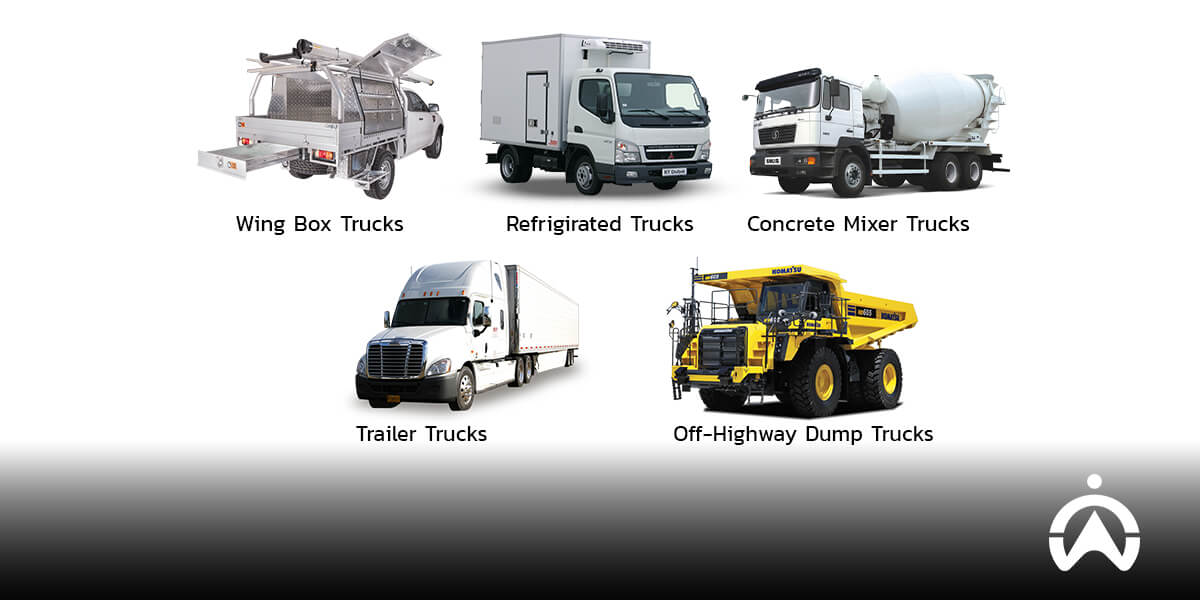
6. Wing Box Truck

The box on this unit can be opened from the side, resembling wings, making loading and unloading easier. The most common use for wing box trucks is for large-scale retail distribution, such as for fast-moving consumer goods (FMCG).

7. Reefer Truck

This vehicle features a special box equipped with refrigeration to maintain the temperature of the cargo. Reefer trucks are essential for cold-chain logistics, delivering fresh food, frozen products, and even pharmaceuticals.

8. Concrete Mixer Truck

Featuring a rotating drum, which mixes and maintains the fluidity of the concrete mixture during transit, concrete mixer trucks play a crucial role in industrial projects, ensuring the quality of the concrete is maintained.

9. Trailer Truck

Trailer trucks consist of a truck head, called a tractor head, and a trailer that can have more than 12 wheels. These trucks have a very large capacity, making them suitable for long-distance logistics, large construction projects, and import-export activities.

10. Off-Highway Dumptruck

Specialized vehicles designed to carry heavy loads off-road, such as in mining areas. One example is the haul dump truck, a mining truck with a very large size and capacity.

Four types of trucks based on their function and configuration, including box trucks, dump trucks, pickup trucks, and flatbeds with a white background.

Types of Trucks Based on Wheel Configuration

Apart from being based on function, trucks can also be differentiated based on their configuration and number of wheels, namely as follows.

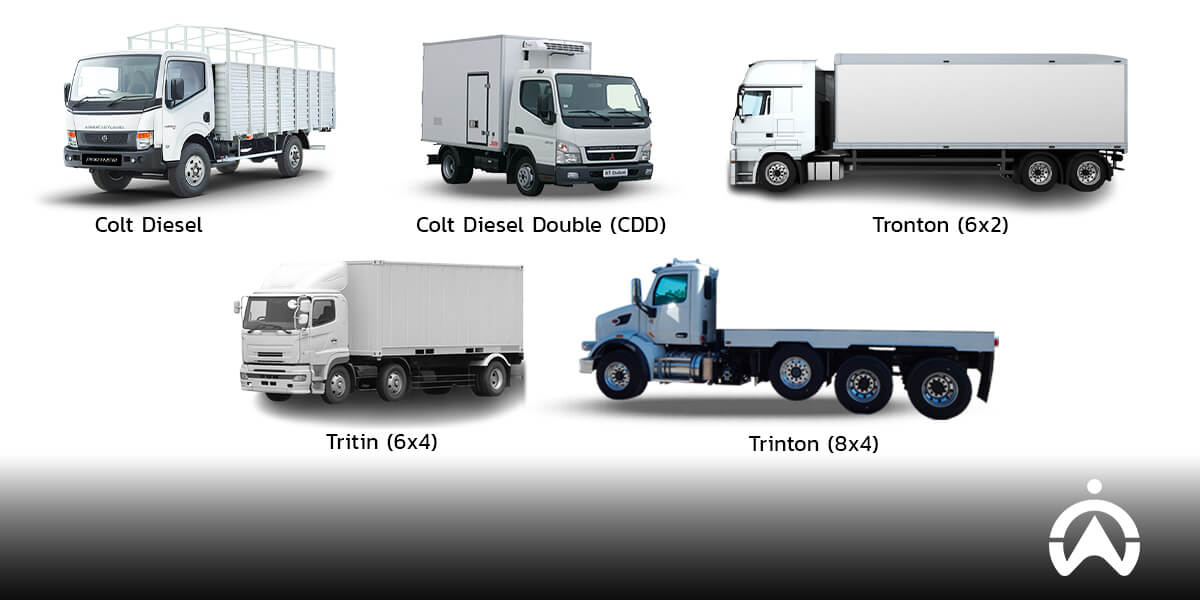
1. Engkel (Colt Diesel)

Konfigurasi: 4×2 (4 roda, 2 sumbu, konfigurasi 1-1)

The term "single axle truck" refers to a two-axle configuration with two wheels at the front and one at the rear. These trucks come in a variety of shapes and functions, from open-bed trucks to closed-bed trucks (box trucks), to tanks.

These vehicles also come in various sizes, from small (1–2.5 tons), medium (2–3.5 tons), to large (4–5 tons). Their size allows single-axle trucks to be used flexibly for short-distance deliveries, such as within cities.

2. Double (Colt Diesel Double/CDD)

Konfigurasi roda: 4×2 (6 roda, 2 sumbu, konfigurasi 1-2)

Double trucks have six wheels, with two on the front axle and four on the rear axle. The term "double" refers to the rear axle, which has two wheels on each side.

A CDD is a medium-duty truck with a larger capacity than a single axle, but still compact enough for urban roads. Double axle trucks can carry between 4 and 14 tons, making them suitable for medium-scale deliveries.

3. Tronton

Konfigurasi roda: 6×2 (10 roda, 3 sumbu, konfigurasi 1-2-2)

The tronton is the most common type of cargo truck and is frequently used for various industrial purposes. This vehicle can carry mining products, construction materials, and even agricultural products weighing up to 30 tons.

It has 10 wheels divided into three axles: one at the front and two at the rear. Configuration-wise, the tronton is the opposite of the trintin truck, which has two axles at the front.

4. Eraser

Konfigurasi roda: 6×4 (8 roda, 3 sumbu, konfigurasi 1-1-2)

The Trintin has eight wheels and three axles in a 1-1-2 configuration, with the front and center axles close together. Four-Wheel Steering (FWS) technology allows all four wheels to be controlled by the steering wheel, improving maneuverability.

This type of truck can carry loads of up to 20 tons over medium distances, such as between cities. Items that can be loaded with a trintin include agricultural products, construction materials, and mining materials.

5. Trinton

Konfigurasi: 8×4 (12 roda, 4 sumbu, konfigurasi 1-1-2-2)

The Trinton is a 12-wheel, 4-axle truck with a 1-1-2-2 configuration, a combination of the Trintin and the Tronton. Like the Trintin, all four front wheels are FWS-controlled, making it just as maneuverable as the Trintin.

You can use the Trinton to transport a variety of materials, from crops to construction materials, with a payload capacity of up to 40 tons. Not only does it have a large capacity, but this vehicle is also suitable for long-distance travel over challenging terrain.

Five types of trucks based on wheel configuration and capacity, including Colt Diesel, Tronton, and Trinton with a white background.

How to Read Truck Wheel Configuration

Dalam menyatakan konfigurasi roda truk di atas, Anda menemukan angka seperti 4×2 atau 6×2 yang sering dianggap membingungkan. Kode angka tersebut adalah kode konfigurasi roda dan penggerak yang ada pada truk dan bus yang berlaku secara internasional.

The first number indicates the number of wheels on each axle (left + right), where dual tires are counted as one wheel per side. The second number indicates the number of drive wheels powered by the engine.

For example:

  • 4×2 artinya terdapat 4 roda posisi dari 2 sumbu, dengan 2 roda penggerak. Misalnya pada jenis truk engkel dan double. Meskipun roda belakang truk double diisi dengan 2 ban per sisi sehingga ada 6 ban secara fisik, konfigurasinya tetap dihitung 4×2.

  • 6×2 artinya terdapat 6 roda posisi dari 3 sumbu dengan 2 roda penggerak. Contohnya adalah tronton yang 2 dari 3 sumbunya diisi oleh ban ganda sehingga jumlah bannya menjadi 10.

  • 6×4 artinya terdapat 6 roda posisi dari 3 sumbu dengan dan 4 roda penggerak. Seperti pada trintin di mana sumbu belakang diisi ban ganda sehingga jumlah ban fisik menjadi 8.

  • 8×4 artinya terdapat 8 roda posisi dari 4 sumbu, dan 4 roda penggerak. Contohnya seperti pada trinton yang mana 2 sumbu roda belakangnya memiliki ban ganda sehingga jumlah ban fisiknya menjadi 12.

Illustration of various types of trucks based on their function and configuration, from wing boxes, cement mixer trucks, to trailers.

Factors to Consider When Choosing a Truck Type

When you want to determine the type of truck for your operational fleet, there are several things you should consider first.

1. Type of load

Each type of cargo requires a different type of truck and a suitable body. Therefore, you need to determine the type of goods to be shipped and estimate the appropriate vehicle type from the outset.

For example, if your company needs a fleet to ship liquid goods, you'll need a tanker truck. If your business focuses on shipping frozen food, you'll need a reefer truck.

2. Load capacity

Indonesia has specific regulations regarding the weight of operational vehicles, and even has scale bridges at certain locations to verify this. Oversized and overloaded vehicles can be impounded, and companies can be penalized.

Furthermore, using vehicles that don't meet their load capacity will leave your fleet vulnerable to damage. To avoid these operational losses, you need to choose trucks that are appropriate for the loads you'll be carrying.

3. Distance traveled and road conditions

The wheel configuration of a truck is closely related to the type of roads it will be used on. If your vehicle will frequently be off-road, you should consider a vehicle suited to that need, such as a tronton (trailer truck).

Furthermore, the distance to be covered during the delivery must also be considered, whether it's for long-distance or short-distance deliveries. Not all trucks are ideal for long-distance deliveries; for example, pickup trucks are only suitable for short distances.

4. Operational cost efficiency

The next consideration is the operational costs you'll incur when choosing a particular truck type. Be sure to also consider the fuel consumption of the unit you choose to ensure efficiency.

Also consider the unit's durability, as it impacts other operational costs, such as maintenance. Choose a truck with high durability, especially if your needs involve heavy-duty work like construction and mining.

5. Compliance and Regulation

Finally, you also need to consider applicable regulations in Indonesia, especially those related to safety standards. Ensure the dimensions of the bodywork (bed, box, etc.) do not exceed the regulatory limits.

Also pay attention to roads that prohibit heavy trucks such as trailers and 3-axle trucks. If the route you are traveling on applies certain restrictions, you will need to adjust the type of vehicle to meet these requirements.

Manage Multiple Truck Types with Cartrack Fleet Management

For companies looking to own a variety of trucks for various needs, you can manage them all with Cartrack's fleet management software. Some of Cartrack's top truck fleet features include:

  • GPS Tracking: A real-time tracking solution using GPS that allows you to monitor your entire fleet of trucks at once.

  • AI & Non-AI Camera: Visual monitoring solution to ensure the condition of the cargo and also the driver's activities while driving.

  • Fuel Monitoring: Fuel monitoring solutions with multiple sensors to reduce waste and prevent fuel theft and fraud.

  • Cargo Door Monitoring: Monitoring cargo door opening and closing activities to ensure security and early identification of fraud and theft.

  • Tailgate Monitoring: Monitoring the tailgate or rear door that can be lowered to ensure the loading and unloading process.

  • Temperature Monitoring: Monitoring the temperature of the cargo to ensure the temperature is maintained throughout shipping and to prevent damage.

  • Driver Identification: A unique driver identifier in the form of a tag, keypad, or NFC to ensure the truck is only driven by authorized drivers.

  • Maintenance: Special features for routine maintenance management and truck repairs with the addition of a driver-specific application for damage reporting.

  • CarPool: Booking management software that allows vehicle use according to specific needs and schedules.

  • Delivery: Specialized delivery management software that allows you to organize shipments and couriers, track their progress, and receive proof of delivery.

Manage all your truck types in one dashboard with Cartrack. Complete your personal details in the form on this page, and our team will contact you with the best offer.