
4 Common Challenges of Fleet Management in Indonesia and How to Overcome Them

There are several common challenges faced by every business in Indonesia that owns and manages its own vehicle fleet, one of which is the still-limited adoption of fleet management technology. If not addressed properly, these challenges can lead to failures in the company’s fleet management. Read on to discover 4 things that can lead your company’s fleet management in Indonesia towards failure and how to address them properly.

1. Inefficient Communication and Operations

As a result of inefficient fleet communication and operations, your team may spend a significant amount of time and money making phone/radio calls related to assignments and monitoring, as well as handling administration and customer claims.

Solution:

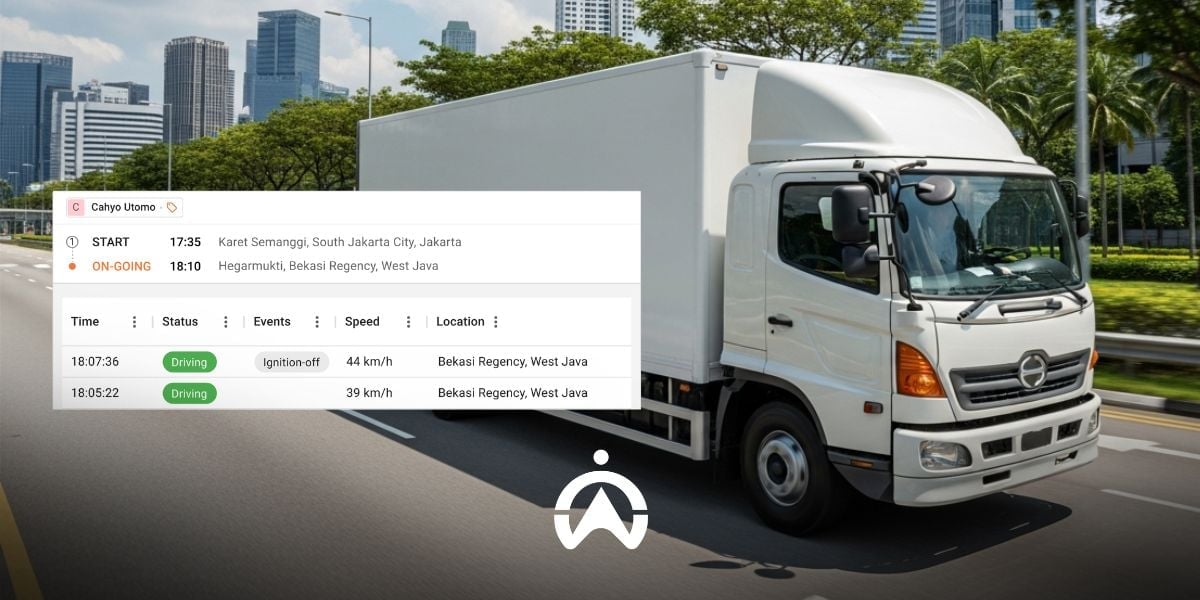
Use a GPS tracker so that your operators can track vehicle location, activity, and operating hours whenever needed. You can also monitor delivery routes and receive real-time notifications for issues that require attention, including route deviation, route delays, slow progress, and late route completion. For more specific monitoring, the geofence feature in GPS tracking software enables you to monitor vehicle movement from one area to another, such as entry and exit times, vehicle speed within the area, and how long the vehicle remains stopped within the area.

In addition, fleet management tools such as Cartrack can help make assignments more efficient through the integration of GPS tracker hardware, Fleet Web software, and the mobile Communicator app. Assignments can be carried out in detail, progress can be monitored in real-time, collection of goods can be verified through barcode scanning, and proof of task completion can be sent directly in digital format (in the form of photos or signatures). Assigning the nearest vehicle is also possible with a GPS tracker.

2. Unproductive Drivers

For companies that rely on vehicle fleets, unproductive drivers can have a significant impact on profits. On the other hand, poor driving behaviour also increases vehicle maintenance costs and the risk of accidents, which can cause both material and non-material losses to the company.

Solution:

You need a driver monitoring system that can provide you with information about driver behavior on the road and driver work discipline. A GPS vehicle tracker can monitor drivers based on vehicle activity, such as actual working hours based on the vehicle's operating hours.     idling 

If you use Cartrack's fleet management software, you can access all driver-related information by downloading several types of automated reports, such as the Driver Score Report, Driver Safety Report, Risk Management Report, and Trip Report. These automated reports will help you understand what needs to be improved and make driver training more targeted.
Truk dengan ikon panah naik-turun yang menggambarkan pergerakan armada dalam fleet management di Indonesia.

3. Lack of Data Access for Fleet Optimisation

Limited information about fleet performance and operations will make it difficult for you to optimise productivity and efficiency. Without accurate and comprehensive data to evaluate your fleet, the decisions and strategies you make may be misdirected.

Solution:

GPS trackers and fleet management software with comprehensive features like Cartrack help you obtain detailed, accurate, and comprehensive fleet information. You can quickly find out the vehicle utilisation percentage, the fleet's busiest hours, average idle time per day, the fuel efficiency level of each vehicle, and more. Fleet evaluation is no longer time-consuming, allowing you to make better decisions and implement the best fleet operational strategies.

4. Lacking the Proper Fleet Management Tools

In addition to human resources, the technology used also affects the efficiency of fleet management. Instead of achieving a return on investment (ROI), choosing the wrong fleet management tools can result in ineffective management and company losses.

Solution:

Choose fleet management tools with easy-to-understand menus and interfaces, features that can be customised to suit your fleet's needs, comprehensive fleet information and insights, integration on a single platform, and a Software as a Service (SaaS) model. The combination of vehicle tracking GPS (with additional sensors as required), SaaS, and a mobile application will make fleet management easier. With SaaS, you can manage your fleet from anywhere and at any time through an internet browser.

Overcome common fleet management challenges in Indonesia and ensure your company's vehicle fleet operates efficiently and productively. Choose the best solution from Cartrack and avoid fleet management failures for your company―contact us now and get a FREE LIVE DEMO!

Fleet Management Digitalisation Optimises Logistics Business Processes in Indonesia

The COVID-19 outbreak has accelerated the evolution of consumer behavior towards logistics services in Indonesia, such as increased demand for courier and expedition services. Furthermore, Indonesian consumer demand for the delivery of primary commodities, such as fresh produce and food, has also increased. Logistics businesses are being challenged to quickly adapt their businesses to these changing consumer behaviors.

Digitalisation Has Become a Mandatory Need for Logistics Businesses

While changes in consumer behavior due to Covid-19 pose challenges, they also present opportunities for an earlier-than-expected transformation of the logistics business in Indonesia. This transformation is driven by digitalisation, a solution to address logistical challenges and changing consumer behavior. 

One significant development in logistics is the increasing demand for fresh produce and food. This growth is accompanied by a need for transparency in product delivery processes and fast, affordable service. 

Digitalisation of fleet management which includes planning, monitoring, and assessment functions helps you face challenges while seizing opportunities to transform your logistics business.

Fleet Management Digitalisation Application for Logistics Optimisation

Digital technology must be leveraged appropriately within your business model to achieve a return on investment. Therefore, it's crucial to map where and how digitalisation is used, including fleet management. Here's how digitalisation can impact planning, monitoring, and evaluation within your logistics company's fleet management in Indonesia.

a. Planning

With digitalisation, you can plan more efficient routing, more productive vehicle utilisation, nearest driver assignments, and vehicle maintenance schedules based on date, kilometre, and operational duration.

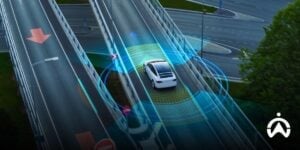
Illustration of radar technology in a transparent car as a form of digital fleet management for logistics business efficiency.

b. Monitoring

Real-time monitoring of upstream and downstream shipments will reduce phone call costs, ensure goods security, and facilitate estimated arrival times, which you can share with relevant parties, including customers. This monitoring includes vehicle location and activity, driving behaviour, task completion progress, operating hours, geofences, fuel consumption, speed, odometer, refrigerated cargo temperature, and cargo door opening and closing activities.

c. Evaluation

Big Data and Artificial Intelligence (AI)-based technology provides you with detailed information and insights into fleet activity. The system will automatically generate reports containing various parameters and analyses you need. This allows you to evaluate and optimise the performance of your fleet and overall logistics operations.

Significant Impact on the Sustainability of Logistics Business

Fleet management digitisation can be achieved by utilising vehicle telematics, Big Data, AI, and the internet of things (IoT). This combination is achieved through the integration of GPS tracker hardware, Software-as-a-Service (SaaS) software, and mobile applications. Using a SaaS platform provides flexibility for you and your team to manage your fleet anytime and anywhere from an internet browser.

As a business owner, digitising fleet management will significantly benefit your logistics business in Indonesia. The significant impacts of fleet management digitisation include lower operational costs, resulting in lower service rates; increased productivity, efficiency, and delivery visibility, resulting in faster, more timely, and more transparent service; and increased customer satisfaction, which can positively impact your logistics company's image and profits in Indonesia.

Start digitising your logistics company's fleet management in Indonesia now and achieve up to a 3X return on investment (ROI) with Cartrack. Contact us now and get a FREE LIVE DEMO of Cartrack!

6 Tips for an Effective Fleet Management System in Indonesia

Managing a fleet in Indonesia is a challenging task that requires the implementation of an effective system. A GPS-based fleet management system eliminates administrative complexities, minimises human error, improves driver behaviour, reduces costs, and enhances operational efficiency. Here are six tips to make your company's fleet management system in Indonesia more effective.

1. Efficient Travel Distance

Distance traveled is not a fixed parameter but a controllable variable—managed, for instance, through balanced vehicle usage and efficient route planning. By using a GPS-based fleet management system, you can monitor the usage percentage and operational duration of each vehicle in your fleet and subsequently balance their utilisation. Fleet management systems also feature tools for route planning and dispatching the nearest vehicle to a destination.

2. Improve Driver Behaviour & Productivity

Safe and efficient driving habits are essential for effective vehicle fleet management. A GPS-based fleet management system provides driver monitoring and assessment reports based on various driving behaviour parameters, such as speeding, harsh braking, rapid acceleration, sharp cornering, and idling. You can use this report data to improve your drivers' habits—thereby minimising the risk of accidents, excessive fuel consumption, and vehicle wear and tear—while also ensuring your drivers remain compliant with traffic laws.

3. Digitalisation of Assignments

Digital delivery task management, combined with real-time vehicle monitoring, offers a more effective alternative to dispatching via phone calls or radio. Cartrack’s GPS-based fleet management system provides a solution through its Delivery application. Operators assign tasks—complete with all necessary details—which drivers receive directly on their mobile phones. Task progress is easily tracked, and drivers can instantly upload photo-based proof of delivery via the app. The system also features barcode scanning to ensure that the items being delivered match the items originally picked up.

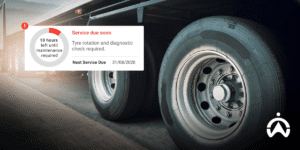
Truck tires with digital service notifications for fleet management system efficiency.

4. Fleet Management Report Automation

An effective fleet management system enhances operational efficiency and minimises human error. One essential function is automated reporting—a feature offered by Cartrack’s fleet management system—which allows you to download over 60 types of automated reports and have them sent to your email on a regular basis. Available automated reports include Driver Score Reports, Fuel Efficiency Reports, Fuel Refill Reports, Vehicle Trip Reports, and Geofence Visit Reports.

5. Fleet Management Software Integration

Relying on multiple software applications to manage a vehicle fleet is certainly inefficient. That is why you need a fleet management system integrated into a single software platform. SaaS-based fleet management software—such as Cartrack—offers the solution, enabling managers, dispatchers, drivers, maintenance technicians, and even administrative and finance staff to coordinate within one platform. You will gain deep, comprehensive insights into your entire fleet's performance quickly. Even more effectively, this SaaS-based software can be accessed anytime and anywhere via an internet browser—making it highly useful for those managing fleets across multiple branch locations in Indonesia.

6. Routine Vehicle Inspection

Regular monitoring of vehicle conditions helps detect vehicle issues early and provides a robust audit trail to streamline claims and other vehicle-related administrative tasks. Employees should also be involved in this process to foster an awareness of vehicle maintenance as a shared responsibility. A GPS-based fleet management system facilitates this for both you and your employees by offering maintenance scheduling features—based on dates, mileage, and operational duration—as well as a Driver Vehicle Inspection Report (DVIR) feature that allows drivers to report vehicle issues.

Ensure your fleet company in Indonesia implements an effective fleet management system. Use the GPS-based fleet management system from Cartrack Indonesia to guarantee increased productivity and improved operational cost efficiency for your fleet. Consult with us today and get a FREE LIVE DEMO!

6 Ways to Maximise Your Fleet Management with a Fleet Management System — More Than Just a GPS Tracker

To improve productivity, customer service, and cost efficiency, your company, regardless of your industry, needs a Fleet Management System that goes beyond a simple GPS tracker. What are the functions of a Fleet Management System that go beyond a simple GPS tracker, and how can you leverage them to maximise your fleet management? Check out the following six points.

1. Monitor Specific Activities with Geofence

The geofence feature enables you to monitor your vehicle’s activities within a specific area, such as entry and exit times, time spent inside the area (idle, travel, stop), distance travelled, maximum speed, and risky driving behaviour within the zone. With this information, the feature can be used, for example, to monitor your heavy equipment activity within a project site, or the entry and exit of your vehicles from company premises. Some companies also create geofences around toll gates to track toll expenses per trip.

In addition, geofence can also be used for delivery customers. You can create a geofence around the delivery area and set it so that your customers receive notifications via email or SMS when your vehicle enters the area. This helps speed up loading and unloading, as customers can prepare before your vehicle arrives.

2. Quickly Track Nearby Vehicles

If you need a vehicle to complete a task urgently, you won’t need much time to locate the vehicle closest to the destination. From a GPS tracker software, you can see the distance and how long it will take each of your vehicles to reach the destination. This allows you to immediately delegate the task to the nearest vehicle, making trips more efficient and ensuring tasks are completed faster.

3. Assess Drivers to Assist in Training and Commission Considerations

Not only does GPS tracker software monitor risky driving behaviour (speeding, harsh acceleration, harsh braking, and sharp cornering), it can also evaluate drivers. Through the Driver Score Report, you can identify drivers who operate safely and review the risky driving behaviours they most frequently exhibit. This report can be used to help design targeted training so that drivers become more productive. In addition, the Driver Score Report also helps you consider awarding commissions to drivers with the best scores.

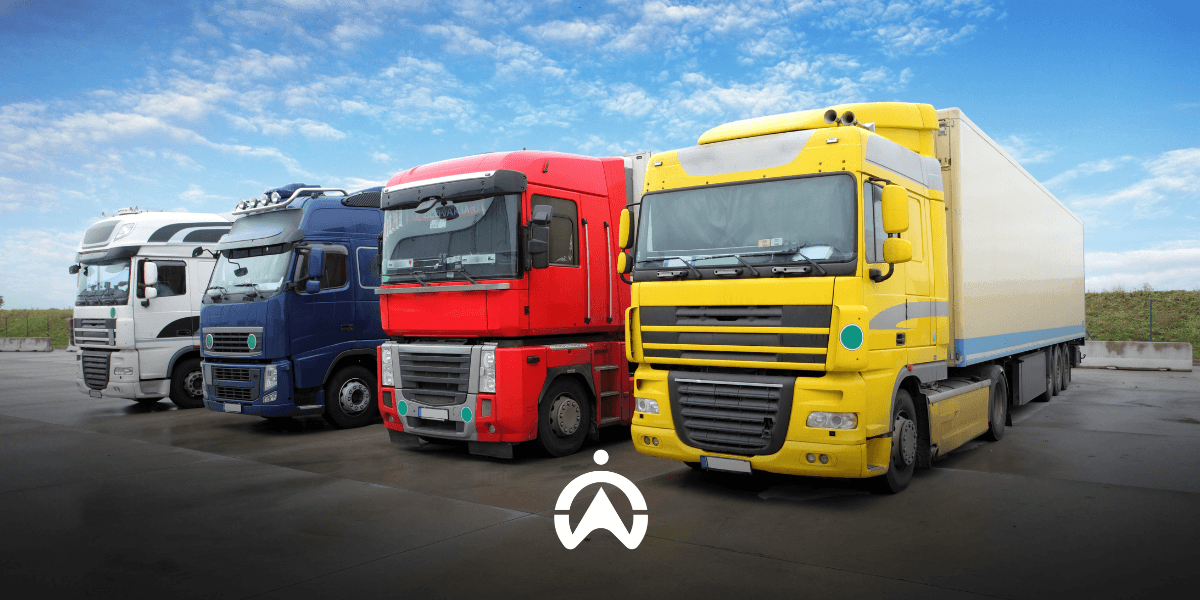
Big white trucks cross the highway for efficient vehicle fleet management with logistics management system.

4. Measuring Vehicle Utilisation

Manually, you may be able to determine whether your vehicles are being used evenly or not. However, with a GPS vehicle tracker, you gain much deeper insights with accurate data. Cartrack GPS Tracker software enables you to view this information quickly through the Dashboard menu. You can see idling duration, total operating hours, and the usage percentage of each vehicle over 7 days, 30 days, 90 days, 120 days, and up to 1 year. You can easily compare this data through the displayed charts and then reassign each vehicle accordingly.

5. Increase Vehicle Asset Protection

There are several ways you can secure your vehicles against theft, one of which is combining a driver ID tag with an immobiliser. Your driver must tap the driver identification magnetic key on the sensor before they can start the vehicle using the main key. If the driver does not authorise using the driver ID tag, the vehicle cannot be started even with the main key.

In addition, you are likely already familiar with the remote immobiliser feature, where you can shut down the vehicle from your mobile phone when theft is detected. Furthermore, you can request a customised installation of the GPS tracker with an immobiliser, so that if the GPS tracker is removed from the dashboard (or wherever it is installed), the vehicle engine will immediately be unable to start.

6. Calculating Vehicle Operating Costs

The flexibility of GPS tracker software allows for cross-departmental functionality. Cartrack GPS Tracker software, for example, through the Mi-Fleet feature, can assist your finance department in calculating vehicle operating costs. With accurate data from the GPS tracker, such as mileage and fuel consumption, Mi-Fleet can calculate vehicle operating costs per trip and per kilometre. You can also manage other expenses such as accessories and spare parts, fines, insurance, and servicing, and then receive monthly vehicle expenditure reports. This automated cost reporting function helps your finance department work more efficiently with more accurate data.

These six functions can be found in the Cartrack Fleet Management System. More than just a GPS tracker, Cartrack helps you maximise your company’s fleet management with a wide range of integrated features and functions. Contact us now and get a FREE LIVE DEMO to see how Cartrack can benefit your business!

5 GPS Tracker Features That Must Be Included in a Vehicle Monitoring System

GPS trackers have become an essential requirement for companies that operate vehicle fleets. Regardless of your fleet's size—whether large or small—a vehicle monitoring system can benefit your business's bottom line. That is why it is crucial to choose a GPS tracker equipped with features that align with your company's fleet management needs. Among the many available features, there are at least five that are essential for any GPS tracker.

1. Real-Time Location Tracking

Fleet monitoring systems originate from the need to know a vehicle's location at all times for various reasons. This function essentially defines the GPS tracker, making it an essential component. You can monitor each vehicle's location on a map, along with its speed and the time it was at that specific position. Vehicle movement is displayed as a series of connected points forming a route, spanning the time from when the engine is started until it is turned off. Each point contains data tracked and transmitted by the GPS tracker installed in the vehicle.

2. Monitoring Driving Behaviour

Driving behaviour monitoring features are not intended to scrutinise every move a driver makes, but rather to improve their performance and grow your business. These features provide visibility into various risky driving behaviours, such as speeding, harsh acceleration, hard braking, and sharp cornering. Beyond ensuring the safety of drivers and vehicles, this monitoring also helps prevent significant financial losses. Additionally, you can use this data to verify driver working hours and track the average time spent on each delivery.

Fleet managers monitor vehicle activity reports on a laptop as part of the GPS tracker feature in the vehicle monitoring system.

3. Vehicle Service Schedule Manager

It is crucial to ensure your vehicles are well-maintained to keep your business running smoothly and minimise losses caused by downtime. That is why you need this feature; it greatly enhances maintenance efficiency, especially if you manage a large fleet. By integrating with GPS tracker data, you can manage preventive maintenance schedules based on the date, mileage, and operating duration of each vehicle.

4. Customise Alerts

Given the diverse monitoring needs inherent in fleet management, customisable alerts are an essential feature. Using GPS tracking software, you can configure real-time notifications for events such as vehicles entering or exiting geofences, engines starting or stopping, cargo temperatures exceeding tolerance limits, vehicle idling, speeding, and upcoming vehicle service due dates. These customisable alerts enable you to take swift action when necessary and ensure smooth operations.

5. Automatic Reports

One of the advanced features of a GPS tracker is automated reporting. The tracked data is delivered in the form of Excel or PDF reports. You simply select the report you need and download it or set up scheduled delivery to your email. In addition to making administrative work more efficient, these automated reports provide valuable analytical data to evaluate your fleet and optimise your business. Some of the available automated reports include Trip Reports, Operating Hours Reports, Fuel Efficiency Reports, Risk Management Reports, and Driver Safety Reports.

While almost all GPS tracker providers offer these five essential features, Cartrack stands out by providing over 60 types of automated reports. The parameters within Cartrack’s automated reports can also be customised to display only the information that matters most to you. Speak with a Cartrack consultant today to discover features that can benefit your business and get a FREE LIVE DEMO!

4 Functions of GPS Trackers for Food and Beverage Companies

GPS trackers can provide real benefits to businesses that produce, distribute, deliver, and sell food and beverage products. By using a GPS tracker, food and beverage companies can achieve optimal potential in food quality, delivery visibility, operational efficiency, and profit. Explore the 4 functions of a GPS tracker for this dynamic and growing food and beverage industry.

1. Maintain Food Quality and Safety

One of the primary focuses in the food and beverage industry is maintaining food quality to boost consumer confidence. This depends on how food is stored before it reaches the customer. Maintaining temperature is a key concern when storing food and beverage products, especially perishable products like meat and milk.

GPS trackers provide a solution with temperature and cargo door monitoring sensors. The temperature sensor will send alerts when the temperature exceeds the upper and lower tolerance limits you set. At Cartrack, this notification can support up to four temperature sensors in a single vehicle. For the cargo door sensor, you can set notifications for when the door is opened and closed, ensuring it is not left open for too long, which could cause temperature changes. With these real-time alerts, you can take immediate action when issues arise, preventing your products from being damaged.

2. Make the Shipping Process Smooth and Transparent

Increased visibility of vehicle usage makes delivery monitoring more effective and transparent. The geofence feature allows food and beverage companies to receive real-time notifications when a vehicle enters the destination area. These notifications can also be sent automatically via email or to customers’ mobile phones so that they can prepare for loading and unloading. In addition, you can also send a real-time vehicle location link to customers or other parties who require this information.

To ensure smooth deliveries and minimise delays, you can use the route planner feature. With this feature, you can select the most efficient route and receive real-time notifications when drivers start and end a route, deviate from the planned route, delay their trip, arrive late at the destination, or when progress towards completion is slow.

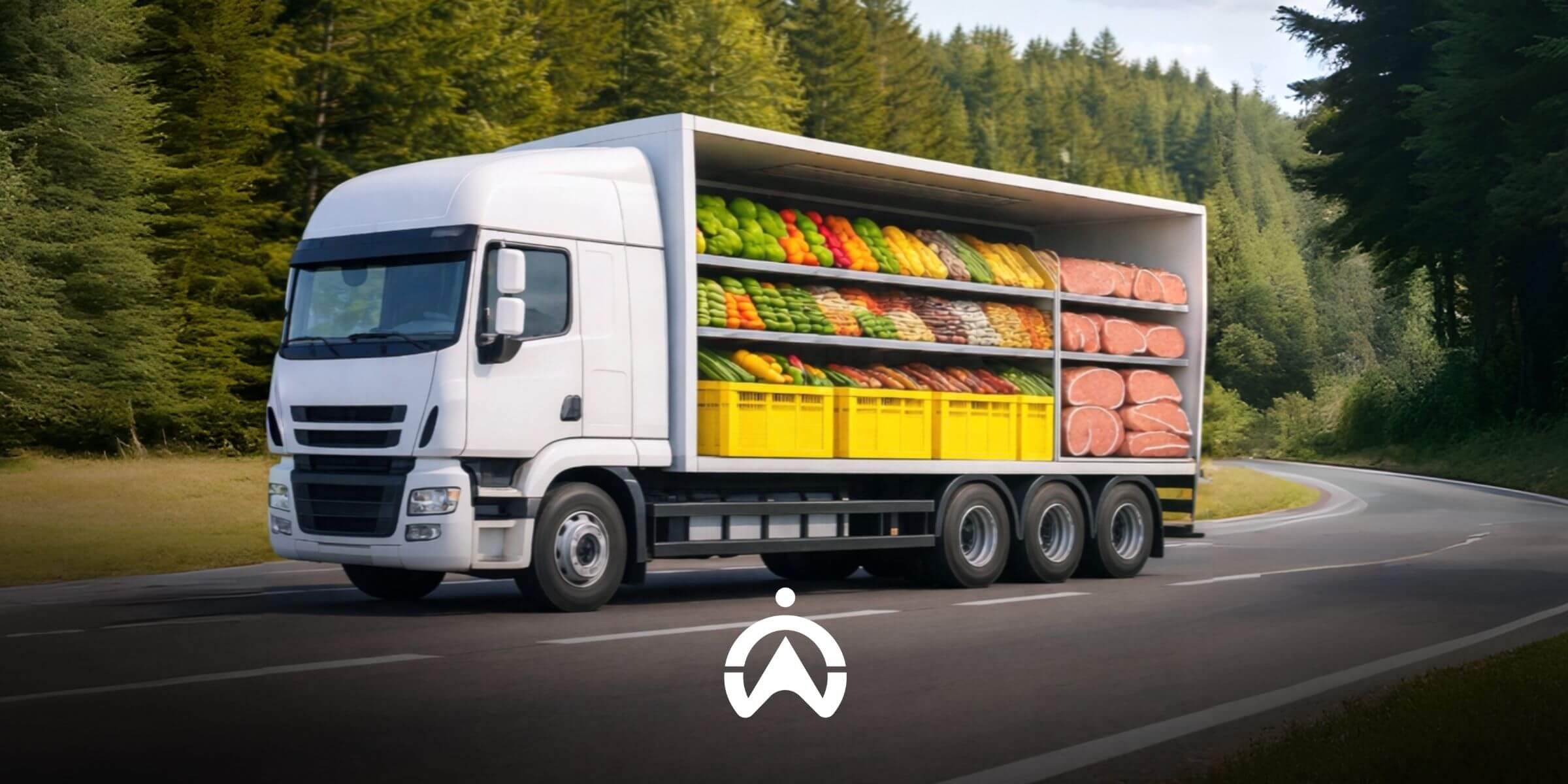
Vegetable cold storage warehouse supports GPS tracker function for food and beverage companies.

3. Improve Business Operational Efficiency

Business operational efficiency can be improved through digitised, integrated workflows and access to insight-driven information. A GPS tracker-based fleet management system provides all these benefits by consolidating various related functions into a single platform, reducing manual processes, and delivering intelligent, insight-driven reports that support better decision-making. Through fleet management software, all manual fleet management processes are digitised, from vehicle tracking, driver monitoring, schedule reminders, route planning, task management, to report generation.

Not only for field operations, fleet management software also helps improve cross-departmental efficiency within a company due to its integrated workflows. Through vehicle activity reports, drivers’ total working hours on the road can be calculated accurately from engine start to engine shut-off, including stop and idling duration. Customer invoicing can also be generated faster because task completion information can be provided in real time. The processing of customer claims, insurance, and fuel purchases also becomes easier with features such as route replay, separate recording of business and private trips (logbook), fuel sensors, and various analytical reporting tools.

4. Increase Company Profits

On-time delivery and temperature monitoring help minimise losses caused by food and beverages becoming damaged or less fresh during transit. A GPS tracker-based fleet management system helps ensure that deliveries, including loading and unloading, are completed on time while maintaining product quality through various features such as route planning, geofencing, driving behaviour monitoring, vehicle operating hours tracking, cargo door sensors, temperature sensors, and nearest driver dispatch (for businesses with multiple delivery branches).

In addition to minimising losses, deliveries also become more fuel- and cost-efficient due to optimised routes, safer driving behaviour, and stable refrigeration temperatures. Customer satisfaction also increases as complaints about delivered products decrease. This naturally leads to an increase in your company’s profit, both directly and indirectly.

Apply a GPS tracker-based fleet management system to your vehicle fleet to optimise your food and beverage business. Cartrack GPS Tracker is ready to support you by providing the best solutions tailored to your company’s needs. Consult with us now to learn how Cartrack’s solutions can deliver significant benefits to your food and beverage operations, and get a FREE LIVE DEMO from us!

3 Ways a GPS Tracker Minimises Losses from Company Fleet Accidents

Accidents, whether major or minor, result in financial losses for companies. Not only do businesses incur costs for vehicle repairs and medical treatment for accident victims, but they also suffer losses because vehicles and drivers are unable to operate for a period of time. As a result, fleet productivity decreases, completed work is reduced, and revenue also declines. GPS tracker-based fleet management solutions have proven to be effective in improving driving safety, thereby minimising losses caused by accidents. Here is how it works.

1. Detecting & Correcting Risky Driving Behaviour

GPS tracker monitors several risky driving behaviours, namely speeding, harsh acceleration, harsh braking, and sharp cornering. Automatic notifications can be sent directly via email or SMS to both you and the driver whenever such driving behaviour occurs. This monitoring increases drivers’ awareness to drive more carefully and prioritise safety.

2. Manage Vehicle Maintenance and DVIR

To reduce downtime, your vehicles require preventive maintenance. If schedules are usually set manually based on dates, with a GPS tracker you can also schedule maintenance based on mileage or the operating hours of each vehicle. Notifications can be set to trigger a certain time or number of kilometres in advance, as well as their frequency.

Besides preventive maintenance, GPS tracker software also provides a Driver Vehicle Inspection Report (DVIR) feature. Drivers can report any vehicle issues they experience while on duty, supported with photographic evidence, which can then be followed up by the maintenance department. The progress of each report can be viewed by drivers, ensuring they are also informed whether the vehicle is still faulty or has been repaired. At Cartrack, you can find this feature in the dedicated driver application.

Trucks traverse the highway with GPS trackers to minimize accident losses to the company's fleet.

3. Evaluate & Improve Driver and Vehicle Performance

With Artificial Intelligence (AI), GPS tracker software can assess driving behaviour—you can use Driver Score Reports and Driver Safety Reports on Cartrack. To measure risk based on driving behaviour and vehicle usage, use the Risk Management Report, which includes, among other things, the number of trips outside working hours, risky driving behaviour alerts, idling, speed, stop time during working hours, total operating duration, and total kilometres. These reports help you evaluate drivers and ensure that vehicles are used evenly and responsibly. Proper vehicle usage can prevent aggressive wear and tear and thus reduce the risk of accidents.

Monitor your drivers and vehicles with Cartrack GPS Tracker today! With features such as driving behaviour monitoring, automatic alerts, scheduling management, DVIR, and intelligent reporting, Cartrack effectively minimises losses from fleet accidents in your company. Contact us now and get a FREE LIVE DEMO!
5 Benefits of Installing a GPS Tracker on Your Fleet

Conventional fleet management is time-consuming and labor-intensive, and it is also prone to human error. That is why you should consider using a GPS tracker. This technology, which has become popular among fleet business owners, continues to evolve; beyond simple vehicle location tracking, GPS trackers can now also generate automated reports.

Here are 5 key benefits of installing a GPS tracker on your fleet vehicles.

1. Asset Protection

Certain GPS tracker features help protect your vehicle from theft, such as geofencing, magnetic driver ID tags, and immobilisers. Geofencing enhances your awareness through automated alerts sent when the vehicle leaves a designated area—such as an office or project site—at suspicious times.

The driver ID tag combined with the immobiliser prevents the vehicle from starting unless the driver first touches the magnetic key to the sensor. A long warning sound will also be heard if the driver hasn't touched the driver ID tag. Finally, you can secure your vehicle by remotely shutting off the engine using the "immobilise" button in the Cartrack app.

2. Preventing Vehicle Misuse

Through ignition on/off notifications and trip reports, you can monitor the times and locations where your vehicles are started or turned off. This allows you to check for vehicle usage outside of operational hours or trips to unauthorised destinations. A route planner also helps you monitor vehicles that deviate from your established routes. If you suspect vehicle misuse, you can replay the trip to review the activity.

3. Improving Driver Productivity

Through GPS tracking, you can monitor drivers' actual working hours, trip durations, and idling times, as well as when and for how long they remain within specific geofenced areas. If you use a route planner, you can determine whether drivers are late starting their deliveries and whether deliveries are completed behind schedule. With this monitoring system in place, your drivers are expected to be more punctual and productive, thereby reducing overtime.

Aerial view of cars with digital radar system and GPS fleet tracker to monitor traffic flow and transportation safety.

4. Reducing Vehicle Costs

High vehicle costs are driven, in part, by poor driving behavior and a lack of maintenance. With a GPS tracker, you can monitor unsafe driving habits such as speeding, rapid acceleration, harsh braking, and sharp cornering. This monitoring helps improve driving habits, thereby minimising losses associated with accidents, vehicle damage, and inefficient fuel consumption. Additionally, preventive maintenance is essential to extend the vehicle's lifespan. Reminder features help you manage preventive maintenance schedules for each of your vehicles. These schedules can be customised based on mileage, dates, or the operational duration of each vehicle.

5. Increasing Profit

A GPS monitoring system makes your fleet operations more efficient and productive, leading to timely deliveries and a higher volume of completed jobs. Consequently, customer satisfaction with your company's services increases. You can also utilise various automated reports generated by GPS trackers to aid in strategic decision-making. This allows you to better assess vehicle usage efficiency and determine whether your fleet needs to be downsized or expanded. Ultimately, all of this will positively impact your company's profit growth.

Install a GPS tracker on your vehicle fleet today to unlock a wide range of benefits. You simply need to choose the best GPS tracking solution tailored to your company's needs—and Cartrack is the perfect choice. With a comprehensive suite of features—including geofencing, driver ID tags, remote immobilisation, driver monitoring, route planning, route replay, reminders, and automated reports—Cartrack effectively optimises your fleet operations and management. Contact us now to get a FREE LIVE DEMO!