
Proof of Delivery: Improve Shipping Security

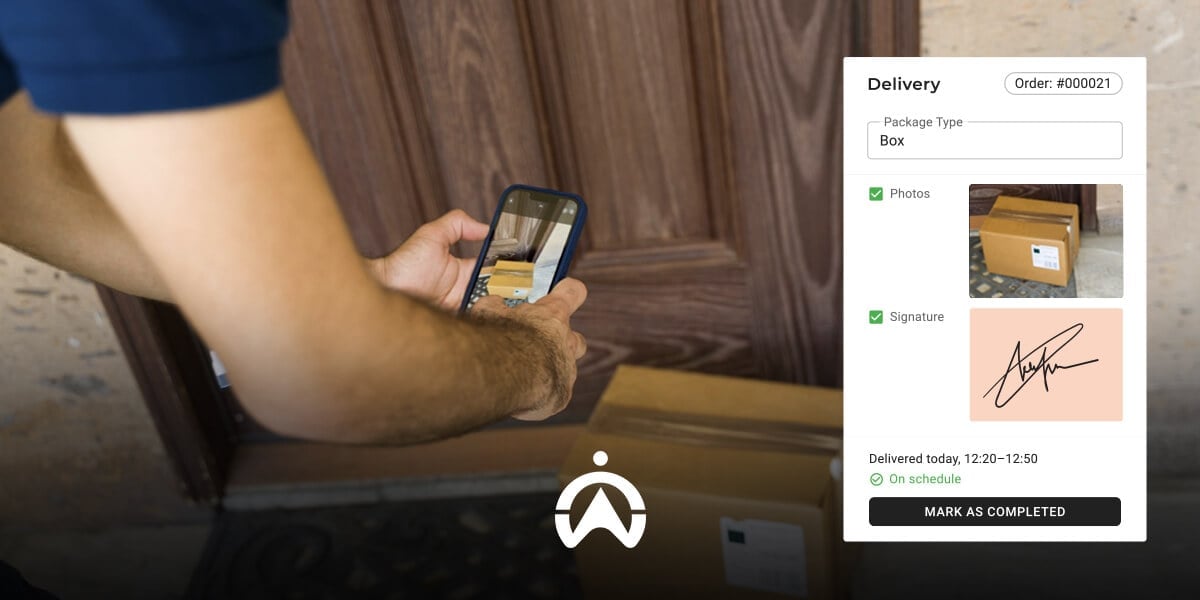
In the past, when you received a package or letter, the courier would ask you to sign a special piece of paper. However, in the last decade, couriers have abandoned the paper signature, replacing it with a photo of the package you received.

Although the formats are different, both of these items are mandatory parts of a delivery, indicating that you have received the item. Now, we'll discuss proof of delivery in more detail.

Find out what proof of delivery is, its benefits for businesses, the different types of PoD, as well as its features and how it works in the following article.

What is Proof of Delivery (PoD)?

Proof of delivery (PoD) is a document used to indicate that a package has been received and that delivery has been completed. This document can be either physical or digital and includes the delivery time, location, and recipient.

Whether you're a business owner or a customer receiving a package, you can check whether it's been received by viewing the PoD. You can also see who received it and where the package is located if you're not at home.

The smiling courier holds the package in the car as proof of safe delivery.

Benefits of PoD for Business

So, why is PoD important for business?

If you are in a shipping related business, then PoD is very important because of the following benefits:

1. Become official proof of delivery

With PoD, you have valid proof that an order has been delivered and received by the customer. This will minimise fraud or false claims that a parcel has not arrived when it has already been received.

2. Monitor courier performance

PoD also serves as proof that the courier assigned to deliver the parcel has completed the task correctly. A PoD containing a photo, date and time, as well as GPS coordinates, can serve as evidence that the parcel has reached its destination.

3. Building long-term trust

Customer trust can be built by implementing a system that ensures a fair delivery process for both parties. From the customer’s perspective, PoD can serve as evidence if they feel they have been disadvantaged by a late or incorrect delivery.

4. Facilitates resolution of shipping issues

In addition to serving as proof, PoD can also be used for investigations if customers report that their parcels have not been received, have been swapped, or have been delivered to the wrong address. This allows you to start an investigation promptly and resolve the issue as quickly as possible.

5. Reduce operational and administrative costs

The most common type of PoD used today is the digital PoD, which allows you to document the PoD paperlessly. This saves you money by eliminating the need to produce printed proof of delivery documents.

Read Also: How to Build a Successful Delivery Business

Types of PoDs

In terms of format, there are two types of PoD commonly used as proof of package receipt: physical PoD and digital/electronic PoD. Physical PoD is proof of delivery that uses paper/forms that must be signed to prove that the order/package has been received.

Meanwhile, electronic PoD is the most common proof of delivery, where the data is stored digitally. There are several types of electronic/digital PoDs you can find today:

  • Digital signature → The recipient digitally signs the package on a smartphone or tablet carried by the courier. This method is commonly used by e-commerce companies and logistics companies.

  • Proof-of-delivery photo → Often combined with GPS coordinates and the time and date of delivery. This photo can serve as proof that an order has arrived at its destination, even if the recipient is not present.

  • Barcode or QR code → Usually used in warehouse deliveries where the recipient or courier will scan to confirm that the order has been received by the person in charge.

In addition to the three PoD types mentioned above, there are also One-Time Password (OTP) and biometric (fingerprint) methods, which offer higher security. However, both are relatively rare in the general logistics industry, especially in Indonesia.

OTP PoD is often used as a contactless delivery alternative to photo PoD, although it's not commonly used. Meanwhile, deliveries using biometric PoD typically involve luxury goods, pharmaceuticals and medical equipment, or other high-value items. Receipt of these items will require in-person identification of the authorised recipient.

Recruitment Process & How PoD Works

Now that you know the above, you might be curious about how PoD works and how it's implemented. Here's how the process from delivery to PoD can be accessed.

  1. The courier receives a delivery task → First, the courier is assigned to make a delivery to a customer at a specific address.

  2. The courier will validate the delivery → When it arrives, the courier will hand over the package and collect proof of delivery which can be in the form of: a photo with GPS coordinates and time and date, a digital signature, or a barcode/QR code scan.

  3. The courier uploads the PoD to the system → Next, the courier uploads the PoD that has been picked up to the system.

  4. Businesses and customers can access PoD → You as a business owner or customer can access PoD for needs such as audits, claims, and operational analysis.

What Can Be Confirmed with PoD?

As a business owner, a PoD allows you to confirm things that often serve as clues and evidence in the event of a dispute with a customer. Some things you can find out and confirm are:

1. The goods have arrived at the delivery destination

A PoD, such as a photo with GPS coordinates and the date and time, can confirm that the package is at the correct address. A photo of your home can also show where the courier placed your package.

2. The courier has completed the task

The most important thing for you as a business owner to know is that the delivery is complete and the package has arrived at its destination. Submitting the PoD signifies the completion of the courier's task.

3. Who received the package?

If the customer is not home, the courier can take a photo of the recipient along with the package. This way, the customer knows who to contact about their package without having to contact the business first.

4. Time and date of delivery

The PoD, which takes the form of a photo with GPS coordinates, usually includes the date and time of delivery. If you're a business owner, this also confirms that the order arrived on time and without delay.

5. Condition of goods when received

Photos taken by the courier can also show condition of goods upon receipt. This can serve as evidence if you receive a complaint alleging the courier damaged the item, when in fact it was someone else.
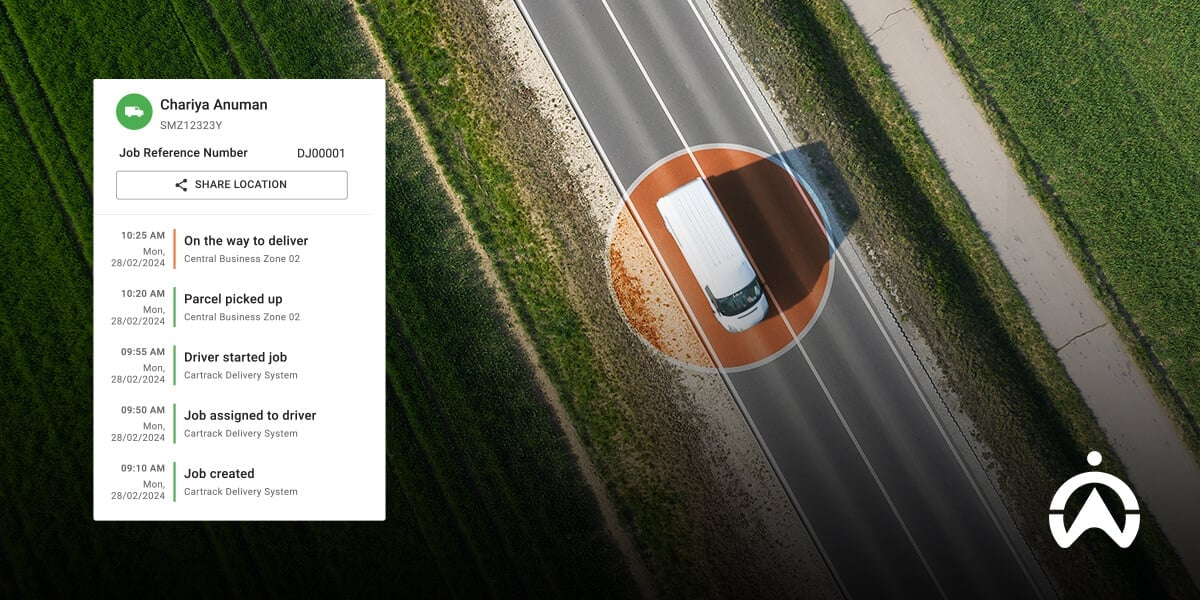
Aerial view of a delivery van on the road with a digital overlay of driver tracking as a proof of delivery system to enhance security.

Optimise Deliveries with the PoD Feature in Cartrack Delivery

Imagine a customer complaining that they haven't received a package delivered by your courier. Meanwhile, the courier has no proof that they delivered the order, even though they claim to have.

Customers may commit fraud because they know the courier has no concrete evidence. Conversely, couriers are also very likely to steal or damage packages that should have been received safely by customers.

Problems like these can be resolved more easily if you have a delivery management system that also offers PoD functionality, such as Cartrack. You will have proof that the order has arrived intact at the recipient’s address.

Cartrack Delivery's PoD features include:

  1. Digital signature → Suitable for sending important documents

  2. Photo → Suitable for shipping goods

  3. Scan barcode/QR → Suitable for shipping from/to warehouse

All three are equipped with GPS coordinates along with the date and time, so you know when the evidence was taken. You can also download photos and digital signatures for archiving or investigative purposes.

Proof of delivery, or PoD, is a very important document in the delivery business. Its benefits include serving as official proof that a delivery has been completed, supporting dispute investigations, and helping to monitor courier performance.

Therefore, if your business is involved with shipping, then the PoD feature must be a primary consideration in choosing delivery management system (DMS). The good news is, Cartrack Delivery can be a DMS solution for your business because it's equipped with a PoD feature.

Complete your details in the digital form below to receive a special offer from Cartrack for your business or company!
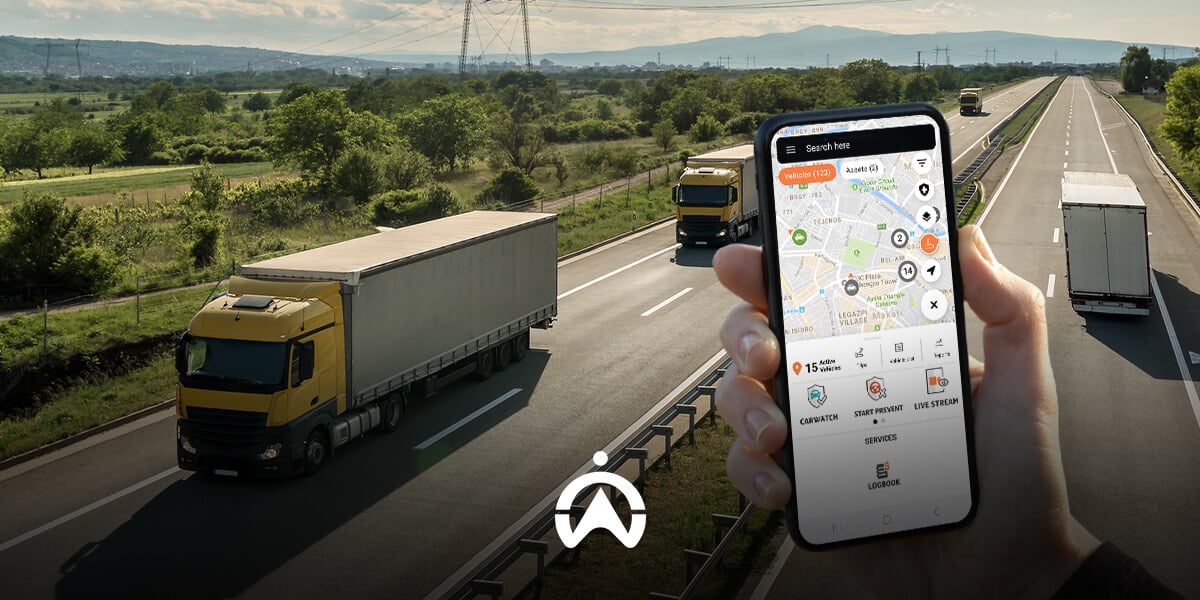
Heavy Equipment GPS to Prevent Misuse and Theft

Imagine if your company's heavy equipment suddenly disappeared from a project site, or if someone stole its fuel while it was idling. Without oversight, losses could occur overnight and escalate over a period of months.

The good news is, you can have full control over your vehicles and heavy equipment with GPS tracking technology. This way, you can track the location of your heavy equipment even when it's not on site.

Why Your Business Needs a GPS Tracker for Heavy Equipment

We know that theft and misuse of heavy equipment are not merely operational challenges, but a serious threat to your business. Therefore, a GPS tracker is an essential solution that can help ensure the security and efficient utilisation of your heavy equipment.

Theft and misuse of heavy equipment such as dump trucks, tanker trucks, bulldozers, and other machinery are serious threats to your business. Therefore, a GPS Tracker is an essential solution to help ensure the security and efficient use of your heavy equipment. Some of the benefits of using a GPS Tracker are:

1. Perform Real-time Tracking

With a GPS tracker, you can know the real-time location of heavy equipment and ensure the units are only used in accordance with regulations. You can also know when a heavy equipment engine is switched on without moving (idling), which naturally wastes fuel and shortens the vehicle's lifespan.

See Also: Cartrack GPS Tracker, the Right Solution for Public Transportation Companies

2. Minimise the Risk of Misuse and Theft

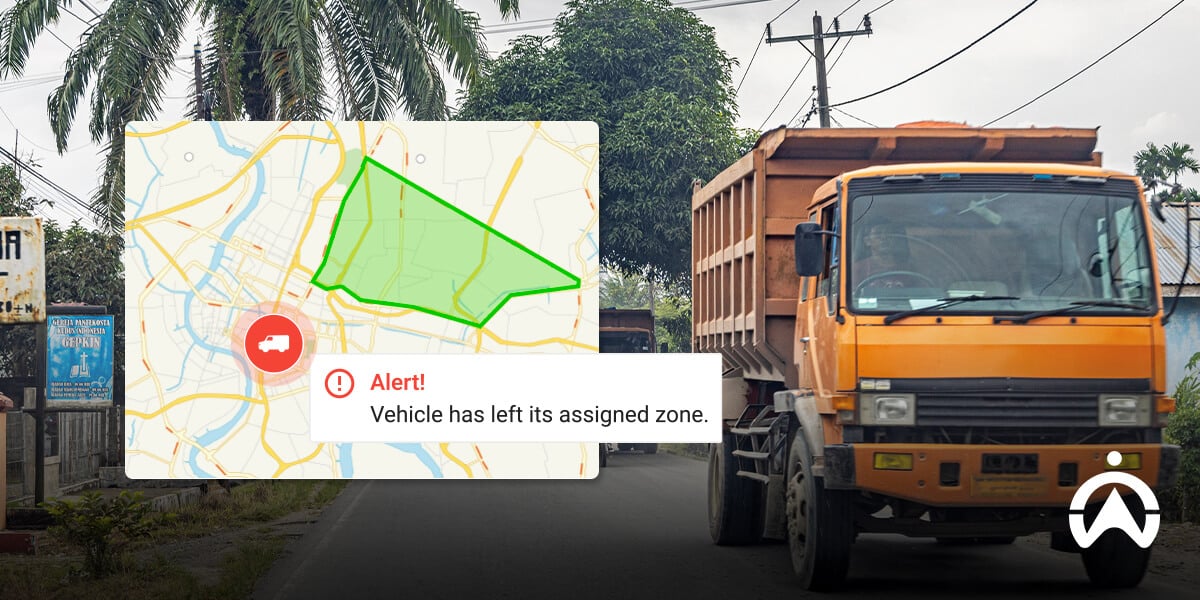
Heavy equipment often operates in remote locations that are far from supervision, making it vulnerable to theft and misuse. By using a GPS Tracker, you can be notified if the equipment is moved from its designated location or operated outside of working hours.

3. Improve Productivity

Operator productivity can also be a major challenge when your focus is on improving operational efficiency. By installing a GPS Tracker, operators are more likely to remain disciplined, as they know the equipment is being monitored.

4. Simplify Fleet Management

As a company representative, you may be managing dozens or even dozens of pieces of heavy equipment simultaneously, which is certainly no easy feat. With GPS integrated with telematics, your job will be much easier in managing all the heavy equipment.

5. Increase Operational Cost Efficiency

Comprehensive monitoring helps reduce operating costs and improve efficiency. It allows you to identify which vehicles are used most frequently, so you can schedule downtime and help prevent unexpected breakdowns.

Orange dump truck on the road with digital map as heavy equipment GPS system to prevent fleet abuse.

The Advantages of Choosing a Heavy Equipment GPS Tracker from Cartrack

From the discussion above, we know that a GPS Tracker is highly beneficial for monitoring your heavy equipment. However, to maximise operational efficiency, you need a solution that goes beyond a mere tracker—such as Cartrack's Fleet Management solution.

Not only does it provide real-time tracking, Cartrack's solution also allows you to:

1. Track Travel History & Operating Hours

All data related to your heavy equipment's location, operating hours, and odometer readings is stored and can be accessed through Cartrack's dedicated platform. This information enables you to analyse productivity, optimise scheduling, and allocate work more effectively.

2. Determine Point of Interest (POI) and Geofence

When working on a project, your vehicles may only be required to work within a specific area or location point. With the Geofence and Point of Interest features, you can mark work areas and set up notifications if heavy equipment moves outside of that designated area.

3. Set up Real-time Notifications

You can also set up various notifications, such as when the vehicle is started/stopped, when it leaves the work area, and so on. You can receive these notifications via the Fleet Web platform or the Cartrack smartphone app.

4. Accessing Automatic Reports

Cartrack's Fleet Management does not only give you access to the platform for monitoring, but also automated reports. Consequently, you can analyse various reports such as driving risk analysis (Risk Management) and the Geofence Report.

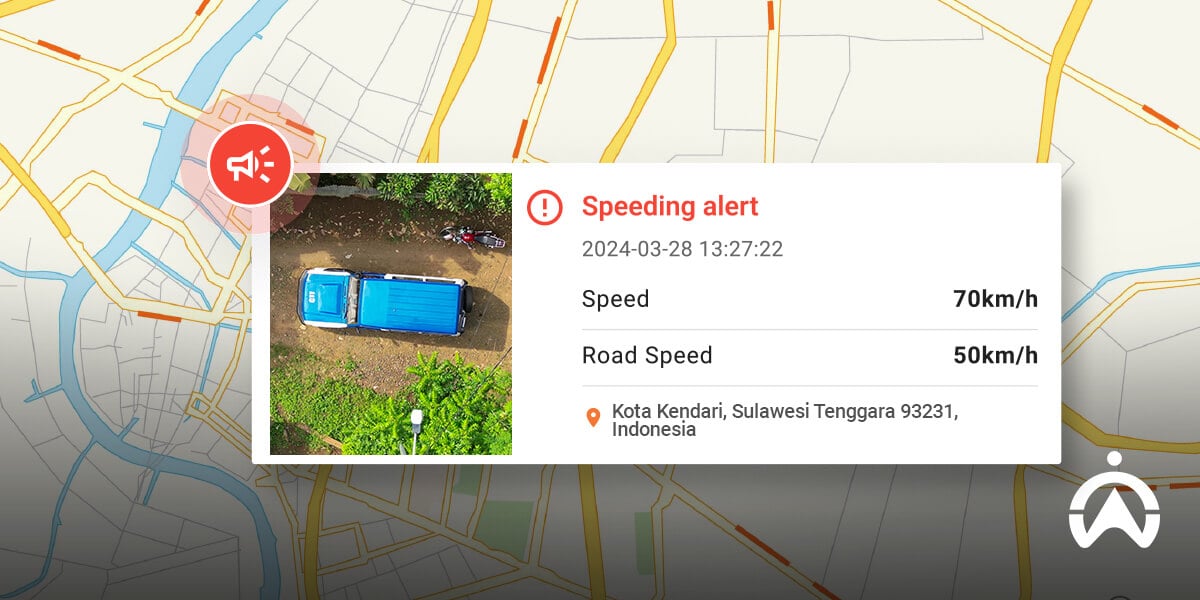
Speed ​​limit notification from the heavy equipment GPS system on a blue truck driving in Kendari to prevent misuse.

Heavy Equipment Management Made Easier with Cartrack

In addition to fleet telematics related to GPS trackers, your heavy equipment security can also be optimised with various additional features from Cartrack. These range from camera features with AI technology to security solutions that prevent the vehicle from starting when stolen.

    1. AI & Non-AI Vision → Camera solutions for internal and external visibility of vehicles as well as for monitoring drivers live-stream with AI technology.

    2. Fuel Monitor → Fuel monitoring solutions to prevent theft and waste.

    3. Power Take-Off (PTO) Sensor → Sensors to determine whether PTO is used according to regulations and to check for indications of misuse.

    4. Maintenance → Heavy equipment maintenance management and automation solutions to minimise downtime.

  1. Start Inhibit Relay → A security solution that allows the vehicle to not start when there is suspicious activity.

Read Also: 4 GPS Tracker Features for Car Rental Businesses Beyond Location Tracking

Get Cartrack Heavy Equipment GPS Now!

Heavy equipment such as dump trucks, concrete mixers, tanker trucks, tractors, cranes, and the like are always at risk of theft and misuse. Don't wait until operational hurdles and losses occur; start protecting your heavy equipment with a Cartrack GPS tracker now!

You can also add other solutions such as dashcams and fleet cameras, fuel sensors, and theft prevention with a Start Inhibit Relay. Fill in your details so that the Cartrack team can contact you for a free demo and a special offer!

Maximise Business Delivery with a Delivery Management System

For example, you own a catering business that's inundated with orders, requiring you to deliver dozens of orders to various locations daily. However, coordinating couriers and arranging deliveries isn't as easy as you might think.

You've started receiving frequent complaints about late orders due to couriers determining their own, often ineffective, delivery routes. Knowing this, you want to improve efficiency, but unfortunately, you don't have much data to evaluate.

All of these challenges can be resolved by using a Delivery Management System, which allows you to manage all deliveries in a single dashboard. So, what is a delivery management system and how does it work? Let’s find out more!

What is a Delivery Management System?

A Delivery Management System(DMS) is a system that enables companies and business owners to manage and coordinate the delivery of goods. This system is typically available as a digital platform with a dashboard that serves as your central control hub.

Through the dashboard, you can schedule and manage deliveries, track driver locations, and optimise delivery routes for greater efficiency. You can also access the proof of delivery submitted by drivers once a delivery has been completed.

Delivery and logistics companies such as JNE, TIKI, and similar service providers commonly use a DMS to manage their operations. However, a DMS is also ideal for online stores, made-to-order food businesses, and other businesses that offer on-demand or same-day delivery services.

Benefits of Delivery Management System

There are many benefits you can get if you use a delivery management system, such as:

1. Simplify Shipping Management

The primary function of a Delivery Management System is to simplify the process of managing and scheduling deliveries. It also allows you to track orders and receive confirmation once they have been delivered, ensuring the delivery process is completed successfully.

2. Optimising Routes

A Delivery Management System also helps you optimise delivery routes, making every delivery more efficient. You no longer need to manually schedule deliveries for each driver or determine the most efficient routes to save time and reduce fuel consumption.

3. Perform Real-time Tracking

You can also monitor the real-time location of each courier, allowing you to confirm that they are actively carrying out deliveries. This also helps improve courier accountability and ensures orders are delivered on time.

4. Improve Operational Efficiency

Automated route management and optimisation will improve time and budget efficiency when it comes to shipping goods. Furthermore, real-time tracking will minimise vehicle misuse by drivers.

5. Improve Customer Satisfaction

Faster deliveries lead to higher customer satisfaction with the service provided. In the long run, this contributes to business growth and sustainability, as customer satisfaction remains a top priority.

Also Read: How to Build a Successful Delivery Business

Features and How the Delivery Management System Works

Now that you understand what a Delivery Management System is and the benefits it offers, let's take a look at how it works. In general, the way a Delivery Management System operates is closely linked to its core features.

1. Input Shipping Data

First, you, as a business owner or administrator, can enter address information and delivery details into the system. On some platforms, you may also be able to pinpoint locations on a map for more accurate delivery.

2. Courier Assignment

You can assign specific deliveries to available or active couriers. For larger delivery operations, you can also use the automatic assignment feature, allowing the system to distribute tasks among couriers fairly and efficiently.

3. Automatic Best Route

In addition to automatically assigning deliveries, the Delivery Management System can also select the most efficient routes for each courier. This eliminates the need for drivers to plan their own routes, enabling them to complete deliveries more quickly and efficiently.

4. Courier Tracking

As a business owner, you can also directly monitor the movements of your couriers as they carry out their duties. This feature allows you to determine whether couriers are actually following their routes or making unnecessary stops.

5. Proof of Delivery (POD)

Furthermore, when the shipment arrives at its destination, the driver can also directly upload proof of delivery (Proof of Delivery). This proof can be a photo of the item upon receipt or a digital signature of the recipient, which you can see on the dashboard.

6. Reports & Analysis

Data and reports related to delivery and courier performance can be used for evaluation and analysis. Therefore, a delivery management system will be extremely beneficial for those seeking more structured and measurable operations.

Close-up of driver's hands on the steering wheel of a car on a toll road to maximize business deliveries using an efficient delivery management system.

Differences Between Manual and Digital Shipping Management

So what's the difference between managing deliveries manually and using a delivery management system? To make it easier, you can see the differences in the table below.

Aspect

Manual Management

Management with DMS

Courier Assignment

Must be noted and notified one by one (via chat/telephone)

Automatically allocated to the nearest and available courier

Route Optimisation

The courier determines the route himself or uses Google Maps manually.

The system selects the fastest and most fuel-efficient route.

Shipment Tracking

Unable to monitor courier position in real-time

Can see courier movements directly on the dashboard

Proof of Delivery (POD)

Using the receipt form or chat proof of delivery manually

There are photo features, digital signatures, and automatic updates to customers.

Estimated Time of Arrival (ETA)

Must be asked directly to the courier and notified manually to the customer

The system immediately displays accurate estimates to customers.

Security & Control

The risk of couriers going off-route or misusing vehicles is higher

There is a travel history that can be checked.

Report & Evaluation

Must recap data manually and is prone to human error

The automated system generates delivery performance reports.

Optimise Your Deliveries with Cartrack Delivery

Based on the comparison above, you can see that digital delivery management with a delivery management system is superior to manual methods. However, not all delivery management systems have the functional features to meet all your business needs.

Therefore, you need a comprehensive and easy-to-use Delivery Management System solution, like Cartrack Delivery. Cartrack's delivery management solution allows you to:

  1. Streamline Deliveries: With Cartrack Delivery, you can manage deliveries efficiently. From importing delivery lists, to automatic scheduling, to instantly delegating couriers.

  2. Easy-to-Use App: In addition to a comprehensive dashboard for you, Cartrack has also developed an easy-to-use app for couriers. With its user-friendly interface, couriers don't need any additional training to use it.

  3. Route Optimisation: Don't let your orders be delayed because the courier determines their own route. With the route optimisation feature, you can find the most efficient route for each courier, saving delivery time and fuel.

  4. Sending Notifications to Customers: Cartrack Delivery also provides email notifications when an order is shipped, along with a link for live tracking. The system will also send an email once the order is received.

  5. Receive Electronic Proof of Delivery (POD): Receive digital proof of delivery uploaded directly by the courier upon delivery completion. This digital proof can be an electronic signature or a photo of the package received.

  6. Get a Complete Report: For accounting and evaluation purposes, you can also download Job Reports and Driver Reports. Each contains complete data on deliveries and the drivers/couriers on duty.

Also Read: 5 Ways to Improve On-Time and On-Time Delivery

In this digital era, manual delivery management is no longer reliable due to its vulnerability to human error. With a delivery management system like Cartrack, you can manage all delivery processes quickly, accurately, and efficiently.

From real-time tracking and route optimisation to downloading automated reports, you can manage everything from a single platform. Improve your delivery efficiency today! Complete the form below to receive a special offer from Cartrack.

Recommendations for the Best GPS Applications for Trucks

For business owners who use trucks as operational vehicles, a GPS tracker is an essential tool you must have. With advancements in technology, a GPS tracker allows you to monitor vehicles in operation, ensuring delivery efficiency. In this article, we will discuss the benefits and importance of using a GPS tracker for fleet management, along with recommendations for the right applications.

Benefits of GPS Applications for Trucks

Using GPS for vehicles is a fleet management tool that offers numerous benefits for you as a business owner. Some of the benefits you'll immediately experience include:

1. Real-Time Location Tracking

A truck GPS tracker enables real-time monitoring of trucks from anywhere and at any time. Beyond ensuring that vehicles follow their assigned routes, it also helps companies take swift action should any issues arise during a journey.

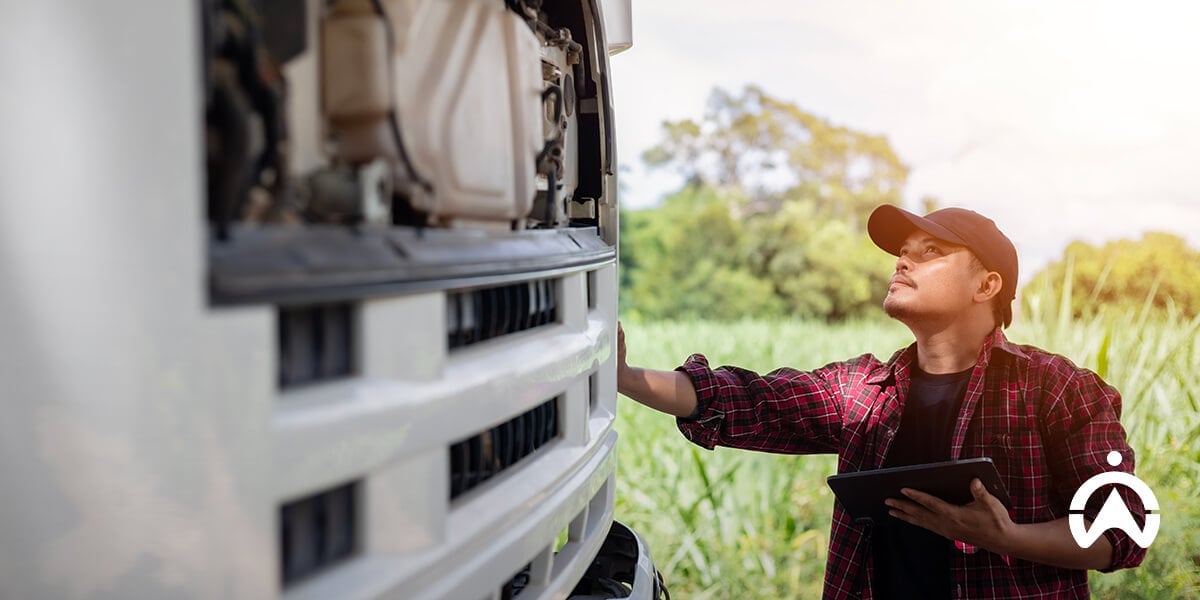
A man checks the front of the fleet using a tablet equipped with a GPS application for trucks.

2. Security Enhancement

With the geofencing feature, you can create a virtual boundary and set up notifications for when a vehicle enters or leaves that area. Furthermore, in the event of a theft, you—as a business owner—will be able to track the vehicle's location.

3. Route Optimisation

Car GPS trackers are typically equipped with navigation features that can recommend the best routes based on travel distance and traffic conditions. This allows drivers to shorten delivery times and also reduce fuel consumption.

4. Monitoring Vehicle Driver Performance

The tracker can record driving behavior such as speed, sudden braking, and even idle time (when the engine is running but not moving). With this data, you can evaluate your driving habits. reduce the risk of accidents and increase efficiency.

5. More Effective Fleet Management

By installing a GPS tracker and utilizing real-time monitoring, business owners can more easily manage delivery planning and scheduling. Furthermore, data collected during transit will prove highly valuable for future evaluations and operational efficiency.

Cartrack GPS tracker application recommendations, the right solution for public transportation companies GPS for cars and trucks

When it comes to fleets like trucks, a standard GPS tracker app often isn't enough, especially if the number of vehicles to be managed reaches tens, hundreds, or even thousands.

For this reason, you should consider a Fleet Management solution, such as the one offered by Cartrack. It helps you optimise your fleet operations with features such as:

  1. Monitor your vehicle in real-time: Allows you to track your vehicle's location in real-time, view the odometer, and get notifications when the engine is running and idling (on but not running).

  2. View trip history: You can view the trip history of each vehicle from when it was started until it was turned off, such as location, trip time, duration and distance traveled, and odometer.

  3. POI (Point of Interest) and Geofence: You can define location points/areas that can be passed by vehicles and get notified if someone leaves the area.

  4. Live-streaming vehicle conditions: You can live-stream vehicle conditions during the trip with the LiveVision feature via internal and external cameras installed on the vehicle.

  5. Accessing reports: You can also view driving reports, such as Speeding, Usage, Risk, Last Position, and Alerts.

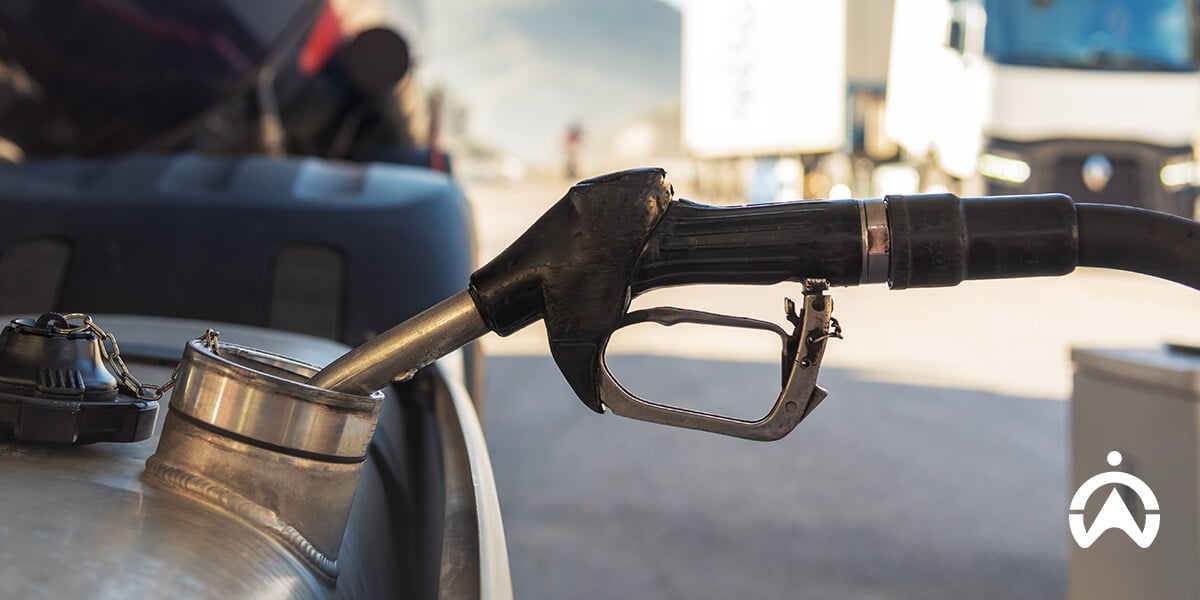
Refueling at a gas station with a truck in the background using the best GPS application for route tracking.

All of these features are included when you subscribe to Cartrack's Fleet Management solution. In addition to GPS tracking, you can also enhance your solution with optional add-on features tailored to your business needs, including:

  • Fuel Management

  • LiveVision (fleet camera) and Smart Cabin (dashcam)

  • Driver Identification

  • Delivery (shipment management)

  • Mi-Fleet (finance and administration)

You can access and manage all the information and settings above through Cartrack's dedicated website, FleetWeb. You can also use the Cartrack smartphone app to monitor and receive notifications.

With Cartrack, you get more than just a tracking application—you gain a fleet management system that can be tailored to your specific needs. Whether you operate in logistics, transportation, distribution, or any other sector, make Cartrack your go-to solution for fleet management. Fill out the form below to request a demo and receive a special offer!

Understanding the GNSS Navigation System and How It Differs from GPS

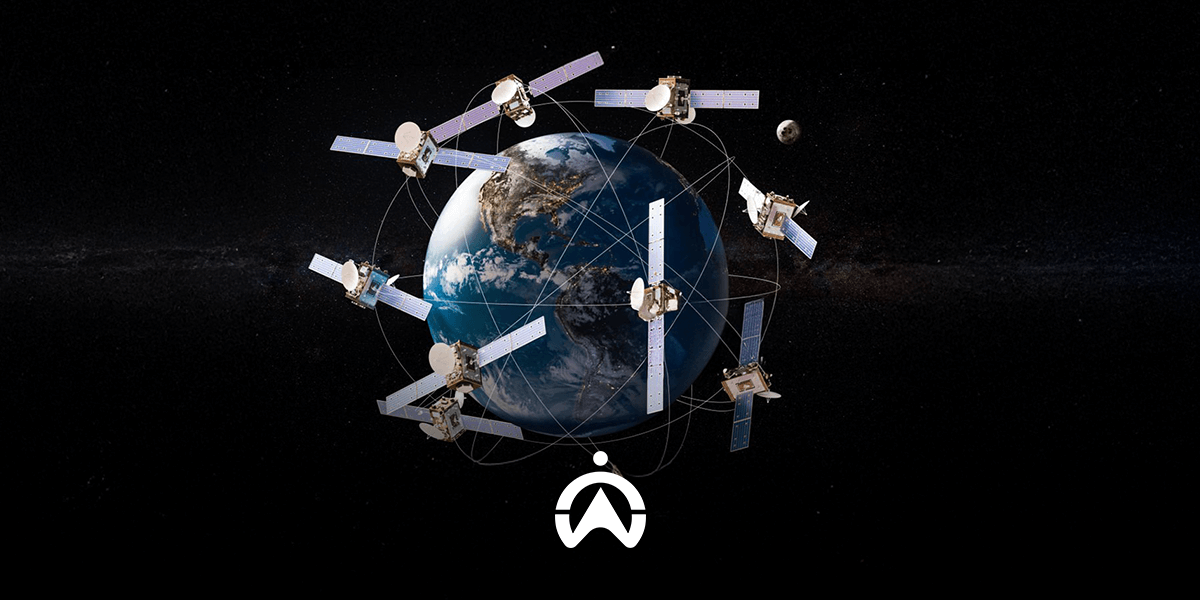
You're certainly very familiar with the Global Positioning System (GPS), right? This navigation system allows us to track and determine our position using satellites orbiting the Earth.

Well, GPS itself is part of a global navigation system called the Global Navigation Satellite System (GNSS). In this article, we'll discuss GNSS in more detail, how it works, how it's used, and how it differs from GPS.

What is GNSS

The Global Navigation Satellite System (GNSS) is a term for a global navigation system that utilises a constellation of satellites orbiting the Earth. Currently, four navigation satellites operate globally:

  • The United States' Global Positioning System (GPS)

  • Russia's Global Navigation Satellite System (GLONASS)

  • China's BeiDou Navigation Satellite System (BDS/BeiDou)

  • Galileo belongs to the European Union

In everyday life, we often use the term GPS to refer to satellite navigation. In reality, GPS itself is just one of the GNSS systems, a global-scale satellite navigation system owned by the United States.

Selain GNSS, ada juga sistem lain yang fungsinya adalah untuk meningkatkan akurasinya, biasa disebut sebagai System-Based Augmentation Satellite (SBAS). Contohnya adalah QZSS (Jepang), Gagan (India), dan EGNOS (Eropa) yang semuanya berbasis pada GPS.

There's also something called a Regional Navigation Satellite System (RNSS). RNSS operate independently but have a smaller coverage scale, such as Navigation with Indian Constellation (NavIC), which only covers India.

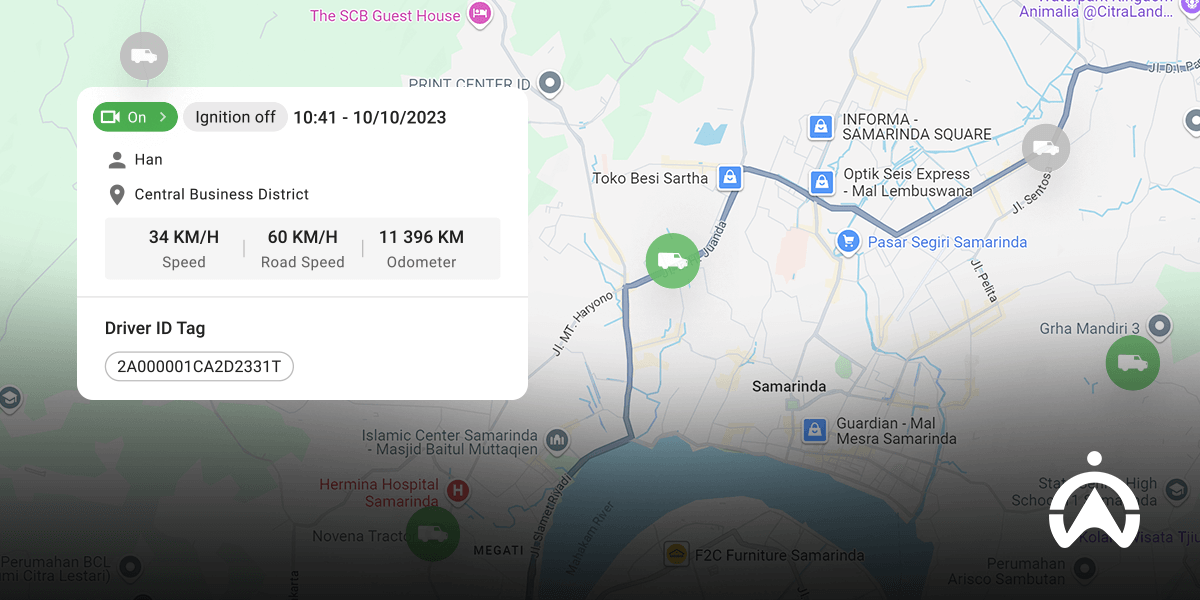
GNSS navigation system map view showing real-time vehicle speed, odometer and location details.

How GNSS Works

A satellite navigation system generally works by sending signals that are then received by a device, such as a smartphone or car. By receiving signals from at least four satellites, the device's position can be determined. A more detailed explanation is as follows:

1. Satellites send signals to Earth

Satellites orbiting at an altitude of at least 20,000 km above Earth's surface continuously transmit signals. These signals contain information about the satellite's location and the time of transmission.

2. The device on Earth receives the signal

Devices such as smartphones or car navigation systems will pick up signals transmitted by these satellites. The device needs to receive signals from at least four satellites to determine its position.

3. Calculate the distance

The device will calculate the time it takes for a signal to travel from the time it's transmitted by the satellite to the time it's received. It will also calculate the distance between you and each satellite.

4. Determining the location

Devices on smartphones and car navigation systems will calculate our position based on the data mentioned above. This position can be in the form of latitude, longitude, and altitude coordinates.

To improve accuracy, there's usually a base station and a continuously operating reference station (CORS) located on Earth. Both provide more accurate positioning because the base station has RTK (Real-Time Kinetics) and the CORS provides GNSS data correction.

Functions and Uses of GNSS

The function of GNSS is, as its name suggests, global navigation. Its functions and uses include:

1. Navigation

With satellite navigation, we can pinpoint our exact location, whether on land, sea, or in the air. Satellites can pinpoint our location and use it as a guide when traveling.

For example, when we want to visit a place, we can enter our destination into our smartphone or vehicle's navigation system. We'll be presented with available route options, allowing us to choose the closest route to get there faster.

2. Tracking

Satellite navigation systems also allow us to track the location of vehicles, goods, and even people in real time. As long as the device is connected to the satellite navigation system, we can track them anytime, anywhere.

You've probably waited for a package to be delivered and tracked its location, right? This is one application of satellite navigation systems, allowing us to know the current location of the item. This also applies when ordering a motorcycle taxi or taxi online.

3. Geofencing

Geofencing is a technology that creates a virtual fence around an area, utilising satellite navigation systems. This technology is extremely useful, especially if you own a business that operates a transportation or vehicle fleet.

You can use geofencing to limit the area your drivers can travel. If they exceed this limit, you or your fleet manager will receive a notification.

4. Transportation Management

Navigasi satelit juga akan sangat bermanfaat untuk memantau sistem transportasi umum seperti bus dan kereta. Kita jadi bisa melacak secara langsung posisi armada transportasi publik sehingga bisa mempersiapkan diri untuk ke halte/stasiun.

This system isn't just for public transportation; it can also be used by those of you who own a transportation business, such as a car rental company. Even if you hand over the keys to your vehicle to the renter, you can still monitor your vehicle with GPS tracking.

5. Emergency Rescue

Fungsi selanjutnya adalah untuk membantu penyelamatan darurat. Misalnya ketika Anda menekan tombol darurat pada smartphone, satelit dapat melacak posisi Anda meskipun Anda tidak tahu sedang ada di mana.

The same applies to company operational vehicles or delivery fleets. Satellite navigation can also track vehicles stranded in situations such as fires, accidents, or natural disasters so that assistance can be dispatched promptly.

Difference between GNSS and GPS

As previously stated, GNSS is a satellite constellation that constitutes a global-scale navigation system. One navigation system commonly used worldwide is the Global Positioning System (GPS), owned by the United States.

Simply put, GPS is a GNSS, or global satellite navigation system, owned by the United States. GPS's advantages over other navigation systems are:

  • It has been around since the 1990s so it is very commonly used.

  • Stable coverage globally because it has 31 active satellites.

  • Wide compatibility with a variety of devices, from smartphones to aircraft navigation systems.

  • The accuracy is quite high, namely around 3–5 meters, which is very acceptable for various needs ranging from navigation to tracking.

  • Still functions optimally even if not combined with other systems.

However, many tracking devices now use multi-GNSS, allowing the combination of all four existing satellite navigation systems. This aims to improve accuracy, obtain corrections, and reduce redundancy.

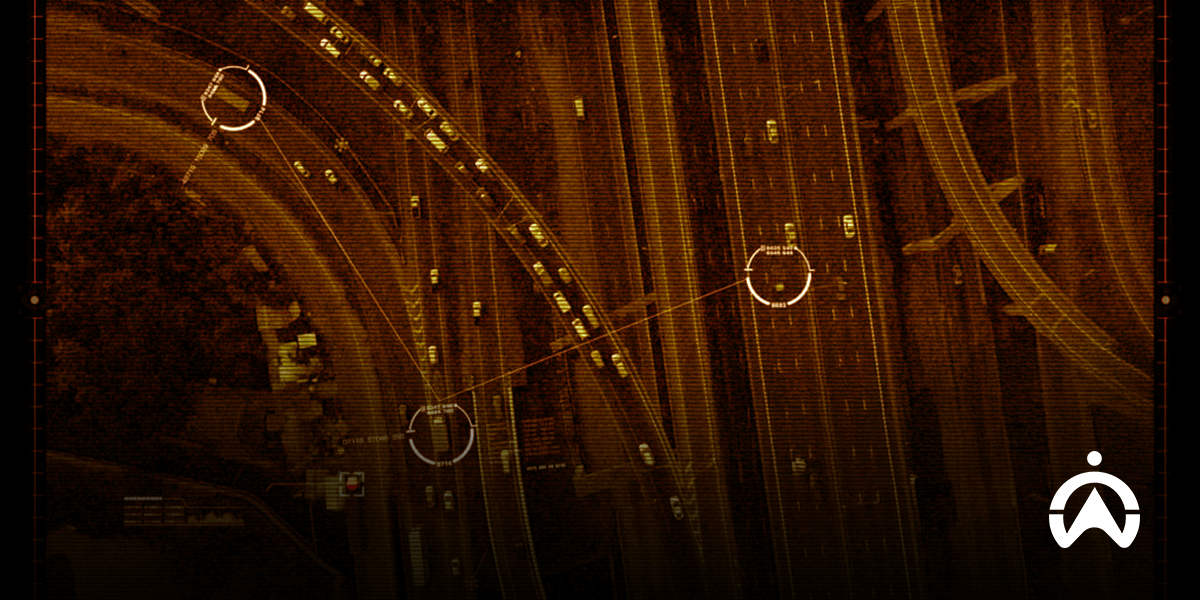
Night view of road traffic using GNSS navigation system technology for digital vehicle tracking.

Monitor Your Vehicle Fleet with Cartrack GPS Tracking

Cartrack offers a GPS tracking solution that allows you to track up to dozens of vehicles in real time. Here are the advantages of Cartrack's GPS tracking as your fleet management solution:

  1. Real-time vehicle monitoring: With Cartrack GPS Tracker, you can monitor your vehicles directly via Fleet Web or the app anywhere and anytime.

  2. Daily trip history: You can find out your daily trip history from when the engine was started until it was turned off, complete with duration, distance traveled, and odometer.

  3. Route planning: This feature allows you to select and monitor vehicle routes and receive notifications in case of deviations.

  4. Point of Interest (POI) dan Geofence: Anda dapat menetapkan POI (titik lokasi) dan Geofence (bidang area) yang dapat dilalui oleh kendaraan sehingga aktivitas operasional lebih efisien.

  5. Automatic reports: All detailed data recorded by the GPS Tracker will be delivered in the form of automatic reports that you can determine the period and format.

That concludes our discussion of the GNSS system, its functions, and its differences from GPS. Simply put, GNSS is a global satellite navigation system, one of which is GPS (United States).

For business owners who rely on vehicles for operational purposes, a GPS Tracker from Cartrack could be the solution for managing your fleet. Click the following link and complete your details to receive a demo and a special GPS Tracker offer for your business!

The Dangers of Overloading in Freight Transport and How to Avoid It

"Overload" is a term often used to refer to a vehicle carrying more than it should. While seemingly trivial, this practice carries significant risks, both to road safety and to the condition of the vehicle itself.

Unfortunately, overloading is still a common practice, especially in freight vehicles like trucks. So, what are the dangers of overloading, and how can you avoid it? Let's discuss this further.

Understanding Overload

Simply put, "overload" means "too much." This term is often associated with vehicles, especially those carrying excess cargo. This condition can occur in both small and large freight vehicles.

A vehicle can be considered "overloaded" if its load exceeds the manufacturer's specified limits. An overloaded vehicle works harder, which can affect components such as the engine, brakes, tires, and suspension.

Factors Causing Overload

There are many factors contributing to the prevalence of overloaded freight transport in Indonesia. Some of these include:

1. Operational Cost Efficiency

Many companies intentionally load more goods into a single shipment to save on travel costs. By loading more goods, companies hope to save on fuel, driver wages, and maintenance costs.

2. Reduce Selling Prices

Fierce market competition has led many companies to seek to lower prices by reducing logistics costs. Furthermore, competition also demands that companies expedite deliveries to meet consumer demand.

3. Limited Resources

Small companies with limited resources often tend to intentionally overload their operations, especially during times of high market demand. Internal pressures, such as delivery targets for drivers and logistics managers, can also contribute to overloading.

4. Pursuing Greater Profits

Companies shipping very large quantities of goods often resort to overloading to maximize profits. Companies often choose this approach because they don't consider the long-term risks and operational disruptions caused by violating existing regulations.

5. Lack of Staff Education

Overloading is sometimes the initiative of field staff who are uneducated about the long-term risks. Rather than saving operational costs, this will actually increase them if the existing fleet cannot operate optimally due to damage.

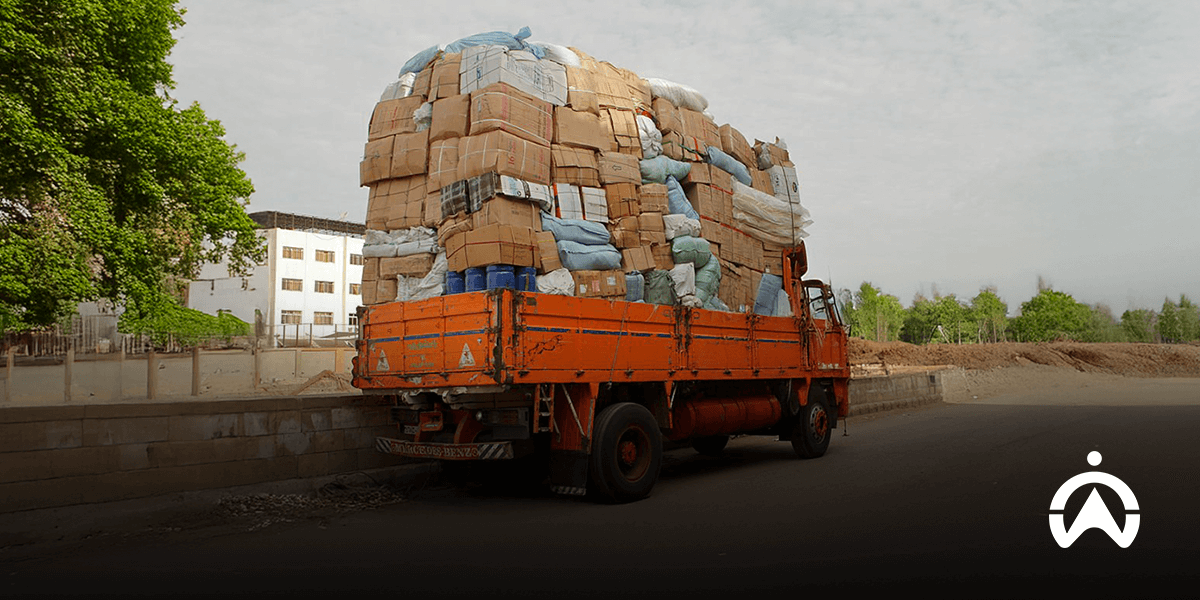
The orange truck was overloaded due to excess cargo on the highway.

Legal Rules Regarding Overload

In Indonesia, there's a term called ODOL (Over Dimension and Over Load), which refers to vehicles with excessive dimensions and loads. This isn't an official term, but aspects of both are covered by several regulations, including:

  1. Law Number 22 of 2009 concerning Traffic and Road Transportation

  2. Government Regulation (PP) Number 55 of 2012 concerning Vehicles

  3. Regulation of the Minister of Transportation Number 134 of 2015 concerning the Implementation of Weighing of Motor Vehicles on the Road

  4. Regulation of the Minister of Transportation Number 60 of 2019 concerning the Implementation of Goods Transportation by Motorized Vehicles on Roads

Despite these regulations, the number of road accidents caused by ODOL vehicles remains quite high, especially on toll roads. In 2023, the government launched a Zero ODOL campaign as a preventative measure against ODOL vehicle accidents.

Dangers and Impacts of Overload

Overloaded vehicles can have a negative impact on traffic, infrastructure, and the vehicles themselves. Not to mention, companies could face legal action during operations for violating regulations.

1. Vehicle Component Damage

Overloading can damage vehicle components, such as premature brake wear, suspension damage, and tire blowouts. This is because the excessive load forces these components to work harder to withstand the impact.

From a company perspective, vehicle damage like this will significantly disrupt operational efficiency. Instead of reducing shipping costs, the company will have to spend more on repairs or replacement parts.

2. Wasteful fuel consumption

Muatan yang berlebih juga menyebabkan mesin bekerja lebih keras untuk mempertahankan kecepatan dan juga stabilitas kendaraan. Hal ini justru akan meningkatkan konsumsi bahan bakar, alih-alih dapat menghemat biaya operasional.

Increased fuel consumption will also increase carbon emissions, negatively impacting the environment. If your company prioritizes sustainability and environmental protection, this is certainly something you should avoid.

3. Accident Risk

A vehicle's maneuverability and stability will be reduced if it is overloaded. Excessive loads also put pressure on the brakes, which can result in them not functioning optimally.

Jika kendaraan melewati medan yang sulit atau berbelok, kendaraan akan semakin sulit dikendalikan dan risiko kecelakaan pun meningkat. Selain itu, muatan yang berlebih juga akan sangat berpotensi terjatuh dan membahayakan kendaraan lain di jalanan.

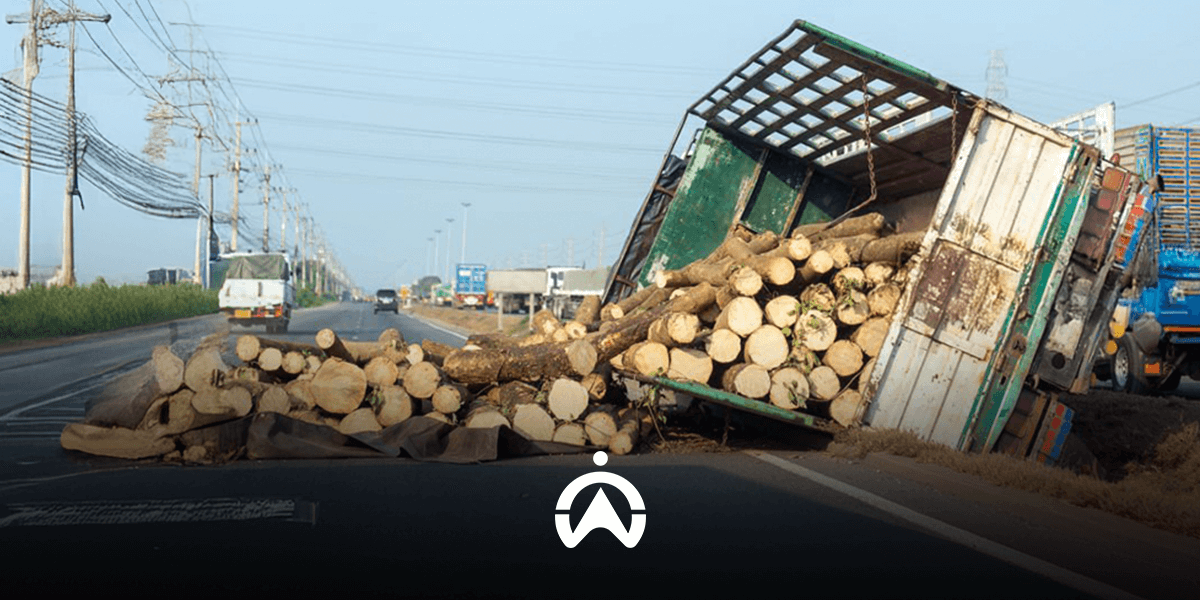
In Indonesia, accidents involving overloaded vehicles are quite common on toll roads. Truck overturns, causing multiple accidents, occur almost every year. When this happens, the losses to companies are certainly significant.

4. Damaging Infrastructure

Overloaded vehicles can also damage road infrastructure and bridges. Not only on highways, but overloaded vehicles can also damage road infrastructure around frequently traveled warehouses or factories.

If detected or reported as causing damage to road facilities, the company may be fined. If damage occurs to roads near the company, repair costs will naturally be incurred.

5. Violations of Law and Sanctions

If a vehicle is found to be overloaded at a weighbridge, the load may be reduced or you may be fined. This can lead to delays in delivery, which can result in losses for the company.

Additionally, you will be prohibited from passing through certain areas, especially those prone to infrastructure damage. You may also be ticketed at any time, especially if there's a roadside inspection.

How to Avoid Overload

Overloading vehicles or transportation can actually be avoided if companies establish strict rules and regulations regarding shipping. Some things you can implement include:

1. Understand Your Vehicle Capacity

In some cases, overloading occurs because business owners and field managers don't understand vehicle capacity. Overloading can occur even if the load isn't over capacity, especially with materials like sand, iron, and other solid minerals.

To avoid this, you should understand your vehicle's capacity, both in terms of dimensions and weight. Especially the Gross Vehicle Weight (GVW), or the maximum weight the vehicle can carry, including cargo and passengers.

2. Carry out Load Planning and Route Selection

The next thing you can do is plan your vehicle's load for each shipment. Ensure that the items are evenly distributed across the vehicle's cargo bed to ensure optimal carrying capacity.

Selain itu, alih-alih memaksakan untuk mengangkut lebih banyak, Anda bisa mengoptimasi pilihan rute pengiriman. Diharapkan dengan demikian, waktu pengiriman dapat lebih dipersingkat dan biaya bahan bakar juga dapat dikurangi.

3. Weigh the goods before transporting them.

When loading goods, staff often neglect to weigh them first and focus on meeting the vehicle's load capacity. This leads to many vehicles being stopped or held at weighbridges during delivery.

Detention and inspections will undoubtedly significantly impact company operations. You can minimize this by establishing a policy that pre-weighs items for shipment and adjusts them to vehicle capacity.

4. Operational Team Education

It's not uncommon for companies to suffer the consequences of "mischievous" operations staff in the field who manipulate deliveries. However, this is also often due to poorly educated operational managers.

Ensure operational managers understand the risks of overloading and support policies to prevent it. Furthermore, you should provide driver training on the importance of avoiding overloading, both for safety and legal compliance.

5. Check the condition of the vehicle regularly

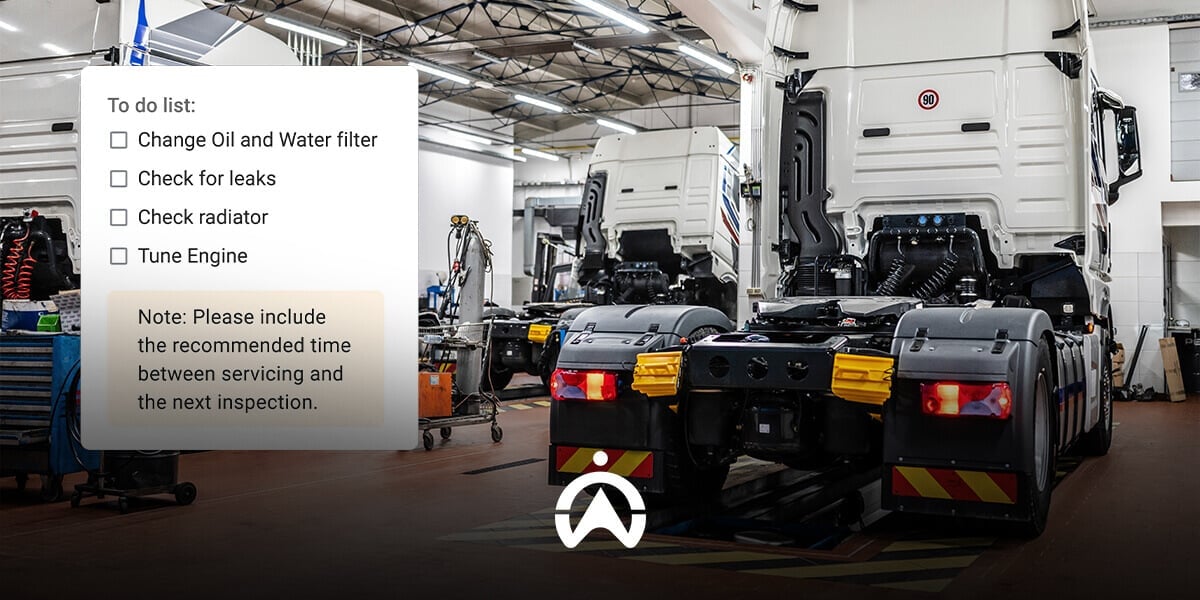
Furthermore, to avoid the dangers of overloading, you can invest in regular vehicle maintenance. With regular inspections, any damage caused by potential overloading can be promptly detected and minimized.

This will also indirectly change bad and risky driving habits, including previously unknown overloading. Furthermore, regular maintenance will also make it easier for you to pass the mandatory roadworthiness test (KIR) every six months.

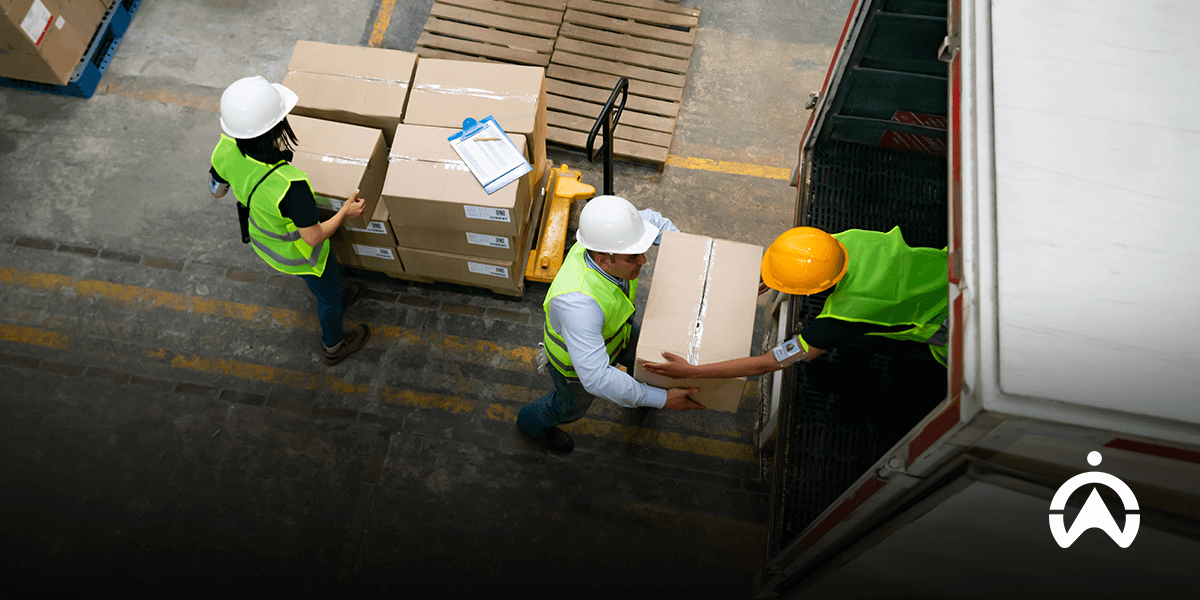
Warehouse workers load cardboard boxes onto trucks to prevent the risk of overloading during freight transport.

Fleet Maintenance Solutions from Cartrack

Many companies don't implement regular inspections, so damage isn't discovered until it's already disrupting operations. When this happens, the resulting losses are often compounded by repairs and delayed deliveries.

You can mitigate the risks of loss mentioned above by performing regular vehicle maintenance checks. One way to do this is by utilizing Cartrack's Cartrack Maintenance solution. With Cartrack Maintenance, you can:

  1. Maintenance Automation: You will get a reminder for maintenance if the vehicle has reached a certain mileage.

  2. Ensure vehicle roadworthiness: Prevent vehicle breakdowns with regular engine diagnostics and inspections to schedule repairs.

  3. Manage repairs: Drivers can request repairs through the app, allowing managers to schedule downtime efficiently.

  4. Understanding repair costs: Plan the cost expenditure required for each category on each vehicle to avoid waste.

With the Cartrack Maintenance solution, you can manage vehicle repairs and maintenance more regularly and on a schedule. This will help you ensure your vehicle's condition, prevent breakdowns, and always be ready for roadworthiness tests.

Cartrack Maintenance is part of Cartrack's Fleet Management suite, enabling you to effectively manage your fleet and commercial vehicles. Click the link below to receive a special offer!

How IoT Temperature Sensors Work to Monitor Storage Fleet Temperatures

Temperature sensors are a technology ubiquitous in our everyday lives. They range from simple applications in thermometers to functional applications like air conditioners and refrigerators, to more complex technologies like smart homes and smart farming.

Have you ever wondered how temperature sensors work? To answer your curiosity, we'll discuss how temperature sensors work, their uses, and how they can provide solutions for the cold chain industry.

What is a Temperature Sensor?

A temperature sensor is a device used to measure the temperature or heat of an object or environment. This sensor can detect changes in heat and convert it into readable information, usually in digital form.

You're surely familiar with a thermometer, right? This device is one example of a simple temperature-detecting sensor that we often encounter in everyday life. Household items like air conditioners and refrigerators also have similar sensors, only integrated into more complex systems.

How Temperature Sensors Work

In general, temperature sensors work by detecting changes in heat or cold through a specific material. These detected changes are then converted into data that can be read by the device or system using it.

Temperature sensors aren't just used to display data in the form of numbers we can read, like a thermometer. These devices can also be integrated into systems for more functional applications, such as regulating the cooling of air conditioners and refrigerators.

With a temperature sensor connected to a cooling system controller, the refrigerator can keep its storage space cool. This device can be used not only for cooling but also in heating systems such as incubators.

Also Read: What is the Impact of IoT on Fleet Management Systems?

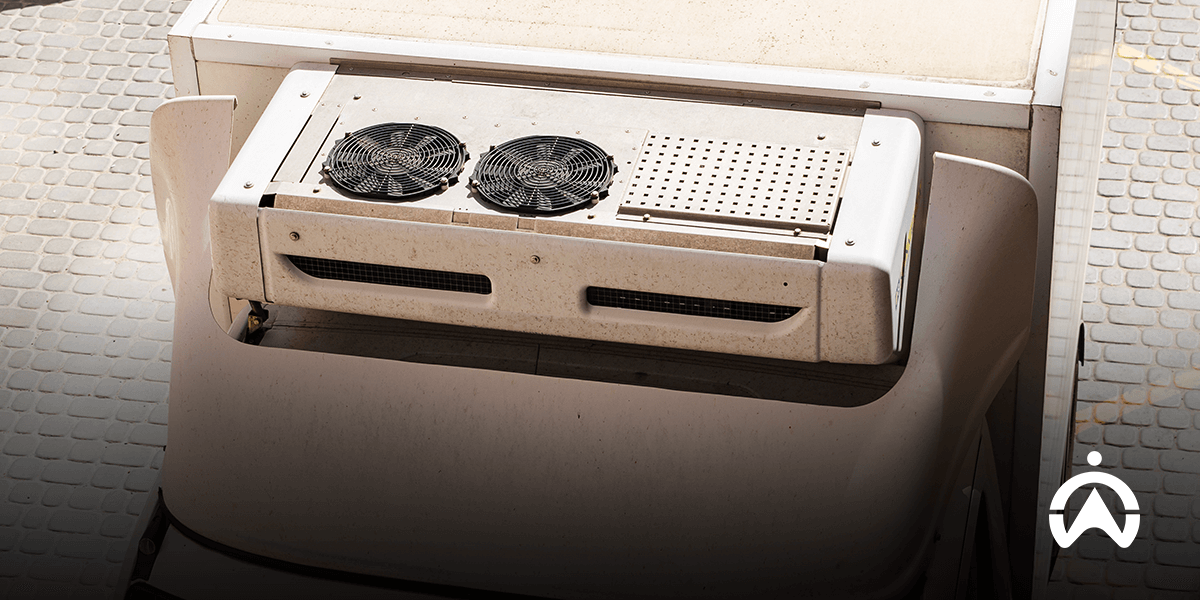
A dual-fan roof-mounted AC unit with an IoT temperature sensor to monitor the temperature of its storage fleet.

Types of Temperature Sensors

As mentioned previously, temperature sensors work by detecting changes in heat/cold using a specific material. Here are several types of temperature sensors based on the material used.

1. Thermistor (Thermistor)

A thermistor is a device that changes resistance (impedance to electrical flow) in response to changes in temperature. This change is then converted into a numerical value that we can read.

These semiconductor devices are widely used because they are highly sensitive to small changes, making them considered more precise. However, thermistors are also highly susceptible to extreme temperatures and humidity or other conditions.

Examples of the use of thermistors: thermometers, refrigerators, and air conditioners.

2. RTD (Resistance Temperature Detector)

The RTD's working system is essentially very simple and utilises the correlation between metal and temperature. Metals like platinum have resistance that changes with temperature. As the temperature increases, the metal's resistance increases, and vice versa.

RTDs offer high accuracy, tend to be stable, and are durable even under extreme conditions. However, they respond relatively slowly to temperature changes compared to other sensors and are also more expensive.

Examples of RTD sensor use: in laboratories and drug storage rooms, manufacturing that requires high accuracy (example: semiconductor manufacturing).

3. Thermocouple

A thermocouple consists of two wires of different metals (usually iron and copper) joined at a single point. The temperature difference between the two ends of the metal produces a small current that can be converted into a digital temperature reading.

Thermocouple sensors can measure temperatures ranging from very low to very high, even reaching thousands of degrees Celsius. However, these devices have drawbacks, including low accuracy and the potential for electrical interference if improperly installed.

Examples of thermocouple sensor use: heavy industry (power plants, oil refineries, and chemical processes)

4. Infrared Sensor

An infrared sensor is a device that measures the heat radiation emitted by an object. Based on the simple principle that all objects with a temperature above zero emit radiation, this sensor measures the intensity of that radiation.

The main advantage of this device is that it can measure temperature without directly touching the object, providing instant results. The downside is that it can only measure the surface temperature of the object, and its accuracy can be affected by environmental factors.

Examples of infrared sensor use: non-contact thermometers, engine thermometers or overheating electronic components.

Use of Temperature Sensors in Various Fields

Temperature sensors are integrated into many things in our daily lives, both for household and industry.

1. Household

Air conditioners and refrigerators are examples of temperature sensors most closely related to our daily lives. Essentially, the sensors in these two electronic devices aren't just used to detect temperature but are also integrated into specialized mechanisms.

In refrigerators and air conditioners, a thermistor is used to detect temperature and is connected to a controller that can turn the cooling compressor on or off. This way, when the room is warmer than it should be, the cooling system will turn on.

2. Medical

In the medical world, temperature sensors can be found in thermometers and incubators. Thermometers generally use thermistors, thermocouples, or infrared, while incubators typically use thermistors or RTDs.

In a thermometer, the device is only used to detect temperature and convert it into digital data in the form of numbers that we can read. Meanwhile, in an incubator, the sensor that reads the temperature is usually connected to a controller that can turn on the heater.

3. Technology

In technology, temperature sensors are used in almost every field, from smartphones and laptops to smartwatches. In addition to detecting heat, these sensors are often connected to controllers that can shut down the device if it overheats.

Additionally, temperature sensors are one of the primary sensors in the Internet of Things (IoT), for example in smart homes. Temperature sensors integrated with IoT can learn user habits to optimize comfort and energy efficiency.

4. Agriculture

In the agricultural sector, temperature sensors can be used to measure soil temperature, in greenhouses, and even for post-harvest storage. Furthermore, with the development of IoT and smart farming technology, data can be accessed remotely.

Temperature sensors are not only useful in the agricultural sector, but also in the livestock industry. With these devices, owners can monitor the ideal temperature for animals like chickens or cattle to ensure their health and prevent disease.

5. Cold chain

The cold chain industry requires strict supervision because it deals with temperature-sensitive products, such as frozen food, pharmaceuticals, vaccines, and other products that require temperature stability during shipping.

Temperature sensors can be installed in warehouses, refrigerated containers, and even at the final delivery point. If a temperature change exceeds the tolerance limit, the company will typically conduct an inspection and repair immediately.

Also Read: How to Monitor Vehicle Fuel with Cartrack's Fuel Sensor & MiFleet

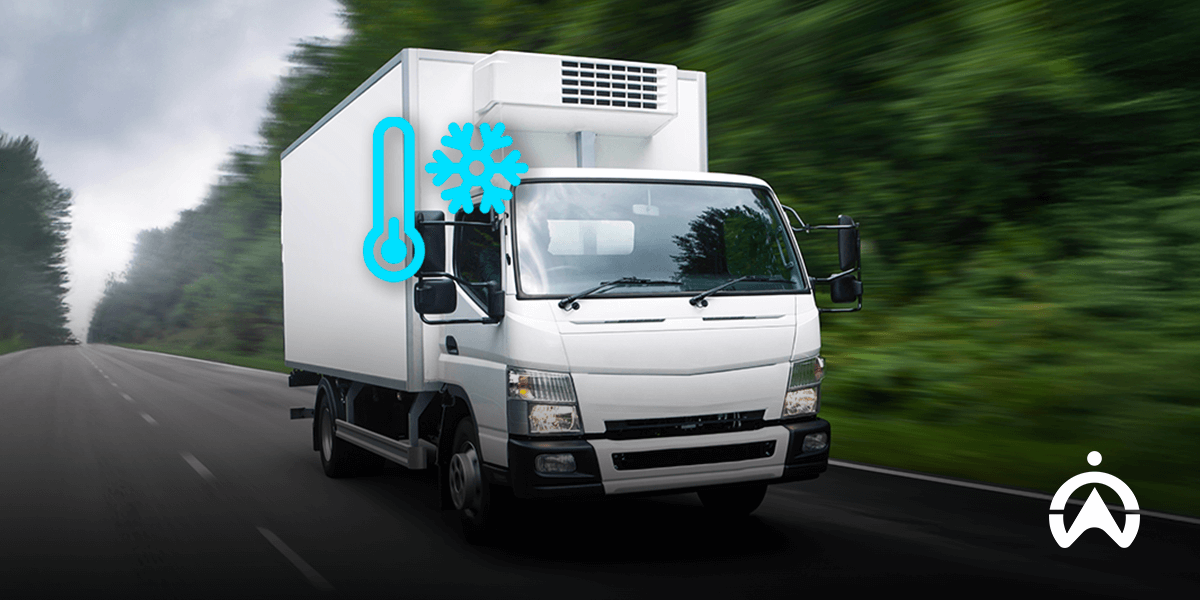
On-the-road refrigerated trucks use IoT temperature sensors to monitor the temperature of their cold storage fleet.

Cartrack Temperature Sensors: Industrial Cold-Chain Solutions

The use of temperature sensors in the cold chain industry is essential, especially if your business prioritizes high quality and standards. Cartrack offers an IoT Temperature Sensor solution that not only detects temperature but also enables live, remote monitoring. With Cartrack's IoT-enabled temperature sensors, you can:

  1. Ensuring quality: Many products, such as vaccines and medicines, must be stored and shipped to specific standards. WHO regulations are typically applied to each shipment to ensure quality and effectiveness.

  2. Preventing losses: With real-time temperature monitoring using IoT technology, you can prevent losses due to product damage, especially for long-distance shipments that can take hours or even days.

  3. Increase consumer confidence: With sensors that detect vehicle temperature, you can assure customers that product quality is maintained and minimize damaged products on the road.

Temperature Sensor Solutions for Cold-Chain Company AntarEs

One client that has used Cartrack's Temperature Sensor is AntarEs, a company operating in the cold-chain industry. AntarEs provides premium services for frozen goods with high standards.

The company already holds ISO 22000 certification, the Guidelines for Good Distribution Practice (GDP), and Hazard Analysis and Critical Control Points (HACCP). Operating in 25 cities across Indonesia, AntarEs has a diverse fleet that must be well-managed.

AntarEs entrusts Cartrack with its fleet management solutions, including GPS, AI cameras, internal cameras, cargo door sensors, and temperature sensors. All of these ensure the fleet operates according to established procedures and quality standards.

With the advancement of technology, the use of temperature sensors is increasing. Furthermore, with IoT integration, monitoring becomes even easier and can be a solution for the cold chain industry.

For those of you in the cold-chain industry, you can contact Cartrack for a Fleet Management solution that suits your needs. Fill out the following form to get a demo and quote from Cartrack!

Also Read: 4 Benefits of Cargo Door Sensors for Company Fleet Management in Indonesia

Best Dashcams for Personal Cars and Fleets in 2025

A dashboard camera—commonly known as a "dashcam"—is an important car accessory for driving safety and security. With a dashcam, owners can document their journeys as well as any incidents that occur on the road.

Therefore, having a car dashcam is crucial for both personal use and business fleet management. In this article, we will discuss the benefits of using a dashcam, provide recommendations, and offer tips on choosing the right one.

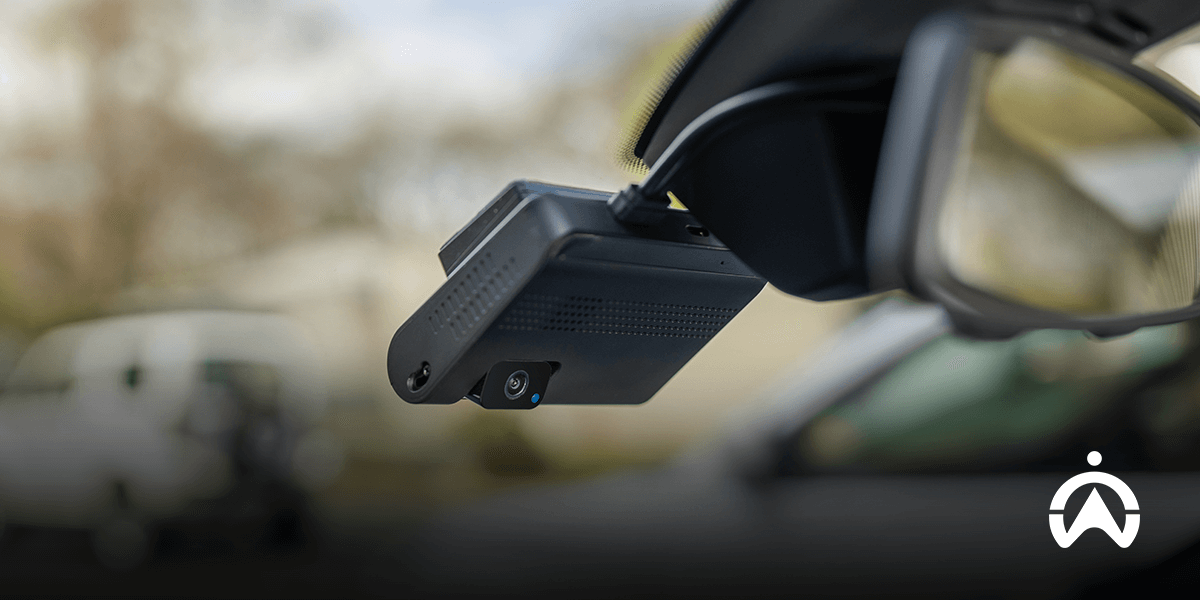
fleet car dashcam

Benefits and Advantages of Using a Dashcam

Many unavoidable incidents on the road occur, such as accidents, traffic violations, and even criminal acts. When these incidents occur, we as drivers often have no proof that they actually occurred.

Consequently, car dashcams play a crucial role in facilitating legal proceedings or insurance claims regarding damage or loss. The following are the functions of a dashcam in a vehicle:

1. Recording the accident

One of the functions of a dashcam is to document the journey and road conditions while driving. In the event of an accident—whether involving the user's vehicle or another—the dashcam footage can serve as evidence for an investigation.

2. As evidence when there is a traffic violation

There are numerous roadside scams where perpetrators pretend to be accident victims and place the blame on other motorists. Vehicles without dashcams are generally more vulnerable to such risks. In such situations, dashcam footage can serve as evidence that the owner is not at fault.

3. Fleet operational monitoring

For commercial vehicles, dashcams are also highly beneficial for monitoring operations. Especially when integrated with GPS, they allow for real-time monitoring of vehicle locations and the routes taken. This certainly makes it easier for fleet managers to monitor their active fleets.

4. Data for driver performance evaluation

With dashcam footage, fleet managers gain better insight into driver behaviour. Many drivers engage in risky actions—such as using mobile devices or driving while drowsy—that lead to "minor" accidents. Dashcam recordings provide documentation that can be used for performance evaluation.

5. Evidence for company vehicle insurance claims

In the event of an accident or a damaging incident, you, as a business owner, will have the evidence needed to file an insurance claim. As long as you possess valid proof of the loss incurred on the road, insurers typically will not complicate the process. Furthermore, some insurance providers even offer reduced premiums for vehicles equipped with dashcams.

Also Read: Fleet Efficiency Solutions with Leading AI Camera Technology

Best Dashcams for Private Cars and Fleets

Using a dashcam is highly beneficial for both private vehicles and operational fleets. Featuring top-tier capabilities, Cartrack offers AI and non-AI vision solutions as part of its Fleet Management offering.

Non-AI Vision

This is a non-AI camera solution that allows you to view live footage via live streaming on the Cartrack website or app. It is suitable for both private vehicles and fleets, with the following options:

  • Road Vision: A camera device that points at the road in front of the vehicle. 
  • Dual Vision: A device consisting of two cameras, one facing the road and one facing the driver. 
  • Multi Vision: A monitoring system consisting of 4-8 cameras and can be combined with in-cab monitor for visibility from the cabin. 

AI Vision

AI Vision is a camera equipped with AI technology to detect and provide safety warnings. These warnings can include audible alerts or vibrations from the driver's seat. Some behaviors that may trigger a warning include: 

  • Camera closure 
  • Focus disturbance 
  • Fatigue 
  • Smoking 
  • Not wearing a seat belt 
  • Potential collision ahead 
  • Vehicle goes off the road line 
  • Driving too close to another vehicle 

You can use this solution for Dual Vision or Multi-Vision setups supporting up to 8 cameras. You can also add an in-cabin monitor for interior monitoring to eliminate blind spots.

Also Read: How to Keep Drivers Safe with AI Cameras

best car dashcam

5 Tips for Choosing the Right Dashcam

There are several things you need to consider when you want to buy a dash cam, whether for personal or business purposes.

1. Prioritise camera resolution

Considering functionality, camera resolution is the first thing you should consider. Generally, both personal and business users prefer a resolution of at least 1080p.

2. Pay attention to battery life

In parked mode, the car's battery, which previously supplied power, switches to the battery. Therefore, the next thing you need to consider is battery capacity, especially if your car tends to be parked for long periods.

3. Check the availability of the Night Vision feature

The next thing you should consider when choosing a dashcam is its Night Vision feature. This ensures high-quality footage, even when recording at night or in low light.

4. Ensure Camera Durability

As an electronic device used in a vehicle—which is naturally subject to constant movement—a dashcam's durability is a factor you should consider. You might also want to look for a camera equipped with a G-sensor capable of detecting sudden movement or impacts.

5. Find out additional features

If you are looking to select a dashcam for business purposes, you should also consider additional features—such as GPS, motion sensors, Wi-Fi connectivity, and driver fatigue alerts. Cameras offering these types of features are typically provided directly by fleet management service providers like Cartrack.

The Best Fleet Management Solution from Cartrack

Cartrack Vision is part of the fleet management services provided by Cartrack. In addition to offering top-tier dashcams, Cartrack also provides other solutions to meet various commercial vehicle needs, such as:

  • Comprehensive fleet management: trip and route history, driving behavior monitoring, working hours monitoring, schedule management, geofencing, and automated reports.
  • Additional features: fuel sensor, remote starter disable, driver identification tag, temperature sensor, and panic button.
  • Special services: MiFleet (operational cost automation), Delivery (delivery control), and Cartrack Vision (AI and non-AI camera monitoring)

With Cartrack's comprehensive services, you can manage your commercial vehicle operations more easily, from fleet management and fuel control to driver activity monitoring.

That concludes our discussion on dashboard cameras—covering everything from their benefits and top recommendations to tips on how to choose the right one. Be sure to select a dashcam that best suits your needs. If your dashcam requirements are related to business operations, contact us to learn about our customizable Cartrack Vision and Fleet Management solutions. Fill out the form below to receive a quote from Cartrack!

Also Read: Best Dashcam Recommendations for Driving Safety

Car KIR: Definition, Requirements and Costs 2025

As a commercial vehicle owner or user for business operations, you're likely familiar with the term "vehicle inspection." However, if you're new to the commercial vehicle business world, you might not fully understand the term. Find out more about vehicle inspections, including their definition, procedures, and costs, in the following article.

What is the Kir Test?

A roadworthiness test (KIR) is an inspection of motor vehicles, particularly for business vehicles such as buses and trucks. This inspection is mandatory every six months to inspect vehicle components to ensure safe driving.

According to Indonesia's Minister of Transportation Regulation No. 19 of 2021, the following types of vehicles are required to undergo periodic inspections:

  1. Public passenger cars

  2. bus

  3. Goods truck

  4. Trailer

  5. Patch train

Regulations regarding this matter are discussed in Law Number 22 of 2009 concerning Traffic and Road Transportation, Article 53 paragraph 1. In addition, this inspection is also regulated in Minister of Transportation Regulation No. 133/2015.

As a mandatory requirement stipulated by law, there are of course sanctions stipulated in Article 76 paragraph 1 of Law Number 22 of 2009 concerning Road Traffic and Transportation (LLAJ). These sanctions include written warnings, fines, suspension of road permits, and even revocation of road permits. Therefore, vehicle roadworthiness tests are mandatory for all business/company operational vehicles.

By conducting regular vehicle inspections, you ensure smooth operations and ensure road safety. This, of course, also indirectly minimizes losses for both the company and other road users.

In addition, you will also avoid lengthy matters with the authorities when random inspections occur which of course disrupt operations.

Read Also: Improve Road Safety with Fleet Management Technology

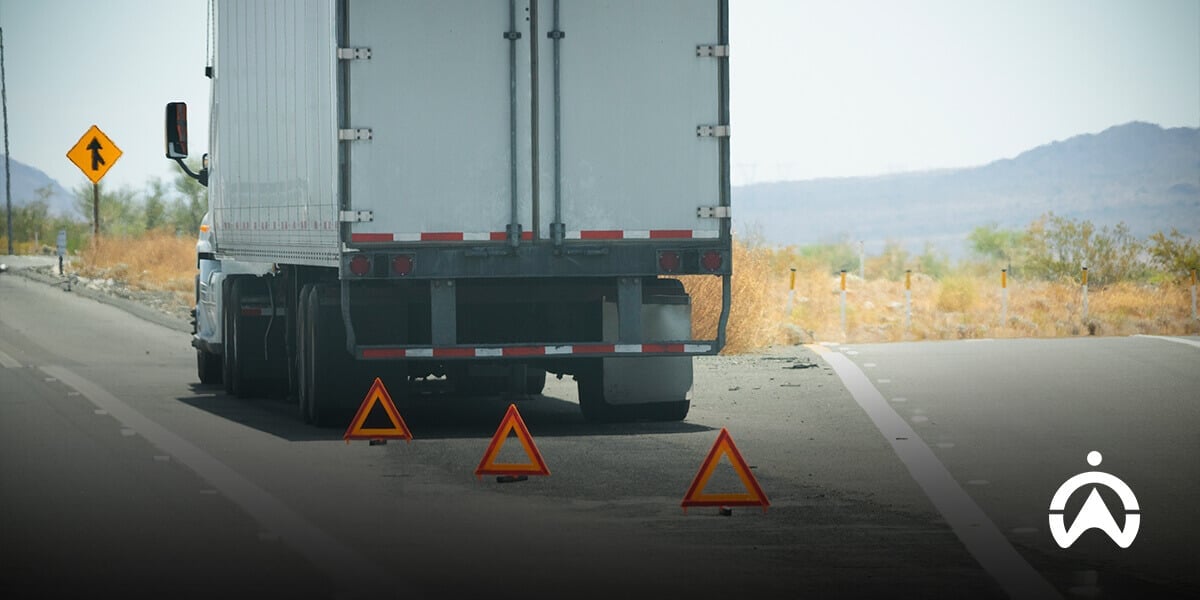
The white truck stopped at the side of the road with a safety triangle, meeting the safety standards for car roadworthiness tests.

Vehicle Inspection Test Implementation Time

Indonesian Minister of Transportation Regulation No. 19 of 2021 also regulates the timing of periodic inspections, as follows.

1. Periodic Registration Test

In other words, the Periodic Registration Test is the first time your vehicle will undergo a roadworthiness test. The requirements are as follows:

  • You can register within 13 working days from the issuance of the STNKB (Motor Vehicle Registration Certificate) for passenger cars, buses and goods vehicles.

  • For trailers and attached trailers, you can register 13 working days from the issuance of the SRUT (Type Test Registration Certificate).

  • Valid for one year from the date of issuance of the STNKB or SRUT.

2. First Periodic Test

The First Periodic Test is the first periodic test or inspection after the Registration Periodic Test. The following are the provisions:

  • It is carried out after the periodic registration test period ends (after 1 year).

  • Valid for 6 months.

3. Periodic Test for Extension of Validity Period

The Periodic Renewal Test is a mandatory periodic test that must be performed within a specified period, namely every six months. At this stage, you no longer need to register the vehicle, making the process shorter than before. The requirements are:

  • It is carried out after the first periodic test period ends (after 6 months).

  • Repeated every 6 months.

Also Read: Pre-Trip Checklist: Safety Steps in Fleet Management

Procedures and Stages of Car Vehicle Inspection Test

After understanding the timing and flow of vehicle inspections, here are the procedures and stages you will go through when conducting periodic inspections.

1. Registration

Registration for the vehicle inspection test can be done directly or online via the website/application.

Offline Registration

Offline registration can be done by visiting the Transportation Agency office in your city or district.

  1. Visit the registration counter.

  2. Complete the registration files.

  3. Heading to the pre-test and roadworthiness inspection location.

Online Registration

Several regions, such as Jakarta and Tangerang, have implemented online registration systems, both through websites and smartphone apps. To find out if your region has implemented an online registration system, you can check on the Play Store.

  1. Open PlayStore on your smartphone (Android)

  2. Ketik “kir [nama kota/kabupaten]” pada kolom pencarian

  3. Download and install

  4. Perform user registration by filling in the data

  5. Select the “First Test List” or “Regular Test List” service.

  6. Prepare supporting documents in scanned format as well as photos of the front and side of the vehicle in JPEG/JPG/PNG format.

2. Checking the required documents

After registration, you will enter the required file check, which is as follows:

  • BPKB (Motor Vehicle Ownership Certificate)

  • STNK (Vehicle Registration Certificate)

  • Original ID card of the owner or power of attorney if the person requesting the inspection is not the owner.

  • Route permit for public transport or operating permit for passenger transport

  • Type Test Registration Letter (SRUT)

3. Pre-Test Inspection

At this stage, Transportation Agency officers will conduct a visual inspection to ensure the completeness of the components that ensure driving safety. Some of these include:

  • Frame number and condition

  • Number and type of drive motor

  • Condition of fuel tank, fuel filler funnel, fuel line pipe.

  • Condition of the converter kit system for those using high pressure fuel

  • Condition and position of the drain pipe

  • dll.

The KIR car document requirements are the STNK and the motor vehicle periodic inspection card.

4. Roadworthiness Inspection

Next, the officer will check the roadworthiness requirements which include:

  1. Exhaust emissions

  2. Noise level

  3. Main braking capability

  4. Parking brake capability

  5. Front wheel cup

  6. Headlight beam capability and direction

  7. Accuracy of speedometer

  8. Tire tread depth

5. Submission of Vehicle Inspection Test Results

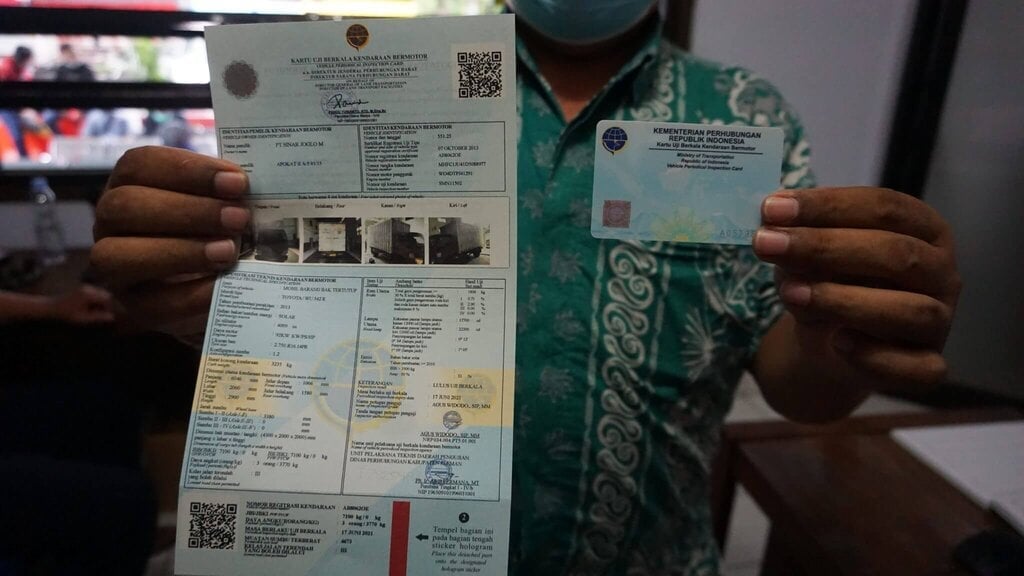
After a series of inspections, you will receive a proof of passing the vehicle inspection. Since 2020, the vehicle inspection certificate, which was previously in book form, has been replaced by an electronic form, BLU-e (Electronic Proof of Passing the Vehicle Inspection). The BLU-e itself consists of:

  • Two certificates of passing the examination

  • Hologram sticker with QR code attached to the windshield

  • One smart card with NFC technology

Source: Sleman Regency Transportation Agency

The vehicle inspection certificate is valid for six months after the inspection. Therefore, you must ensure your vehicle is registered for the inspection on time. You can also check by entering your vehicle registration number on the Transportation Agency's dedicated website.

  • Visit spionam.dephub.go.id

  • Select “Check Vehicle”

  • Enter the license plate number using capital letters and numbers. (Example: B1234FG)

  • Click “Search”

The results of this search will be in the form of information including vehicle number, company name, and SRUT number (Type Test Registration Letter).

Also Read: What is a Driver Monitoring System?

2025 Vehicle Inspection Test Costs

Since January 5, 2024, vehicle inspection fees have been free. This policy is based on Law Number 1 of 2022 concerning Financial Relations between the Central Government and Regional Governments and Government Regulation Number 35 of 2023 concerning Regional Taxes and Levies.

That concludes the discussion and complete information regarding the ins and outs of vehicle roadworthiness tests. If you own a commercial vehicle, don't forget to ensure your fleet undergoes regular inspections.

A delivery truck drives on a city street, depicting a commercial vehicle that is required to pass a car KIR test.

Ready for the KIR Test with Maintenance Management from Cartrack

To ensure your vehicle is always ready for roadworthiness tests and passes them without any issues, you must perform routine maintenance and constantly monitor its condition. Cartrack offers a fleet maintenance management solution that helps you, as a business owner, maintain your vehicle's condition. With automation, you can:

  • Schedule regular servicing according to vehicle mileage and usage.

  • Receive automatic alerts before the KIR test expires, so there are no delays.

  • Monitor the condition of machines and critical components in real-time to avoid sudden breakdowns.

  • Analyze vehicle maintenance history to make it easier to budget for repairs and spare parts replacement.

With vehicle management from Cartrack, you can ensure compliance with vehicle regulations while avoiding downtime due to unexpected problems.

Manage your commercial vehicle maintenance with Cartrack to keep every unit in top condition. Get a free demo now by filling in your details. form follows! 

Tips to Avoid Car Theft While Shopping in Indonesia

Car Safety Tips When Shopping in Indonesia

Shopping at a mall should be a fun and safe experience. However, in Indonesia, car thefts often occur while shopping. For example, in October 2024, a BMW was stolen from the parking lot of a luxury hotel in Semarang by its former owner, who used a duplicate key and installed a GPS without the new owner's knowledge. Cases like these highlight the importance of taking precautions to protect your vehicle.

There is no need to worry, as there are several steps you can take to keep your car safe while you are shopping. This article will share some simple tips to keep your vehicle secure, as well as how Cartrack's tracking and security technology can provide additional protection.

Car Safety Tips When Shopping

Shopping should be a fun activity, but the risk of car theft remains a serious concern in Indonesia. With the rise in vehicle thefts, it's important to take extra precautions. Here are some practical tips to keep your car safe:

1. Park in a Bright and Crowded Place

Criminals tend to operate in dark, deserted areas. One of the best ways to deter them is to park your car in a well-lit, busy area. Shopping malls often have parking areas close to entrances, which offers better visibility and security.

If possible, choose a parking space with visible security systems, such as CCTV cameras or regular security patrols. These measures not only make your vehicle less attractive to thieves but also provide additional security for you.

2. Lock the vehicle properly and hide valuables.

It may sound simple, but many people forget this basic step. Always make sure your car is locked, no matter how briefly you leave it. It only takes a moment for thieves to break into your vehicle. Also, never leave valuables like bags, gadgets, or groceries visible. Store these items in the trunk or glove compartment.

3. Use Additional Security Tools

Adding physical security devices such as steering wheel locks, pedals or immobilisers can strengthen vehicle security. In addition, technology such as Cartrack’s GPS tracker allows you to track your vehicle’s location in real time, giving you peace of mind anytime, anywhere.

4. Beware of Modern Theft Methods

Car theft cases in Indonesia often involve sophisticated methods. For example, thieves may install a GPS tracker in a second-hand car they are selling, then steal the vehicle after it has been purchased. Make sure you check the vehicle’s history thoroughly and be wary of suspicious sellers.

avoid car theft in the mall

5. Use Cartrack Technology for Added Security

Cartrack offers advanced GPS tracking solutions that can provide additional protection for your vehicle. With features like real-time location monitoring, geofencing, and signal interference detection, you can rest assured your car is safe.

  • Real-Time GPS Tracking: Monitor your vehicle's location in real time.

  • Geofencing Alerts: Create virtual boundaries around parking areas, and receive notifications if your vehicle leaves the designated zone.

  • Suspicious Activity Alerts: Get instant notifications if there is any suspicious activity, such as a vehicle being moved or vandalized.

6. Avoid Parking Between Large Vehicles

Large vehicles like SUVs or vans can obstruct your car's visibility, giving thieves the opportunity to operate unnoticed. Try to park your vehicle in an open, visible area.

7. Pay attention to your surroundings

Self-awareness is one of the most effective ways to avoid becoming a victim of car theft. When walking to or leaving your car, remain alert for suspicious activity. If something seems amiss, don't hesitate to find another parking spot or ask mall security for assistance.

Protect Your Vehicle While Shopping

With the holiday shopping season approaching, busier shopping malls and crowded parking lots create more opportunities for thieves. Follow these tips to keep you and your vehicle safe:

  • Shop at Quiet Times: If possible, plan your shopping at quieter times, such as early morning or late evening.

  • Hide Shopping Bags: Don't leave shopping bags in plain sight; store them in the trunk or cover them to keep them out of sight.

  • Stay Alert: Stay focused when loading items into your car or walking back to your vehicle.

tips to avoid car theft

Cartrack: The Ultimate Security Solution for Your Vehicle

Cartrack offers a range of solutions designed to provide maximum security for your vehicle. With advanced technology, you can protect your car anytime, anywhere.

Real-Time Tracking: Track your vehicle’s location in real time. Stolen Vehicle Recovery: Our recovery team is ready to assist if your vehicle is stolen. Activity Alerts: Receive instant notifications if suspicious activity is detected. Signal Interference Detection: Cartrack remains active even when attempts are made to interfere with the GPS signal.

Don’t wait until something bad happens. Protect your vehicle today with trusted technology from Cartrack.